






















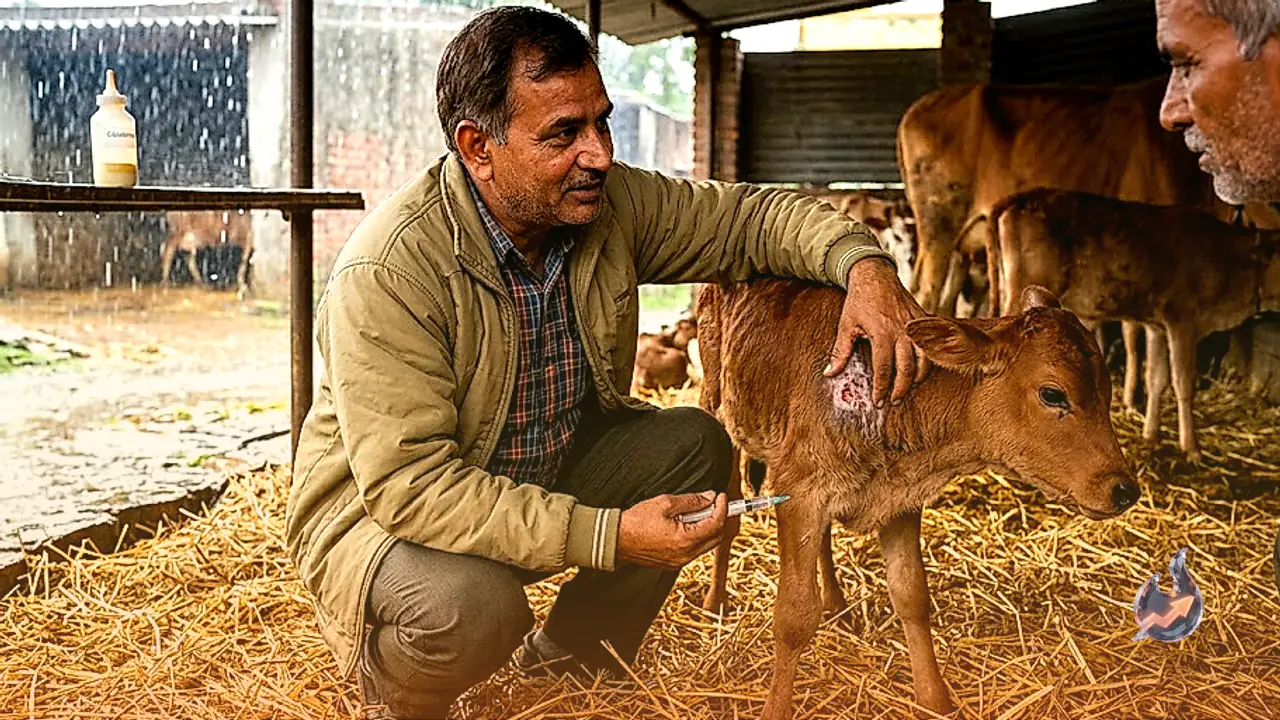

Cattle and buffalo owners need to pay special attention to their calves during the monsoon season, since newborn and young calves fall sick quickly when they keep getting wet in damp, humid conditions. According to Ranjeet Singh, a vaccinator with the Animal Husbandry Department in Firozabad, many livestock owners in villages become careless about looking after their animals during the rainy months, and this negligence sometimes ends up costing the lives of young calves belonging to cows and buffaloes. He says that the moment any symptoms of illness appear in a calf, owners should immediately consult a veterinarian, get vaccinations done on schedule, and always keep the calves in a clean, dry spot to protect them from insect infections, because even a small lapse can turn into a major crisis.
Pneumonia and diarrhoea pose the biggest risk
Ranjeet Singh explains that among the illnesses calves face during the rainy season, pneumonia and diarrhoea are the most common and the most dangerous. If calves are tied up in open, unroofed spaces during rain, they keep getting soaked and can end up with severe, life-threatening disease. Newborn calves already have weaker immunity, so the effects of cold and dampness hit them harder and faster than they do adult animals. Any delay in such cases can prove very costly, which is why he stresses contacting a veterinarian the moment illness is even suspected, along with keeping a regular watch on the calf's condition.
Getting soaked brings fever and skin disease
When young calves keep getting drenched in the rain, they can develop fever, and their bodies can also pick up insect infestations that gradually damage their skin. Standing for long periods in wet mud and slush raises the risk of infection further, so cow and buffalo calves should always be kept in a dry, clean place. Beyond that, a calf must be fed its mother's first milk, colostrum, within an hour of birth, because this early milk is what builds up its immunity. Calves that miss out on timely colostrum end up with a weaker ability to fight off disease later on.
Deworm the calf as soon as it turns one month old
Ranjeet Singh says that as soon as a cow's or buffalo's calf turns one month old, it must be given deworming medicine for stomach worms. Once calves cross the one-month mark, their risk of various infections and illnesses rises further, so this dose should not be delayed. Giving the medicine on time helps the calf digest milk more efficiently, strengthens its digestive system, and improves its overall health.
Nutritious feed and mineral salts build up strength
He adds that it is essential to give young calves a balanced, nutritious diet, since poor nutrition can slow down their physical growth. Alongside this, feeding them mineral salts, or a mineral mixture, improves their physical growth, boosts immunity and keeps them healthier for longer. Taken together, if livestock owners look after their calves properly during the monsoon, keep them in clean, dry surroundings, provide a balanced diet, and seek timely treatment the moment symptoms appear, calves can be protected from serious, life-threatening illnesses such as pneumonia, diarrhoea, fever and skin disease.