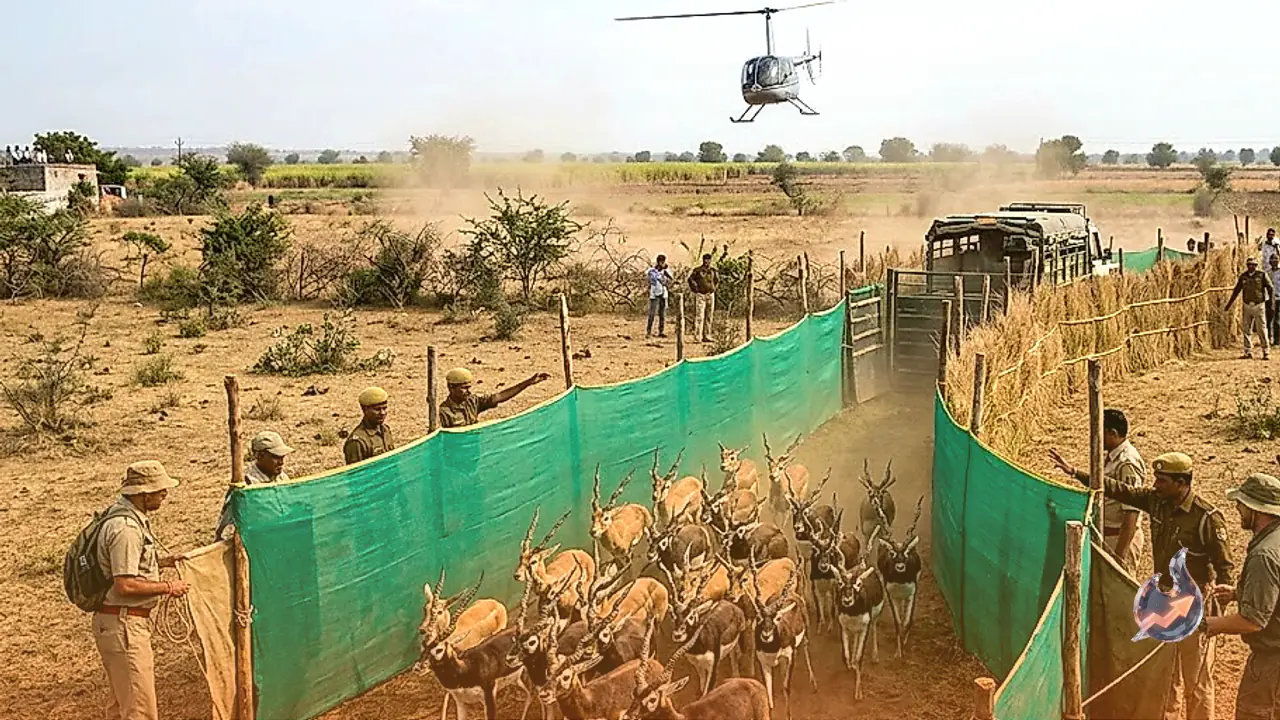


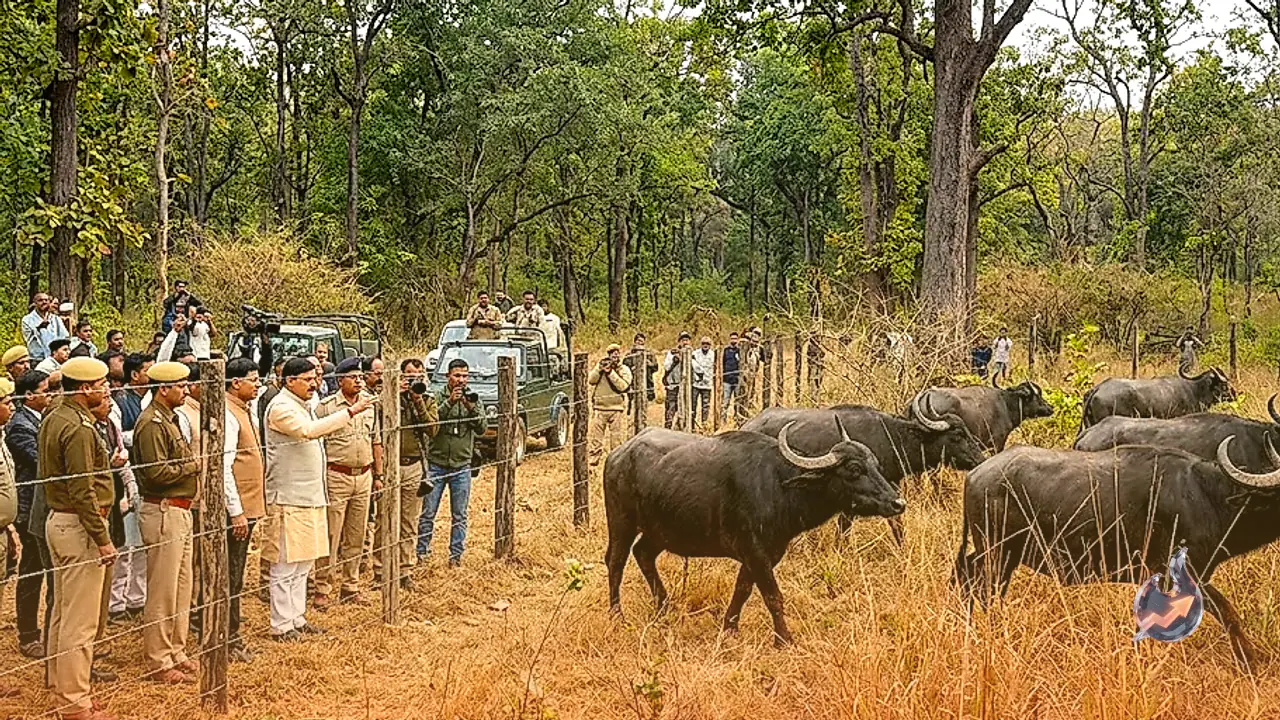















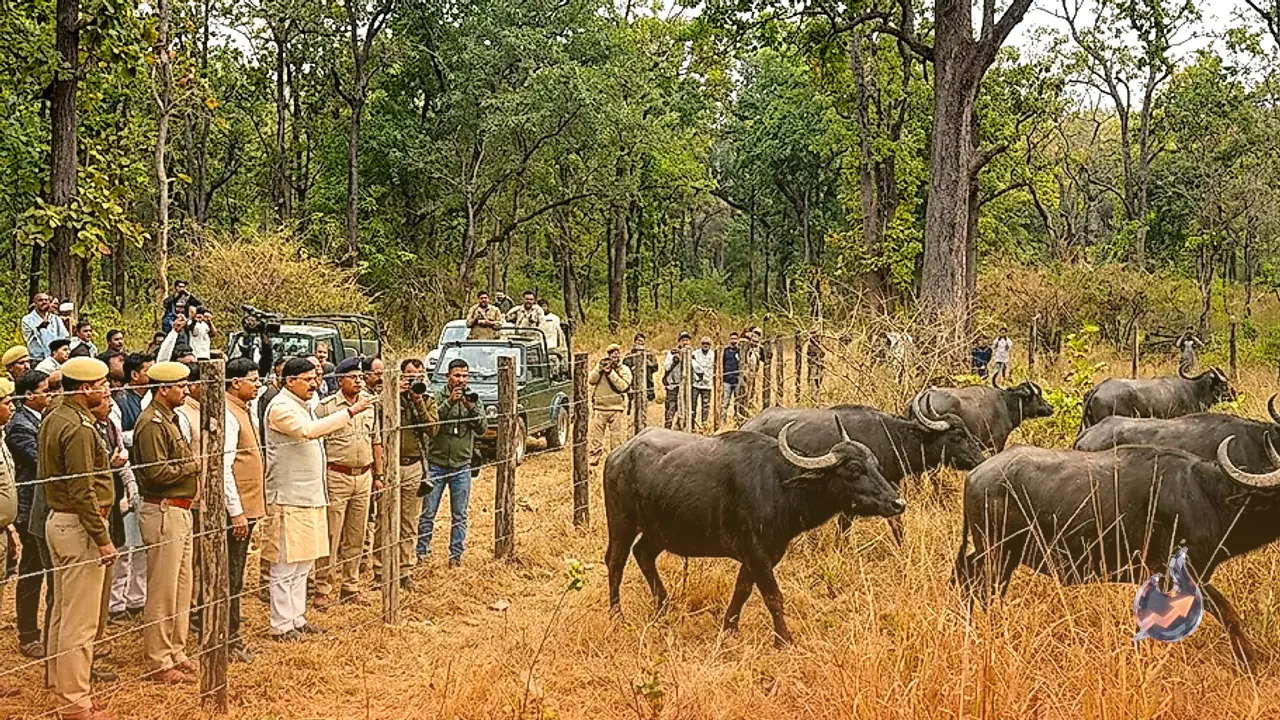

Marking a critical step forward for regional wildlife conservation, Madhya Pradesh has expanded the roaming grounds for reintroduced wild water buffaloes in the Kanha forest landscape. Chief Minister Dr Mohan Yadav visited the Supkhar area in Balaghat district to formally oversee the release of 8 wild buffaloes, comprising 6 females and 2 males, into a spacious 17-hectare enclosure. The initiative marks the second phase of an ambitious wildlife reintroduction initiative aimed at integrating the species back into the state's natural habitats.
Transition from Quarantine to an Expanded Natural Enclosure
Prior to this relocation, the animals were housed under strict observation in an enclosure measuring approximately 1 hectare. They spent the past 4 months undergoing specialized monitoring and quarantine within that compact setup to evaluate their health, behavior, and adaptation to the local environment. Having successfully cleared the isolation period, the herd has now transitioned to the 17-hectare facility, providing them with ample space to graze and behave naturally while remaining safeguarded within a controlled perimeter.
Reintroduction from Assam After a Century-Long Absence
The arrival of these wild buffaloes ends an absence spanning approximately 100 years from the forests of Madhya Pradesh. The animals were translocated across a distance of roughly 2200 kilometers from Assam, carried out in coordination with Assam Chief Minister Himanta Biswa Sarma. While Kanha is already globally celebrated for its population of tigers and the swamp deer known as barasingha, adding wild buffaloes restores a lost component of the forest food chain. Under the initial phase of the translocation drive at Supkhar, 4 buffaloes were brought on April 28, followed by another batch of 4 on May 9, establishing the initial foundation herd of 8 before their current shift to the larger paddock.
Broadening the Wildlife Network and Protected Reserves
Addressing conservation efforts across the state, Chief Minister Mohan Yadav noted that systematic steps are underway to rebuild ecosystems for species that vanished from the landscape over time. He referenced the recent establishment of the Rani Durgavati Tiger Reserve, created at Nauradehi on October 7, which now serves as the third habitat site for cheetahs in the state. Yadav emphasized that the state government aims to systematically restore lost fauna across protected reserves, highlighting Balaghat as a globally acknowledged tiger reserve that plays a pivotal role in conservation.
Security Improvements and Regional Growth in Balaghat
In addition to ecological milestones, the Chief Minister pointed out shifts in the regional governance and security environment, declaring that Balaghat has been freed from Naxalite influence. Observing that he has made 4 trips to the area over the last 5 months, Yadav stated that curbing extremism has enabled the administration to concentrate on infrastructural growth and ambitious conservation programs in the region.