
















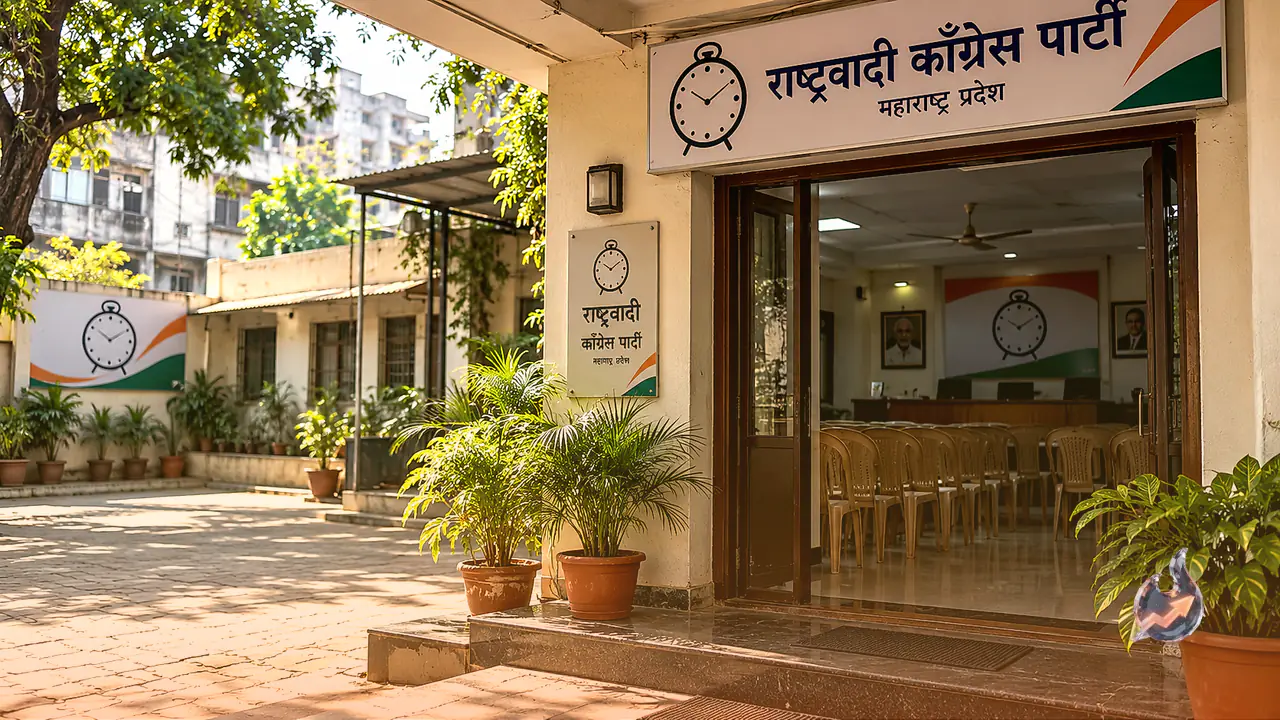

Internal dissent within the Nationalist Congress Party (NCP) has resurfaced following recent organizational appointments made at the top leadership level. The contentious decision to assign key responsibilities to new appointees has triggered widespread discussion regarding administrative governance and constitutional validity within the party. Severe objections have been raised concerning two pivotal decisions: the appointment of Zeeshan Siddique as the Mumbai NCP President and the designation of Umesh Patil as the Chief National Spokesperson. Senior leaders and current office bearers have expressed strong reservations regarding the procedures followed in these actions.
Zeeshan Siddique's Appointment and Praful Patel's Call for Introspection
The restructuring of the party's Mumbai unit saw Zeeshan Siddique being appointed as the Mumbai NCP President. Shortly after this announcement, senior party leader Praful Patel published a statement on social media that immediately drew widespread attention. Although Patel refrained from citing specific individuals, the timing and context of his post were viewed across political circles as an implicit disagreement with the recent appointment choices made by the leadership.
Following the outcome of the Maharashtra Legislative Council elections, Patel emphasized that the party urgently needed to engage in comprehensive self-reflection. He noted that structural modifications across organizational tiers are essential to rebuild trust among the general public and strengthen the party's grassroots foundation. Patel's public stance sparked intense internal conversations, signaling a lack of consensus on recent organizational strategies.
Constitutional Challenge to Umesh Patil's Designation
Amid ongoing discussions surrounding the Mumbai presidency, a second conflict emerged over the appointment of Umesh Patil as the party's Chief National Spokesperson. Patil's assignment was formalized through an appointment letter issued by Sunetra Pawar. However, this move faced immediate resistance from the incumbent Chief National Spokesperson and National General Secretary, Brijmohan Shrivastava, who issued an official press note on October 28 to challenge the action.
Shrivastava publicly questioned the legal and constitutional legitimacy of the letter issued by Sunetra Pawar, deeming it unconstitutional and invalid. He maintained that no elected or designated office bearer can be removed or replaced without adhering to the explicit provisions outlined in the party's constitution. Shrivastava stressed that executing such administrative changes without obtaining authorization from the national committee violates core party regulations.
National Convention Tenure and Election Commission Documentation
To substantiate his position, Shrivastava pointed to the resolutions passed during the party's national convention held on November 30, 2023. He highlighted that his appointment to the post of Chief National Spokesperson was proposed and unanimously approved during that national session. Under the terms of the resolutions adopted at the convention, his tenure is officially valid until November 30, 2028.
Shrivastava reiterated that party protocols prohibit displacing a constitutionally appointed official without following proper procedures. Furthermore, referencing ongoing correspondence and documentation submitted to the Election Commission, he indicated that key matters regarding elections and administrative filings remain unresolved. In light of these issues, he urged Sunetra Pawar to immediately rescind the controversial appointment letter and align all future executive actions with the party's constitution.
Implications for Party Governance and Future Cohesion
The dual controversies concerning these organizational roles have brought the internal functioning and leadership style of the NCP under intense scrutiny. While senior leaders like Praful Patel advocate for institutional reform and strategic evaluation, Shrivastava's reliance on constitutional mandates underscores a deeper institutional crisis regarding executive authority.
The unfolding events demonstrate noticeable friction between senior decision-makers and organizational executives within the party. As political observers monitor the situation, the key question remains whether the party leadership will review these appointments or take corrective measures to restore internal cohesion ahead of upcoming political challenges.