
























The Australian Dollar struggled to regain footing during Thursday's Asian trading session, lingering near its lowest marks since August 7 against the US Dollar. A fresh batch of domestic employment data delivered mixed signals that failed to inspire buyers, leaving the currency subdued. Compounding the local economic challenges, persistent expectations of tighter monetary policy from the US Federal Reserve kept American bond yields elevated, which in turn preserved broad strength in the greenback and dampened appetite for risk-sensitive currencies.
Mixed August Jobs Print and Industrial Contraction Hurt Outlook
Data published by the Australian Bureau of Statistics (ABS) showed that total employment expanded by 39K positions in August, later updated in detailed releases to an increase of 39.5K. The headline figure comfortably outpaced consensus forecasts of a 20K gain and represented a notable turnaround from the drop of 15.8K recorded in the prior month. Nevertheless, the underlying details told a less encouraging story, as full-time employment experienced a decline. At the same time, the national Unemployment Rate climbed to 4.6%, up from 4.5% in July and exceeding the market's expectation of 4.5%.
The softening in the labour market arrived alongside disappointing Australian flash PMI figures, which had already underscored emerging economic headwinds. The flash PMI readings highlighted a deceleration in services activity alongside an outright contraction across the manufacturing sector. Together, these lacklustre macroeconomic reports have reduced conviction regarding aggressive follow-through rate hikes by the Reserve Bank of Australia (RBA) beyond the widely anticipated 25 basis points (bps) tightening scheduled for next week, actively undermining the Australian Dollar (AUD).
Labour Trends as a Compass for Monetary Policy
The Australian Bureau of Statistics releases its comprehensive overview of domestic labour conditions approximately 15 days following the conclusion of each month. The unemployment rate is among the most closely tracked barometers by central bankers and investors alike, given its direct transmission into household consumption patterns and broader inflationary pressures. While employment data is inherently a lagging economic gauge, its trajectory heavily dictates the interest rate path charted by the Reserve Bank of Australia (RBA). Favourable employment readings typically bolster the Australian Dollar, whereas the latest soft details have exerted downward pressure.
Key Resistance Levels and Technical Trajectory
From a technical standpoint, the AUD/USD currency pair weakened toward the 0.7000 threshold during Thursday's Asian trade. Should the pair attempt a recovery, initial topside resistance stands at the 50.0% retracement level located at 0.7050. A push beyond that barrier could encounter the 38.2% retracement mark at 0.7094, followed by the 23.6% retracement zone around 0.7149. Market technicians note that upward momentum could decelerate significantly around these resistance boundaries, particularly given the cautious sentiment prevailing among market participants.
Broad Currency Dynamics, Central Bank Shifts, and Commodities
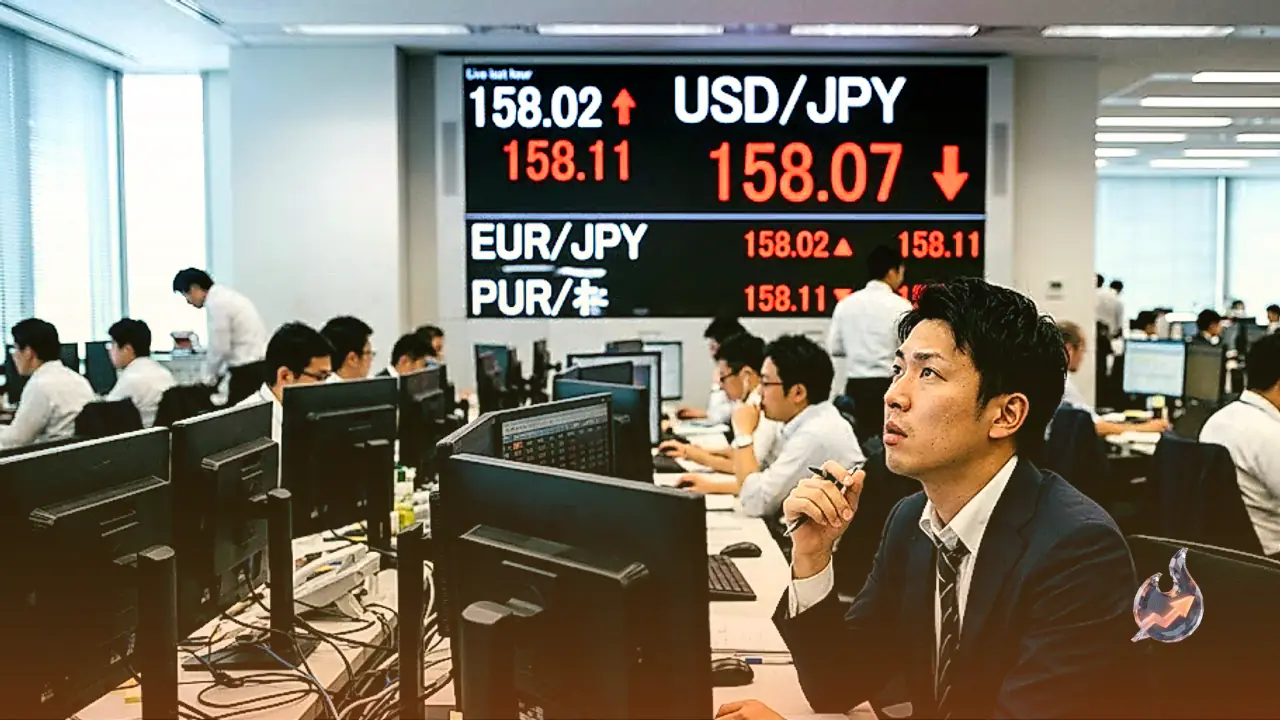
Cross-asset performance revealed shifting dynamics across major financial hubs. The Japanese Yen gained ground against the greenback, pulling USD/JPY back from three-week highs to trade around 158.00 in the Asian session. Surging domestic government bond yields in Japan provided support to the domestic currency amid heightened speculation of potential official currency market intervention. Meanwhile, the Bank of Japan (BoJ) concluded its policy meeting with a 7-2 vote to raise its short-term interest rate target from 1.00% to 1.25%, delivering a widely expected measure in its ongoing effort to normalise domestic monetary settings.
In the commodities space, gold faced downward pressure, lingering beneath $4,300 per ounce during Asian trading hours. The precious metal remained vulnerable against a backdrop of surging US Treasury yields driven by hawkish Federal Reserve bets, which allowed the US Dollar to preserve strong gains near two-month peaks. Higher energy costs also influenced broader markets, as advancing crude oil prices paired with elevated sovereign yields disrupted the risk-on equity rally seen earlier in the week, weighing heavily on equity indices.
Market Participants Await High-Stakes Geopolitical Talks
Underpinning the cautious price action across forex and commodities is an overarching reluctance among traders to deploy large capital allocations ahead of the summit between US President Donald Trump and Chinese President Xi Jinping. The bilateral discussions between the leaders of the world's two largest economic powers carry profound implications for international trade policies and global growth trajectories. With geopolitical uncertainty lingering, market participants have adopted a watchful stance, keeping asset prices confined within tighter ranges.