























Wall Street's tech-driven rally ran out of steam overnight as the Nasdaq Composite and Nasdaq 100 snapped their winning run, dragged down by a heavy selloff in chipmakers and artificial intelligence names. The Dow Jones and S&P 500 also finished in negative territory, though their losses were far smaller. The steepest damage landed on the tech-heavy Nasdaq. While July is traditionally seen as a bullish month, traders are juggling US-Iran tensions, sticky inflation and a hawkish stance from the US Federal Reserve.
Nasdaq leads the slide
The Nasdaq Composite shed 173.69 points, or 0.7%, to settle at 26,040.03 when trading closed on July 1, 2026. The drop ended a two-session winning streak worth 955.42 points, a rebound that had followed a 1,503-point plunge the previous week.
The Nasdaq 100 took an even harder hit, tumbling 467.21 points, or 1.54%, to end the session at 29,809.13. That pushed the index back below the 30,000 level it had reached on June 30 after five days of choppy trading.
Chip and memory stocks bleed
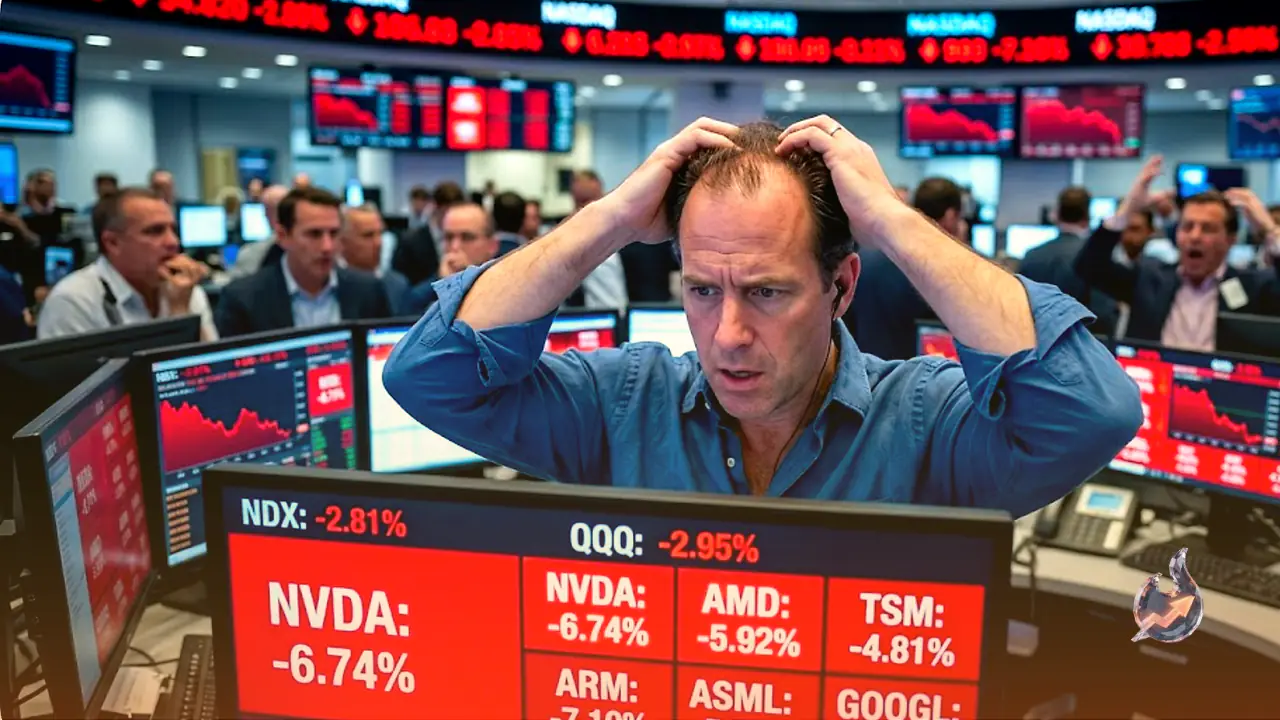
Both technology gauges buckled under sharp selling in semiconductor and memory shares. Micron Technology and Sandisk Corp each sank 10.6%, Applied Materials fell 10%, Intel lost 9% and AMD slipped 6.9%.
Even Nvidia, the world's most valuable company and a bellwether of the AI boom, closed 1.3% lower. SpaceX, a heavyweight component of the Nasdaq 100, cratered nearly 8%.
Dow and S&P edge lower
The Dow Jones finished barely in the red, off 13.96 points, or 0.027%, at 52,305.24. The S&P 500 closed at 7,483.23, down 16.13 points, or 0.22%.
Asian markets feel the chill
The weakness on Wall Street spilled into Asian trading in the early hours of Thursday. According to Ponmudi R, CEO of Enrich Money, Qatar said the latest round of indirect US-Iran talks had made "positive progress," keeping hopes of a wider diplomatic breakthrough alive. Even so, the mood across Asia stayed cautious after the US tech rout, with Japan's Nikkei sliding nearly 2% early in the session and South Korea's Kospi dropping more than 6%, a sign of how jittery global risk appetite had become.
Jobs data and the Fed in focus
US stock futures drifted lower on Thursday as investors held back ahead of the June jobs report, a release expected to offer fresh signals on the labor market and the Federal Reserve's rate path. Figures out on Wednesday showed private-sector hiring cooled more sharply than forecast last month. Fed Chair Kevin Warsh said inflation expectations had softened over the past month, while restating the central bank's pledge to bring back price stability.
Earnings season brings optimism
There are still reasons for bulls to stay hopeful. A Charles Schwab report noted that investors are looking forward to the coming earnings season, which unofficially opens on July 14 as big banks post second-quarter numbers. As of June 26, analysts were pencilling in 23.1% year-over-year earnings growth for S&P 500 companies. All 11 sectors are expected to log gains of 10% or more, per FactSet, with Communication Services out front and Industrials and Real Estate trailing.
Nathan Peterson, director of derivatives research and strategy at the Schwab Center for Financial Research, listed several positives. "Seasonally, July is bullish, the broadening of the rally is healthy, oil prices are down significantly, and rate hike expectations may soften."