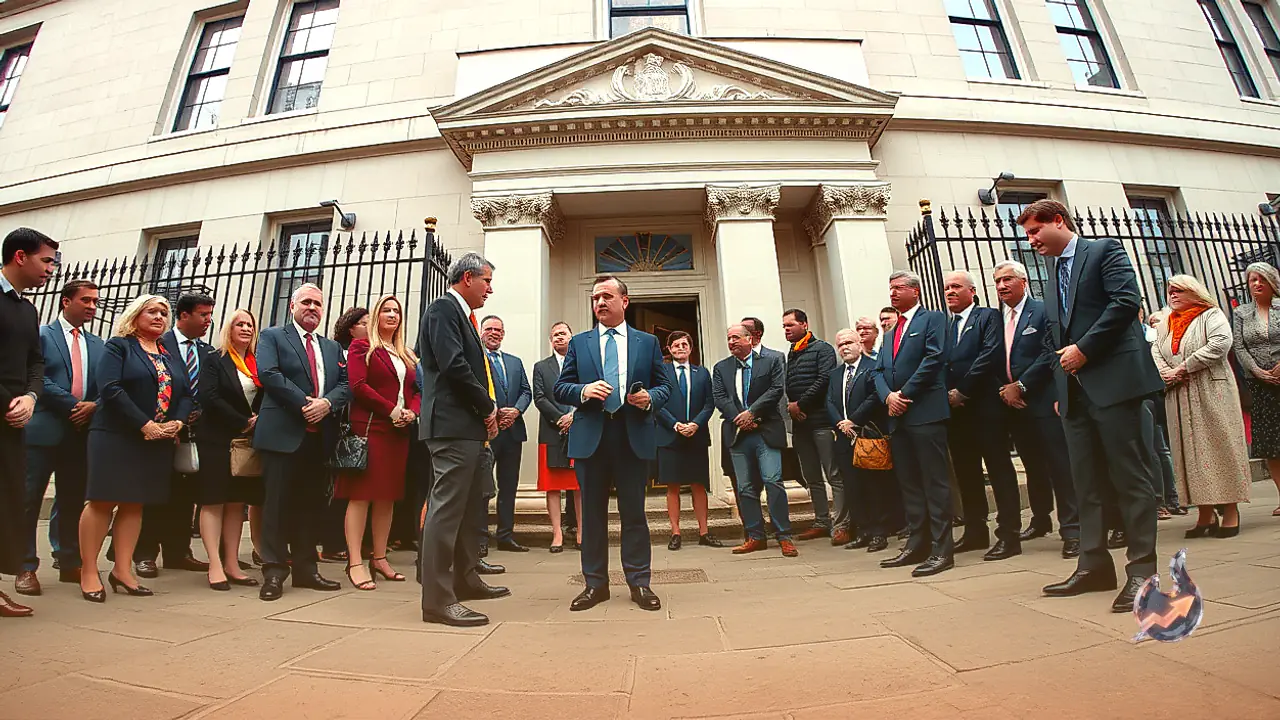





















Federal Reserve Chairman Kevin Warsh has laid out his approach to monetary policy, institutional discipline, and evolving technological trends during an in-depth conversation in Bangkok, Thailand. Sharing the stage with International Monetary Fund Managing Director Kristalina Georgieva at a fireside discussion, Warsh stated that the central bank remains fundamentally dedicated to restoring and maintaining price stability across the United States economy. At the same time, he made it abundantly clear that he does not intend to predetermine the decisions of future Federal Open Market Committee meetings, arguing instead that policy must be formed on the basis of economic data, production trends, and real-time employment developments.
Refusing to Dictate Monetary Decisions Beforehand
Addressing the upcoming monetary policy calendar, Kevin Warsh emphasized that premature commitments can undermine the effectiveness of economic policy. He noted that since the September FOMC gathering, global conditions have broadly tracked the expectations laid out by central bankers. The primary task facing the committee in the near term is crystallizing what is occurring in the real economy, specifically how aggregate output, payroll expansion, and consumer prices are evolving under current credit conditions.
With a couple more policy gatherings scheduled before the close of the calendar year, Warsh highlighted that these sessions will serve as pivotal moments for clarifying policy choices. He stated directly that judgements will be formed carefully during the October and December sessions rather than being telegraphed months in advance. Looking further ahead, he rejected the premise of declaring what interest rate path he might pursue across 2026. According to Warsh, pre-judging policy outcomes runs counter to the fundamental responsibility of an independent central bank, which must retain flexibility to react to structural shifts and incoming data points.
Crisis Memories and the Surge in Private Capital Investment
Reflecting on past economic disruptions, Warsh acknowledged that he carries lasting impressions from his time navigating the global financial crisis. Those turbulent events demonstrated how rapidly risks can propagate across interconnected financial channels. Turning to the present climate, however, he pointed to significant signs of structural expansion, calling attention to an accelerating surge in capital investments across modern industries.
Warsh described this continuous investment flow as the single most critical positive development currently underway in the broader global economy. In his assessment, private capital is entering productive avenues because sound economic policies have laid the groundwork for sustained business confidence. While noting that actions taken by the Federal Reserve naturally exert spillover effects across international borders, he remarked that global policy moves likewise spill back into the domestic economy. This persistent cross-border feedback mechanism means the central bank cannot conduct monetary strategy inside an isolated domestic silo.
Technological Shifts and the Fed Scrutiny of Artificial Intelligence
Shifting focus toward structural transformations in corporate America, Kevin Warsh explored the rising influence of artificial intelligence. Quipping that people in the United States have begun pronouncing AI as 'SI', he underscored the massive scale of attention being devoted to automated technologies. From a macroeconomic perspective, Warsh suggested that AI is poised to impact the demand side of the economic ledger long before its broader supply-side productivity shock fully materializes across supply chains.
Over the medium term, sophisticated computational tools are expected to provide central bankers with higher precision and greater confidence when processing complex data series and formulating interest rate responses. Nevertheless, Warsh conceded that the immediate consequences for aggregate employment remain difficult to gauge with precision. To explore these transformations thoroughly, the Federal Reserve has scheduled a specialized field hearing on artificial intelligence in the San Francisco Bay Area on November 16. Dedicated task forces inside the central bank have been directed to generate fresh intellectual capital to bolster the FOMC analytical toolset. Warsh emphasized that as private enterprises deploy significant capital into emerging technologies, the central bank’s role is not to pick winners or determine technological validity, but rather to evaluate systemic financial stability risks and identify negative tail-side developments that require prudential oversight.
Institutional Integrity and Broader Administrative Stewardship
Turning inward toward the structure and operation of the central bank, Kevin Warsh argued that institutional credibility is the bedrock of the Fed's ultimate authority. Having served in the system during previous years, he observed that his familiarity with the organization gives him the confidence to introduce reform ideas and question established practices. While acknowledging the deep reservoir of technical talent across the staff, he insisted that cultivating the right organizational culture is essential to maintaining public trust.
Highlighting an often-overlooked administrative reality, Warsh noted that approximately 75 percent of the Federal Reserve staff do not focus directly on monetary policy, but rather manage critical duties spanning bank supervision, payment rails, and regulatory oversight. He stressed that a central bank chairman must actively lead every facet of the enterprise, not merely the interest rate committee. To that end, he pledged to dedicate balanced attention toward the Fed’s wider commercial and operational duties over the next 100 days. Clarifying that his tenure is driven by getting policy right rather than curating a personal legacy, Warsh praised predecessors including Paul Volcker, Alan Greenspan, and Ben Bernanke for leaving behind an institution with enhanced credibility. Given that the modern world is evolving at a pace unprecedented in his adult life, he maintained that central bankers must lean forward proactively to understand what these rapid transformations mean for the economy.
Financial Market Reactions and Asset Valuations
Market participants reacted swiftly to the measured tone of Kevin Warsh’s remarks in Bangkok. The US Dollar Index (DXY), which tracks the greenback against a basket of six leading international currencies, traded lower by 0.22 percent to reach 101.82 as currency traders weighed his non-committal stance on future policy adjustments.
Across the foreign exchange space, the Australian Dollar found renewed traction, with the AUD/USD pair advancing toward the 0.6950 threshold amid broader selling pressure on the dollar. Concurrently, the USD/JPY pair lost upward momentum and dipped below 158.00 as investors reassessed the dollar's near-term yield support. In commodities, spot gold pulled back toward $4,150 per ounce during Asian trading hours, relinquishing a portion of its recent gains. Recent inflation releases in the United States had revived speculation that policymakers might execute at least one interest rate increase before year-end, which helped stabilize Treasury yields and tempered bullion demand ahead of Warsh's remarks. Meanwhile, major cryptocurrencies including Bitcoin, Ethereum, and XRP presented mixed performances, with Bitcoin and Ethereum defending key baseline support levels while XRP met selling resistance. Persistent inflation metrics have constrained general risk appetites, keeping digital token markets in a cautious, range-bound posture.
Core Monetary Mechanics: The Dual Mandate, QE, and QT
The institutional framework governing the Federal Reserve is defined by its congressional dual mandate, which tasks policymakers with pursuing stable price levels alongside maximum sustainable employment. The primary mechanism used to balance these dual objectives is the benchmark federal funds rate. When inflationary pressures accelerate above the established 2 percent target, the central bank raises rates to lift borrowing expenses throughout the economy, cooling demand while typically strengthening the US dollar by drawing global investment capital into dollar-denominated assets. Conversely, when price growth sinks beneath 2 percent or joblessness rises, the committee lowers rates to stimulate economic activity, which often dampens the greenback.
Policy setting occurs across eight designated meetings each year under the guidance of the twelve-member Federal Open Market Committee. Voting members comprise the seven Governors of the Federal Reserve Board, the president of the Federal Reserve Bank of New York, and a rotating group of four regional reserve bank presidents serving one-year tenures. Beyond traditional rate moves, extreme economic distress can prompt unconventional measures such as Quantitative Easing (QE), wherein the central bank purchases long-term securities from private institutions using newly generated reserves to restore liquidity. The opposite process, Quantitative Tightening (QT), occurs when the Fed allows maturing bonds to roll off its balance sheet without replacement, absorbing liquidity from the banking system and generally providing underlying support to the national currency.