























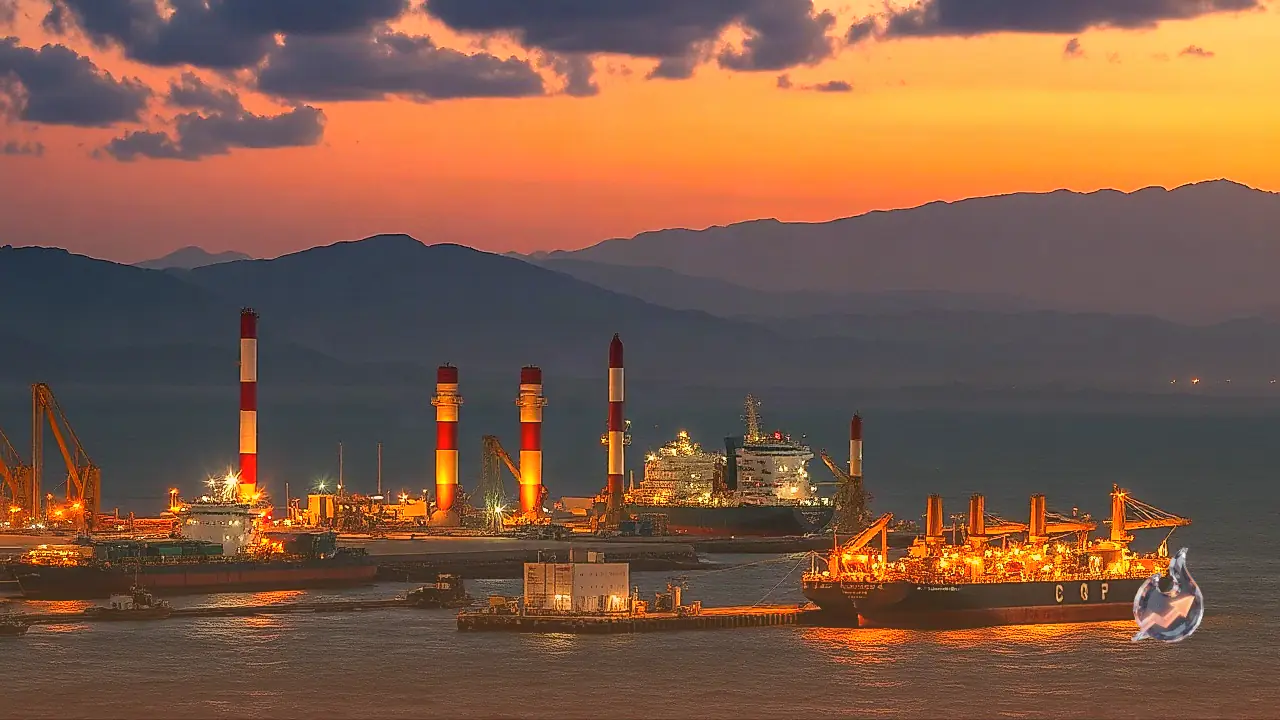

Global energy markets witnessed a notable shift on Thursday as West Texas Intermediate (WTI) Crude prices retreated below the $97.00 per barrel mark. This downward movement has brought the international benchmark closer to its one-week lows around the $96.00 price territory. The primary driver behind this recent cooling of prices is the news that Saudi Arabia, the world's leading oil exporter, has successfully secured an alternative logistics route to transport its crude oil to key Asian markets. This structural workaround has substantially eased global anxieties surrounding potential supply chain bottlenecks in the region, bringing much-needed relief to energy traders and industrial consumers alike.
Saudi Arabia's Logistics Strategy and Pipeline Restoration Roadmap
The global oil supply chain is highly sensitive to geopolitical disruptions, particularly in the Middle East. Any threat to shipping lanes or infrastructure can immediately trigger a premium on crude prices. However, Saudi Arabia's ability to quickly pivot and secure alternative maritime and overland channels to reach Asia has demonstrated a high degree of operational flexibility. This development has effectively mitigated the fear of immediate delivery failures to major Asian economies, which are among the largest importers of Middle Eastern crude.
In tandem with finding alternative routes, Saudi energy authorities announced a comprehensive restoration plan for their critical pipeline infrastructure. According to official communications released on Wednesday, the state-backed entities are working around the clock to bring the compromised pipeline back to 40% of its operational capacity within just a few days. Furthermore, the authorities have set a firm projection to have the entire pipeline system fully operational and running at 100% capacity within the next six weeks. This rapid repair schedule has reassured global markets that any domestic logistical constraints are temporary, preventing a sustained spike in oil valuations.
Geopolitical Standoff: The US-Iran Friction
Despite the positive supply developments, the persistent geopolitical standoff between the United States and Iran continues to inject a high degree of uncertainty into the global market. This friction is acting as a strong price floor, keeping crude benchmarks from falling significantly below the $100.00 per barrel mark. Energy traders are keeping a close watch on the rhetoric coming from both Washington and Tehran, as any escalation could instantly disrupt shipping through the Strait of Hormuz, a critical chokepoint for global oil transit.
US President Donald Trump recently expressed optimism regarding the situation, stating that the United States is hopefully approaching the end of the conflict. He also claimed that the Iranian government is actively pushing for direct negotiations to resolve the ongoing disputes. However, authorities in Tehran have publicly and firmly denied these claims, refusing to engage in talks under the current conditions of US-led economic sanctions. This complete disconnect in communication between the two nations ensures that the geopolitical risk premium remains embedded in energy pricing, preventing WTI from experiencing a deeper correction.
US Commercial Stockpiles and the EIA Inventory Report
On the domestic front in the United States, latest energy data has further contributed to easing immediate supply concerns. The weekly commercial crude inventory report released by the US Energy Information Administration (EIA) on Wednesday revealed a shorter-than-expected withdrawal of stockpiles for the week ending September 11. Specifically, US crude inventories declined by 640,000 barrels, which was less than half of the 1.6 million barrel draw that market analysts had widely anticipated. This smaller drawdown indicates that domestic production remains robust and refinery demand is well-balanced with supply.
In addition to the modest crude decline, the EIA report highlighted that domestic gasoline and distillate inventories actually experienced an increase compared to the previous week. This rise in finished product stockpiles suggests a seasonal cooling in consumer demand, further taking the wind out of the bullish sails. Historically, crude market participants also track the private sector data published by the American Petroleum Institute (API) every Tuesday, followed by the government-run EIA report on Wednesday. While the two sets of data fall within 1% of each other approximately 75% of the time, the EIA statistics are widely regarded as the ultimate industry benchmark due to the agency's official status and comprehensive tracking capabilities.
Demystifying West Texas Intermediate (WTI) and Cushing Hub
For investors navigating the energy sector, understanding the characteristics of West Texas Intermediate (WTI) is essential. WTI is a specific grade of crude oil that serves as one of the primary benchmarks for global oil pricing, alongside Brent crude from the North Sea and Dubai crude from the Middle East. WTI is widely referred to in financial media as a light, sweet crude oil. The term light refers to its relatively low API gravity, meaning it is less dense than heavier crudes. The term sweet indicates a very low sulfur content, typically under 0.5%.
These chemical properties make WTI an exceptionally high-quality crude oil that is highly coveted by refining facilities. Because it contains less impurities and is less dense, it requires significantly less energy and refining complexity to convert into high-value consumer products such as high-octane gasoline, diesel, and aviation turbine fuel. WTI is primarily sourced from oil fields within the United States, particularly in Texas, and is transported via pipelines to Cushing, Oklahoma. Cushing serves as the physical delivery point for NYMEX oil futures and is widely celebrated as the Pipeline Crossroads of the World, playing a central role in domestic storage and distribution logistics.
Key Drivers Governing Crude Oil Valuations
Like any traded financial asset, the pricing of WTI crude oil is ultimately governed by the laws of supply and demand. On the demand side, global economic growth is the single largest driver. When major economies like the United States, China, and Western Europe experience robust GDP growth, industrial activity and transportation volumes surge, leading to increased oil consumption. Conversely, a slowdown in global economic output or fears of an impending recession can rapidly suppress demand and lead to a collapse in oil prices.
On the supply side, pricing is heavily influenced by geopolitical events, localized conflicts, and international sanctions. Wars in oil-producing regions can physically damage extraction infrastructure or block critical shipping channels, leading to artificial supply deficits. Furthermore, the decisions made by the Organization of the Petroleum Exporting Countries (OPEC) and the broader OPEC+ alliance play a pivotal role in maintaining market equilibrium. Finally, because crude oil is denominated and traded globally in US Dollars, the strength of the greenback has an inverse relationship with oil prices. A weaker US Dollar makes oil cheaper for international buyers holding other currencies, stimulating demand and pushing WTI prices higher.
OPEC and OPEC Plus: The Guardians of Oil Supply
The Organization of the Petroleum Exporting Countries (OPEC) is an intergovernmental organization consisting of 12 oil-exporting nations. These member countries meet twice a year to collectively negotiate and establish oil production quotas. The primary objective of these production limits is to manage the global supply of crude oil, stabilize international prices, and secure steady revenue streams for member nations. When OPEC decides to implement production cuts, it effectively tightens global supply, which typically drives WTI and Brent prices upward.
To increase their market influence, the group expanded its cooperative efforts to form OPEC+, which includes the original 12 member states along with ten additional non-OPEC oil-producing countries. The most influential and militarily powerful member of this expanded coalition is Russia. By coordinating their production strategies, OPEC+ controls a massive share of the global oil market, giving them unprecedented power to influence international energy prices and respond to macroeconomic shifts on a global scale.
Global Financial Markets and Currency Fluctuations
Beyond the energy pits, the broader financial markets exhibited diverse movements on Thursday. In the foreign exchange market, the Australian Dollar (AUD/USD) found fresh buying interest during the Asian trading session, reclaiming the crucial 0.7100 handle. This recovery was largely supported by a temporary pause in the US Dollar's recent rally, which had been driven by the Federal Reserve's hawkish policy outlook. Additionally, growing bets that the Reserve Bank of Australia (RBA) will implement further interest rate hikes, combined with speculative hopes for US-Iran diplomatic progress, provided a significant boost to the risk-sensitive Australian currency.
Meanwhile, the USD/JPY pair reversed its minor dip below the 156.00 level on Thursday, attempting to snap a three-day winning streak that had pushed it to a nearly two-week high. The greenback stabilized as traders digested the Fed's aggressive monetary policy stance, while a more hawkish pricing of the Bank of Japan's (BoJ) normalization path supported the Japanese Yen. Market participants are now focusing their attention on the upcoming BoJ monetary policy decision scheduled for Friday. For over a decade, Japan's ultra-low interest rates made the Yen a primary source of cheap funding for global investments, and any move toward policy normalization could have wide-ranging systemic effects.
Precious Metals and Safe-Haven Capital Flows
In the commodities sector, precious metals also staged a recovery. Gold prices climbed back above the $4,300 per ounce mark ahead of the European trading session on Thursday. However, the yellow metal remained highly vulnerable and traded within close proximity of the six-week low recorded during the previous session. While a minor retreat in the US Dollar index from its July highs offered a supportive tailwind for gold, the Federal Reserve's hawkish macroeconomic outlook and persistent geopolitical tensions in the Middle East continue to cap the non-yielding asset's upside, keeping investors cautious.