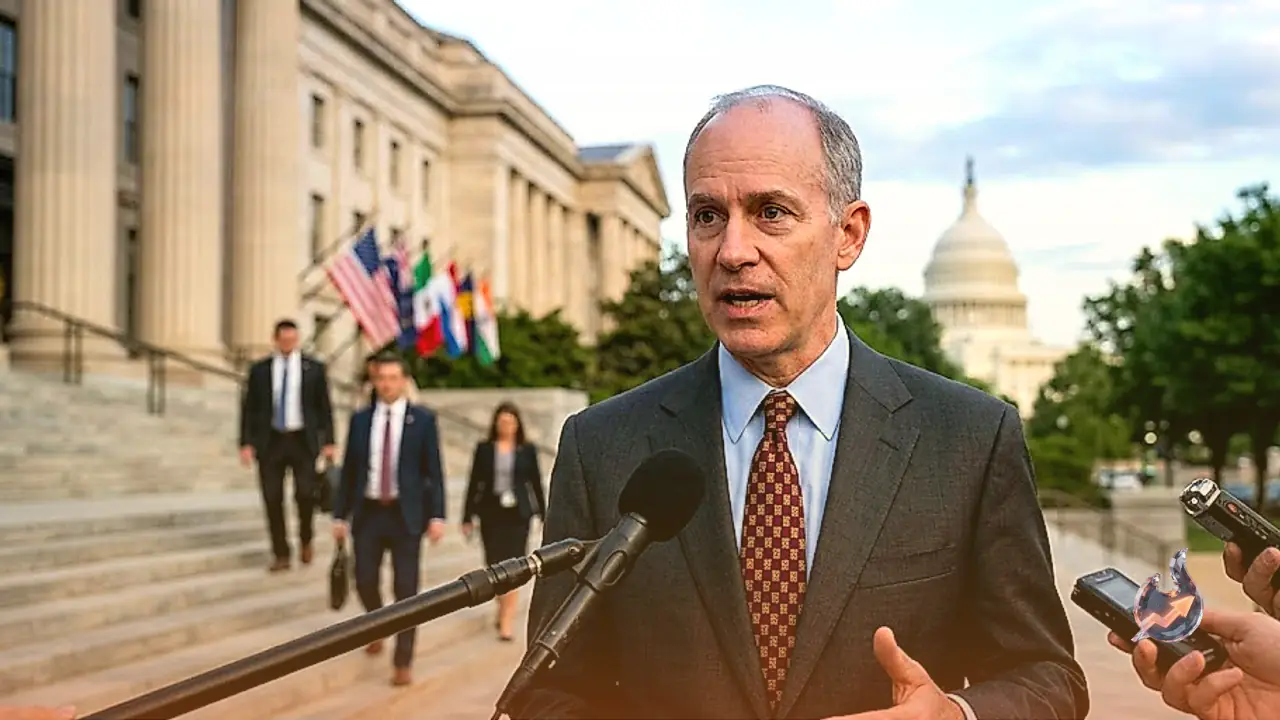

























US President Donald Trump said that, ahead of a rate increase, he told Fed Chair Kevin Warsh that joining the Federal Reserve board's position would not alter the result. Trump added that he did not expect Warsh to take his direction and said he wanted the Fed to be independent, despite criticizing the board as political and describing its members as people installed by politicians.
Trump describes a board vote with a fixed outcome
Trump recalled addressing Warsh by his first name, Kevin, and telling him that a vote aligned with the board was the practical option because the outcome was already settled. He called the board hostile and political, said it was making the wrong choice, and described its members as politicians chosen by politicians.
“You might as well vote with the board because it's just not going to matter.”
That brief remark summarizes the central tension in Trump's account: he portrayed the board's vote as decisive while saying he wanted the central bank to be independent. Trump separately said he did not expect Warsh to take direction from him. The comments therefore put the focus on the boundary between a president's public views and the Fed's policy process rather than on a confirmed change in the rate path.
Dollar holds near 100.35 as markets digest Fed signals
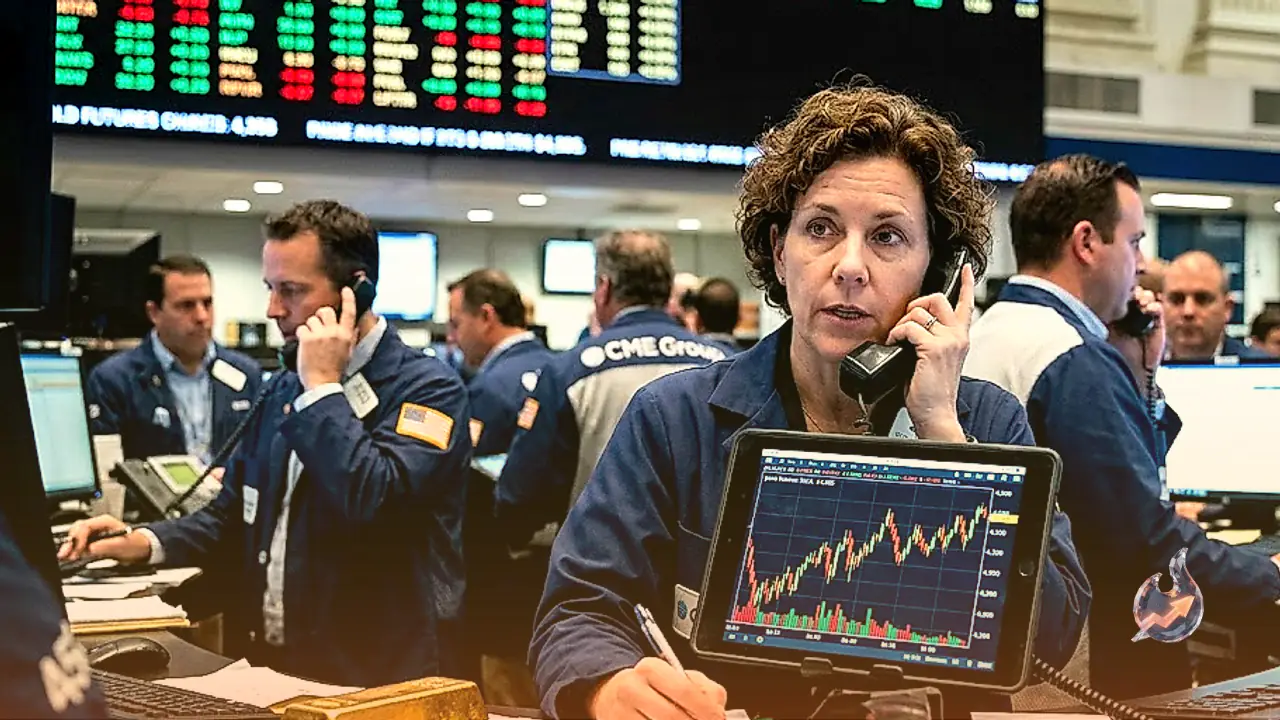
In Thursday's market snapshot, the US Dollar Index (DXY) was 0.03% higher for the day at 100.35. The dollar's pause followed a Fed-driven advance that had reached its highest level since late July.
Rate expectations shape how investors compare returns across countries. When markets price a more aggressive Fed, dollar assets can attract more international money, while currencies and commodities that depend heavily on risk appetite may face pressure. Trump's remarks add a political layer to that calculation, but the market figures show a pause rather than a fresh, decisive breakout.
The Fed's two mandates and its main lever
US monetary policy is set by the Federal Reserve, or Fed. It operates under two mandates: stable prices and full employment. Interest-rate adjustments are its main tool, changing borrowing costs across the economy and influencing spending, investment, hiring, and asset prices.
When inflation runs above the Fed's 2% target and prices are climbing too fast, the central bank raises interest rates. More expensive loans and credit slow demand and help contain inflation. Higher yields can also lift the US Dollar (USD) by making the United States a more appealing destination for international investors' money.
If inflation drops below 2% or unemployment is too high, the Fed may reduce rates. Cheaper credit is meant to encourage borrowing, spending, and investment. The trade-off is that lower yields can weaken the Greenback by making dollar holdings less attractive.
Eight meetings and twelve voting officials
The Fed convenes eight policy meetings in a year. The Federal Open Market Committee (FOMC) uses those meetings to review the economy and decide monetary policy, including the direction of interest rates.
Membership consists of all seven governors on the board, the New York regional Fed president, and four presidents selected from the other eleven regional Reserve Banks. The regional seats rotate, with those presidents serving one-year terms. This setup keeps policy inside a committee process rather than a single public exchange.
QE and QT show the tools beyond ordinary rate moves
During extreme stress, the Fed can turn to Quantitative Easing (QE), which expands credit when the financial system is blocked. It is an unconventional tool for crises or exceptionally low inflation. The Fed relied on it during the Great Financial Crisis of 2008.
The mechanism creates additional dollars and uses them to purchase high-grade bonds from financial institutions. The added liquidity generally weakens the US Dollar. Quantitative Tightening (QT) works in the opposite direction: the Fed stops purchasing bonds, and when bonds it already owns mature, it does not use the returned principal for fresh purchases.
Because QT withdraws support instead of supplying it, it is generally favorable for the US Dollar. QE and QT demonstrate that bond purchases and the handling of maturing holdings can influence currency and credit conditions alongside the policy rate.
AUD/USD, USD/JPY, and gold react to the same crosscurrents
In Thursday's Asian trading, AUD/USD held near 0.7100 as it absorbed the prior session's decline. The dollar's pause came after a Fed-driven advance to its highest level since late July. Wagers on a Reserve Bank of Australia rate increase and optimism about diplomacy between the United States and Iran improved risk sentiment, supporting the Australian dollar and the pair.
During the same Asian session, USD/JPY recovered from a short move below 156.00. The pair was poised to stop a three-session rise that had reached a nearly two-week peak by the previous day. After climbing to seven-week highs in the wake of the Fed, the dollar took a breather, while a stricter market reassessment of the Bank of Japan's normalization path lifted the yen and capped the pair's upside. Attention was moving to the Bank of Japan's scheduled policy decision on Friday.
Gold approached $4,300 on Thursday, reclaiming much of the prior decline after touching a six-week low. The dollar's retreat from its late-July high helped the metal. Expectations that oil-related inflation pressure would ease, alongside hopes for diplomacy between the United States and Iran, pulled US Treasury yields down and supported yield-free gold.
Ethereum and Japan add separate tests for investors
The failure of the Clarity Act to pass the Senate weighed on Ethereum and the wider cryptocurrency market. Analysts had argued that the legislation could provide a major boost for Ethereum, the second-largest cryptocurrency, but the anticipated rally tied to the bill's advance has been reassessed. ETH carried the effect of that defeat.
Japan offers a separate long-term contrast. For over ten years, Japan's exceptionally low rates supplied cheap funding for global investments measured in trillions of dollars. That made the yen one of the least expensive funding currencies available globally. A further tightening move by the Bank of Japan is anticipated this week, so the edge created by that funding environment could now be changing. Unlike most large economies, which lifted rates, Japan stayed apart from that trend, and additional tightening could alter the benefit its low rates have given global investment.
The practical reading of the political and market signals
The key distinction is between a political view and an actual monetary-policy decision. Trump's remarks explain how he saw the board's vote, but the Fed's mandates, meeting calendar, and voting structure remain the framework. Readers tracking portfolios, loans, or currency exposure can watch the FOMC decision, the dollar's reaction, Treasury yields, and assets such as gold and ETH around the announcement.