





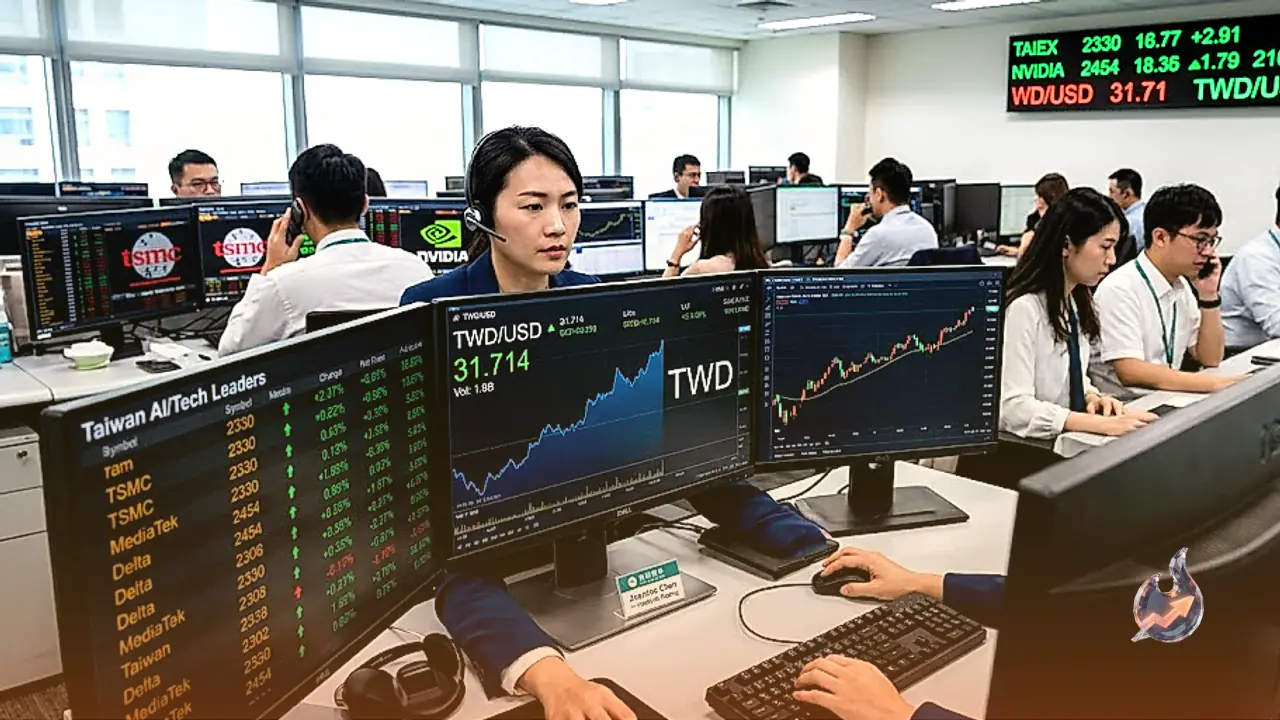

















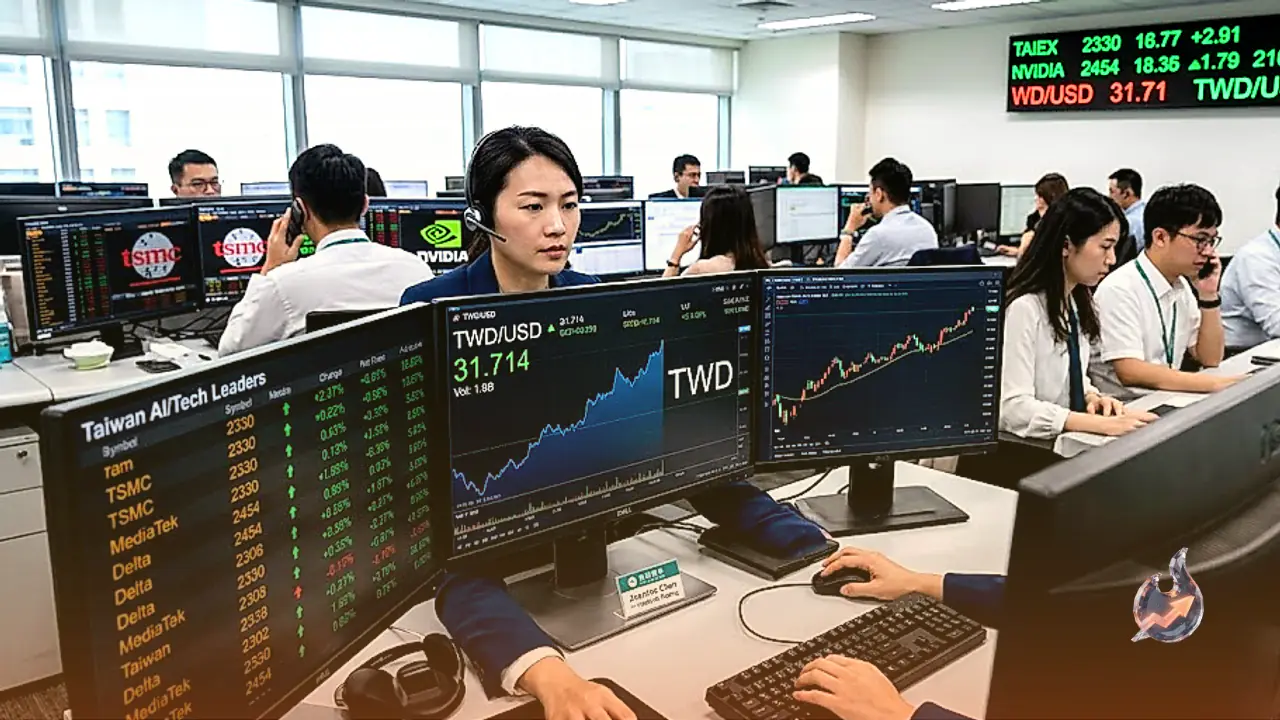

The Taiwan Dollar (TWD) posted notable gains in foreign exchange markets, briefly touching the 31.71 mark against the US Dollar (USD). The currency's upward trajectory has been propelled by robust foreign portfolio inflows and strong domestic equity performance tied to artificial intelligence and semiconductor manufacturing themes. Although early session advances were partially trimmed as trading progressed, the underlying momentum highlights how closely the island's exchange rate is tracking global appetite for cutting-edge technology assets.
Foreign Portfolio Buying Powers Currency Strength
Surging global corporate spending on artificial intelligence computing infrastructure has reinvigorated Taiwan's export-oriented electronics manufacturing sector. This renewed technology boom has funneled substantial international capital directly into domestic stock markets, creating sustained demand for local currency conversion. Strategists Sim Moh Siong and Christopher Wong noted that foreign buying patterns warrant careful monitoring, observing that if renewed interest in tech and AI themes continues to attract portfolio inflows, Taiwan's strong export cycle may translate into more pronounced support for the Taiwan Dollar.
However, currency analysts emphasize that the currency's upward journey will not be entirely unobstructed. Outflows initiated by domestic residents seeking overseas investment returns, alongside potential central bank smoothing actions intended to curb excessive foreign exchange volatility, are anticipated to temper the velocity of the currency's rise.
Technical Indicators and Key Chart Levels
From a technical charting standpoint, the bullish trend on the daily timeframe remains intact, yet signals of fatigue are emerging. The Relative Strength Index (RSI) has turned downward, indicating that a period of price consolidation could materialize before any renewed directional push. Technical levels show immediate floor support established around 31.70 to 31.71, where the 21-day and 200-day daily moving averages intersect with the 61.8 percent Fibonacci retracement of the 2026 low-to-high move. Conversely, overhead resistance is situated between 31.83 and 31.86, aligning with the 100-day moving average and the 50 percent Fibonacci retracement barrier.
Broader Foreign Exchange Divergence
Cross-currency dynamics across the Asia-Pacific region reflect broader shifts driven by divergent monetary policies and global trade politics. The Australian Dollar (AUD/USD) extended its downward slide, breaching below the critical 0.7100 support zone to reach a three-day low. The Greenback's broad-based resilience kept the Aussie under selling pressure as market participants positioned portfolios ahead of Thursday's high-stakes summit between Donald Trump and Xi Jinping.
Concurrently, the Japanese Yen faced ongoing structural challenges. The USD/JPY currency pair traded near 157.50 during Tuesday's Asian trading window. Although persistent fears of official government currency intervention helped cap steeper Yen losses, the Bank of Japan's latest monetary step failed to ignite a durable rally. The Bank of Japan raised its short-term interest rate target from 1.00 percent to 1.25 percent via a 7-2 vote, reaching a 31-year high in its multi-stage monetary normalization path. Because this rate adjustment aligned fully with widespread market expectations, it did little to counter the supportive tailwinds provided to the US Dollar by a hawkish Federal Reserve stance and escalating Middle East geopolitical frictions.
Gold Advances Despite Greenback Strength
Amid erratic currency swings and ongoing geopolitical strains, gold demonstrated notable resilience. Spot bullion regained positive traction on Tuesday, climbing steadily toward the significant $4,400 per troy ounce threshold. The precious metal advanced even as the US Dollar attracted renewed buying interest and US Treasury yields delivered a mixed performance, underscoring ongoing safe-haven demand across international capital markets.