





















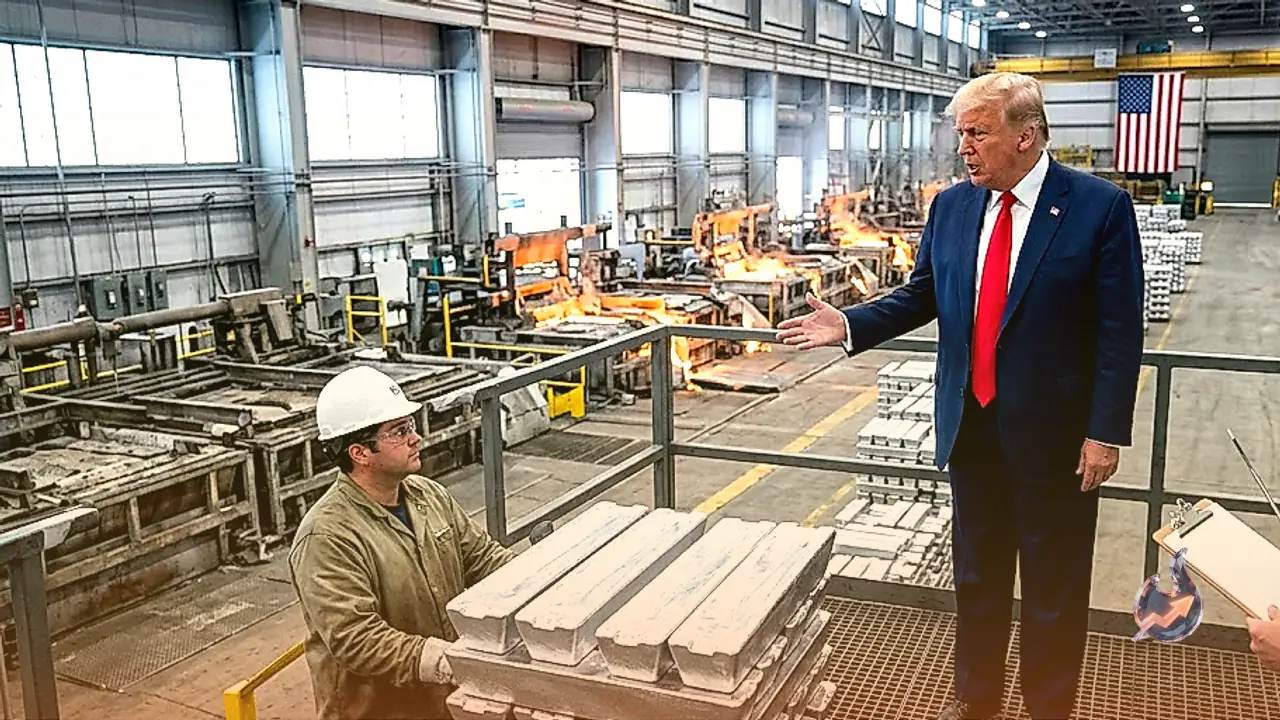

The Trump administration's recent legislative amendments to the Section 232 aluminium tariffs are explicitly designed to spur heavy capital investment in domestic smelting operations across the United States. However, financial analysts and commodity strategists at ING maintain that these policy tweaks must be interpreted strictly as a long-term industrial strategy, rather than an immediate fix for the country's ongoing metal supply deficits. The newly introduced tariff changes offer a highly specific financial incentive aimed at corporate producers: manufacturing companies that formally commit to building new facilities, expanding existing infrastructure, or refurbishing dormant US smelting capacity will be legally eligible to import qualifying volumes of raw aluminium at a significantly reduced tariff rate of 25%. This represents a steep and lucrative discount from the standard 50% tariff rate that would otherwise apply. This two-tiered tariff system aims to offset the massive capital expenditures and operational risks required to restart aging smelters or construct entirely new industrial facilities.
The Reality of US Primary Aluminium Production
Despite multiple years of protective trade measures and baseline tariffs originally designed to aggressively shield domestic producers from foreign competition, the US primary aluminium sector has nonetheless experienced a prolonged operational decline. Currently, the entire country relies on just four operating primary aluminium smelters, a stark reduction from historical highs. This severe contraction in domestic smelting capacity means that the United States is now structurally dependent on imported aluminium to meet the massive daily demands of its automotive, aerospace, and commercial construction industries. Financial experts emphasize that the latest tariff adjustments, while economically significant, are highly unlikely to trigger any material changes in the near-term supply and demand dynamics of the US market. Rebuilding heavy industrial capacity is a notoriously slow, capital-intensive process, requiring several years of planning and physical construction before a single new commercial ton of metal can be successfully poured.
Impact on Midwest Premiums and Future Market Outlook
Because the US industrial market cannot immediately substitute foreign metal with domestic production, industry experts firmly believe the country's heavy reliance on international imports will persist for the foreseeable future. This ongoing structural deficit is expected to keep Midwest aluminium premiums—the specialized surcharge that domestic buyers must pay on top of the benchmark global exchange price simply to secure physical delivery of the metal within the United States—exceptionally well supported. If the administration's long-term industrial policy eventually proves successful, it could theoretically pave the way for a gradual, sustainable revival of the American primary aluminium industry. However, until meaningful new capacity comes online and reaches full commercial production levels, US buyers and manufacturers will continue to navigate a tight domestic market that remains heavily influenced by international trade flows and elevated premium pricing structures.
British Pound Struggles Following Softer UK Inflation Data
Shifting focus to the global foreign exchange markets, the British Pound has noticeably struggled to gain any significant upward traction against the US Dollar throughout the latest trading sessions. During Wednesday's market hours, the GBP/USD currency pair remained heavily suppressed, persistently staying below the critical threshold of 1.3400 in the second half of the day. The British currency's sluggish performance is heavily tied to the latest macroeconomic inflation data officially released out of the United Kingdom. The UK's annual Consumer Price Index (CPI) inflation officially cooled more than analysts had initially anticipated, dropping down to a rate of 2.6% for the month of June. This closely watched figure came in noticeably below the broader market's consensus forecast of 2.7%. The softer-than-expected inflation reading has effectively altered market expectations, making it increasingly difficult for the British Pound to gather any sustained recovery momentum.
Euro Confined to Narrow Range Ahead of Crucial ECB Decision
In a very similar vein to the British Pound, the Euro has seen highly muted and restricted price action, with the EUR/USD currency pair trading in a very tight and narrow market channel hovering right around the 1.1400 price level on Wednesday. The global currency markets are currently experiencing a notable lull in high-impact macroeconomic data releases, prompting institutional traders and retail investors alike to adopt a cautious stance. Furthermore, escalating geopolitical tensions in the Middle East have broadly capped the Euro's upside potential, as international investors actively shy away from riskier assets and volatile currency pairs. Market participants are primarily sitting on the sidelines, waiting intently for Thursday's crucial monetary policy announcements from the European Central Bank (ECB). The upcoming ECB decisions will provide critical, market-moving insights into the central bank's future trajectory regarding benchmark interest rates.
Gold Surges Uncontrollably Amid Geopolitical Tensions and Rising Oil
In stark contrast to the sluggish fiat currency markets, precious metals are currently experiencing a powerful and sustained upward rally. Gold prices have aggressively extended their market gains for a fourth consecutive trading day, breaking out and standing comfortably above the historic 4,100 dollar price level. The yellow metal appears entirely unfazed by the broader risk-off sentiment currently permeating other global asset classes. This relentless price surge is being primarily fueled by rapidly escalating geopolitical tensions centered in Iran, which have driven a massive, global flight to safety among institutional investors. Additionally, higher global crude oil prices are heavily contributing to the overall market anxiety regarding inflation. The precious metal has already rallied by nearly 2.5% so far this trading week alone and is perfectly on track to record its absolute best weekly performance in more than three full months, deeply underscoring the intense market demand for safe-haven assets.