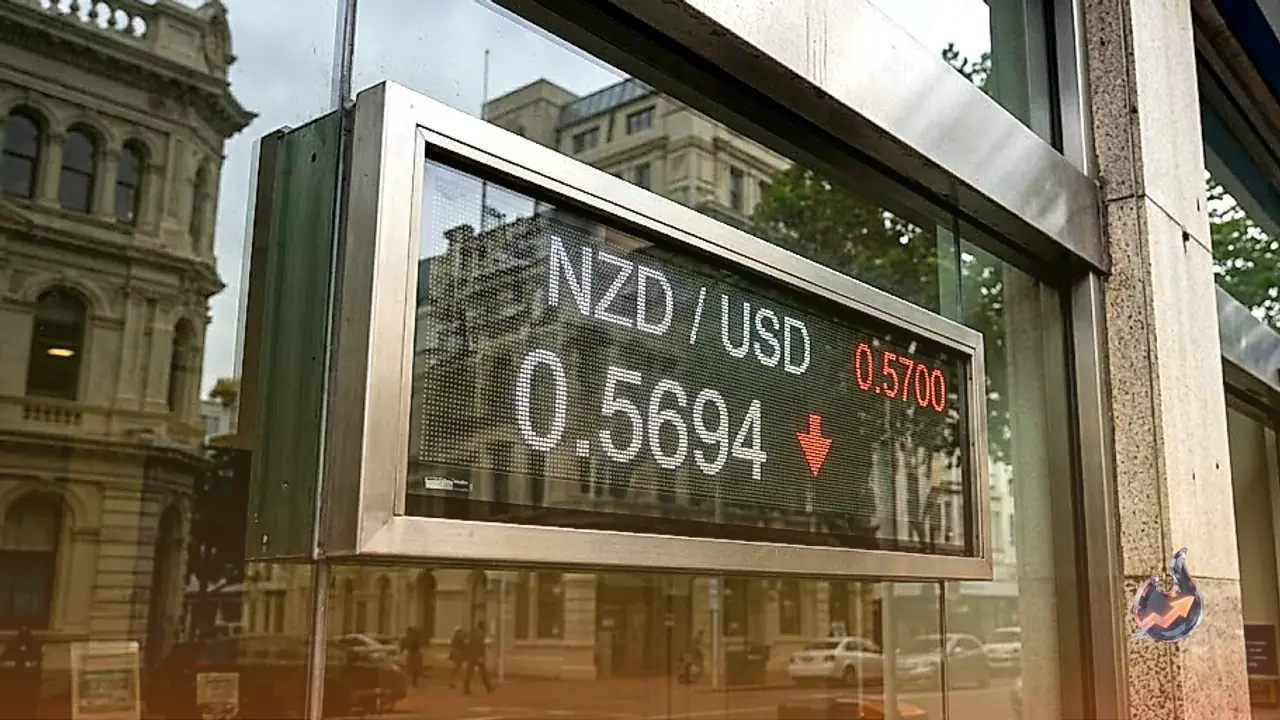

























Global foreign exchange markets witnessed pronounced shifts on Tuesday, October 20, as the British Pound outperformed its primary peers following the release of encouraging domestic employment figures. Sterling demonstrated noticeable strength across the board, recording its sharpest appreciation against the US Dollar. Concurrently, the American currency found itself contending with downside pressure as retreating benchmark Treasury yields dismantled the brief momentum it had established earlier in the week, prompting market participants to recalibrate their currency exposures ahead of crucial economic announcements.
Yield Retracement Leaves US Dollar Vulnerable
The greenback had initially mounted a modest stabilization on Monday, recovering from early softness to settle virtually flat by the close of the North American session, propelled by a short-lived bounce in United States Treasury bond yields. That defensive recovery proved transient by early Tuesday trading. The benchmark 10-year US Treasury yield backed down toward the 5.1% threshold, and the US Dollar Index lingered in negative territory beneath 101.80. Cross-currency heat maps, which measure percentage shifts across primary pairs by matching base and quote denominations, highlighted widespread moderation in greenback demand. Currency desks noted that the ongoing softening in yield support has curtailed aggressive dollar accumulation, leaving investors hesitant to push long positions without fresh macro catalysts.
French Political Discord Strains Eurozone Stability
Across the English Channel, escalating political instability in France has thrust European monetary authorities into a complicated operational predicament. Market strategists at Rabobank observed that the prevailing unrest within the French political establishment confronts the Eurozone with a stark, whispered realpolitik binary. Under their assessment, the European Central Bank (ECB) could theoretically step in to bail out France should severe fiscal stress emerge, but such an intervention would arrive at the heavy expense of the Euro currency itself and provoke immense resistance from Germany. Alternatively, should Frankfurt elect to withhold emergency balance-sheet backstops, the abstention would directly jeopardize the broader economic, institutional, and capital-market stability across the European Union.
Rabobank analysts extended their critique by questioning whether the ECB possesses the capability to insulate and bail out the remainder of the monetary union from French contagion while leaving authorities in Paris entirely to their own devices to resolve the domestic quagmire. In their institutional assessment, whatever trajectory materializes, elevated market volatility appears significantly more probable than any swift reversion to historical averages. Global market participants therefore remain exceptionally tuned to any fresh deterioration in French sovereign risk dynamics alongside the subsequent policy responses crafted by the central bank.
Monetary Mechanics and the British Pound's Structural Foundations
The British Pound Sterling occupies an enduring position within global commercial history. Originating in 886 AD, it stands as the oldest circulating currency in existence and functions as the statutory monetary medium of the United Kingdom. Liquidity metrics from 2022 establish it as the fourth most heavily exchanged currency worldwide, commanding approximately 12% of total foreign exchange turnover with average daily clearing volumes hovering at $630 billion. The currency's most vital trading pairing is GBP/USD, widely designated across dealer desks as the 'Cable', which accounts for roughly 11% of all foreign exchange transactions. Secondary key conduits include GBP/JPY, traditionally labelled the 'Dragon' by market participants and representing 3% of activity, followed by the EUR/GBP cross at a 2% market share. The sole authority responsible for minting and managing the volume of Sterling is the Bank of England.
The foundational driver steering the trajectory of the British currency is the monetary regime pursued by the Bank of England. The central bank governs policy through the prism of its statutory price stability mandate, which targets an annualized consumer price inflation rate anchored near 2%. The operational mechanism deployed to fulfill this objective is the systematic calibration of benchmark lending rates. When domestic inflation overshoots the official boundary, monetary officials typically elevate interest rates, deliberately escalating credit costs for commercial enterprises and households to dampen aggregate consumption. Such restrictive settings tend to support the British Pound, as wider yield differentials attract cross-border capital seeking favorable yields within the UK financial system.
Conversely, persistent disinflation signifies anemic demand conditions, compelling monetary authorities to trim lending rates to reduce capital costs and stimulate productive business investment. Broader macroeconomic indicators serve as constant guideposts for Sterling valuations. Periodic publications regarding Gross Domestic Product (GDP), purchasing managers indexes (PMI) spanning the manufacturing and services segments, and employment tallies generate direct market revaluations. Resilient domestic metrics boost foreign capital absorption and validate policy tightening, fostering Sterling gains, while negative surprises typically depress currency values. Furthermore, the national trade balance, measuring the net disparity between merchandise exports and foreign imports over a defined duration, remains vital. Robust overseas appetite for British exports necessitates ongoing conversions into Sterling, creating direct foreign-exchange demand that strengthens the net external value of the currency.
Yen Fluctuations, Regional Asian Currencies, and Commodity Adjustments
In Asian market trading, USD/JPY struggled to maintain upward traction, softening toward the 158.00 vicinity on Tuesday following its positive finish on the preceding Friday. The pair later demonstrated consolidation near 158.50. Market commentary from Japanese Finance Minister Satsuki Katayama clarified that administration officials have not finalized decisions regarding funding mechanisms for anticipated expansions in national defense expenditures. The Finance Minister noted that policymakers intend to examine measures that secure durable fiscal resources while maintaining a disciplined focus on long-term budgetary sustainability. Meanwhile, foreign exchange traders showed an inclination to stay on the sidelines ahead of the critical National Consumer Price Index inflation figures scheduled for release on Friday. While elevated United States sovereign yields continue to lend underlying structural support to the Dollar against the Japanese Yen, caution ahead of the price report tempered further directional commitments.
Concurrently, AUD/USD advanced toward the 0.7000 threshold during the Asian session, supported by a mild pickup in investor sentiment and the broad pause in the dollar's upward path. Market analysts noted, however, that persistent geopolitical hazards alongside protective positioning ahead of quarterly earnings releases from leading artificial intelligence technology enterprises may constrain meaningful upside follow-through for the Australian unit.
Within the raw materials and digital asset spaces, commodity contracts reflected shifting capital flows. Gold prices retreated toward $4,120 per ounce during the initial European trading window, encountering steady liquidation pressure stemming from previous yield rebounds and ascending crude oil benchmarks. The 10-year US Treasury yield stood roughly 0.35% lower near 5.13%, as investors braced for impending third-quarter (Q3) corporate earnings filings from major American hyperscalers. In the cryptocurrency domain, NEAR Protocol fell by nearly 2% on Tuesday, matching a similar 2% downturn observed during the preceding session. Despite short-term price slippage, institutional commitments appeared resilient, underscored by Bitwise's NEAR-dedicated Exchange Traded Fund (ETF), which recorded fresh capital inflows exceeding $5 million on Monday.