


















Following three years of regional warfare, Israel is heading into a political confrontation that citizens across the country long anticipated. The general election scheduled for Tuesday arrives over an intensely divided populace bracing for a momentous struggle. Final opinion polls released ahead of the legal blackout revealed that the incumbent governing coalition and the primary opposition bloc are locked in a virtual dead heat. Approximately half a million young Israelis are preparing to cast their ballots for the first time, alongside an estimated 70,000 citizens flying in from overseas specifically to participate in the vote. Opposition momentum was on full display on Saturday night in central Tel Aviv, where vast assemblies demanded an immediate change in national leadership. Among the demonstrators, 21-year-old Omri stated that his vote was driven by a desire for peace, security, an end to institutional corruption, and the removal of religious extremism from power.
The electoral campaign has been energized by novel campaign instruments, such as AI-generated videos aimed at capturing public attention, as well as the emergence of a fresh political contender. Gadi Eisenkot presents a striking contrast to the combative, media-centric style of Israel's longest-serving prime minister, Benjamin Netanyahu. Originating from a working-class Moroccan background, the former military chief of staff remains relatively new to the political arena, known primarily for his restrained temperament and deliberate aversion to public theatrics. This low-profile stance has led observers to describe him as an atypical non-politician. Nonetheless, Eisenkot and his centrist Yashar party have consistently challenged Likud for the leading position in survey results, turning an already tense race into an existential referendum on the nation's democratic path.
Contrasting Personalities and Political Profiles
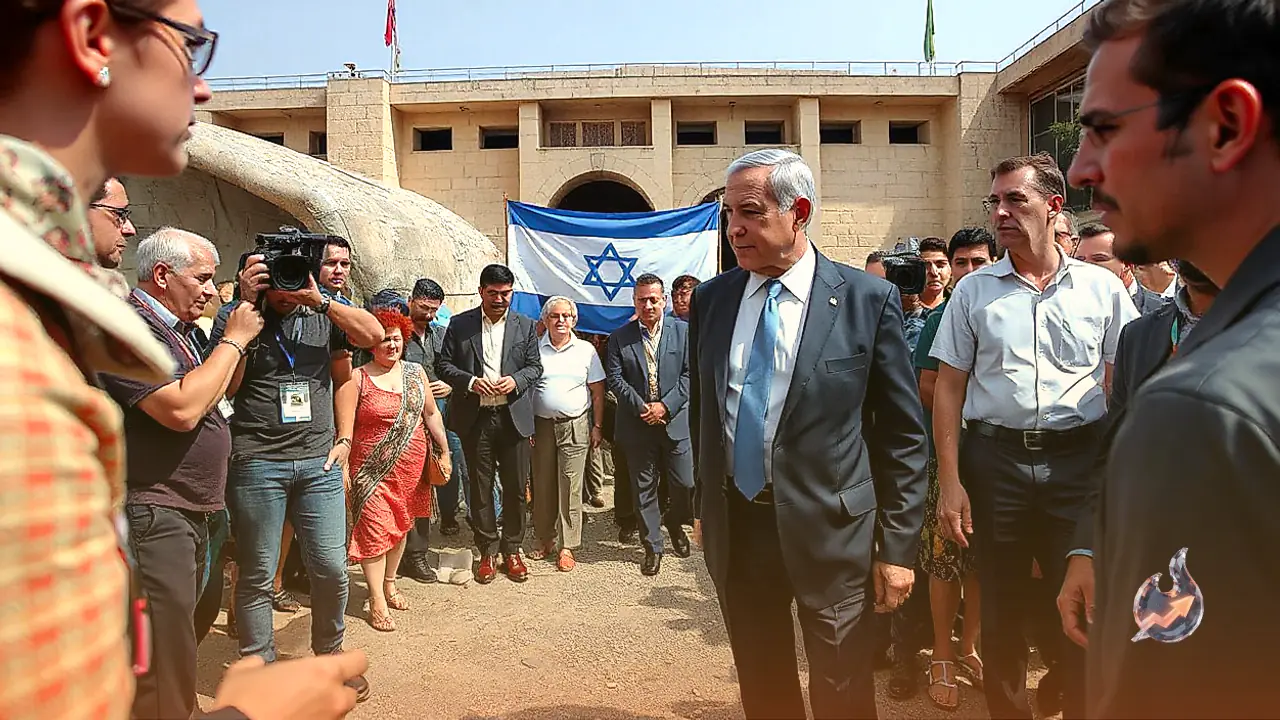
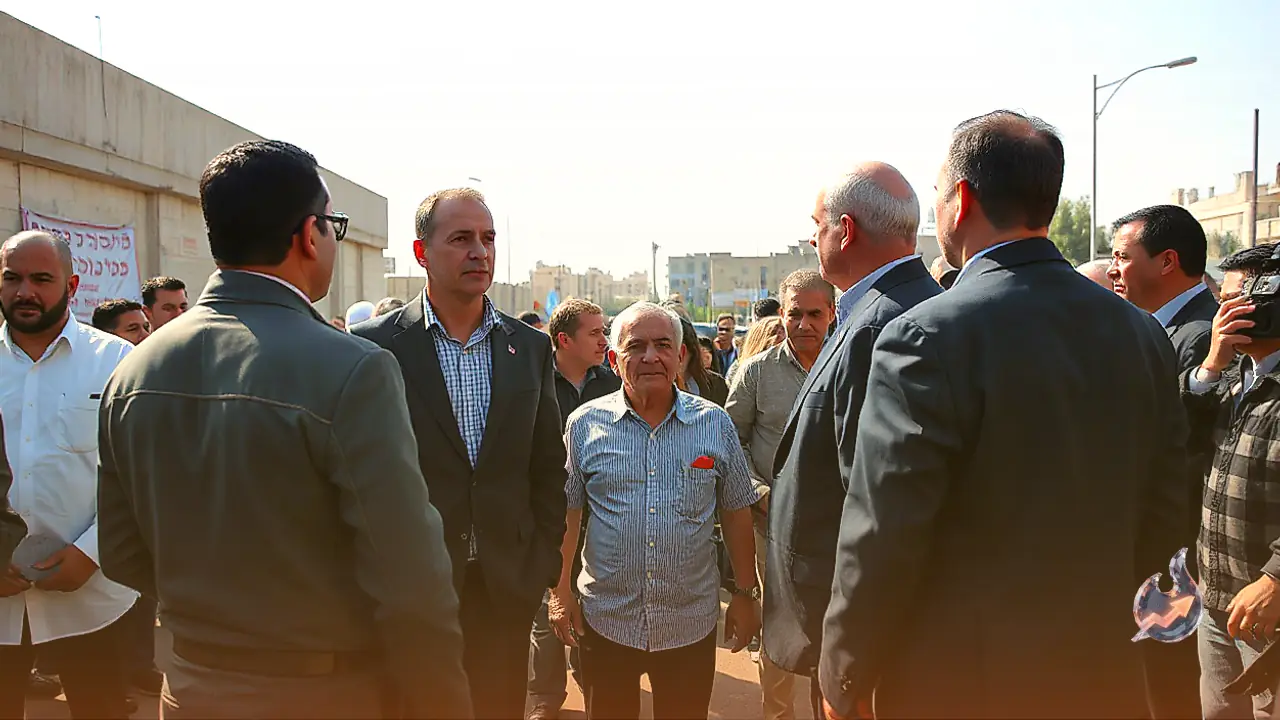
While the mechanics of Israeli governance require assembling complex parliamentary coalitions rather than securing a single-party majority, the remarkably close polling numbers have elevated the stakes. During an appearance at a community centre for Ethiopian Jews in Ramle, Eisenkot moved through a perimeter of security personnel and political advisers. A local attendee named David remarked on the candidate's demeanor, noting that Eisenkot maintains direct eye contact and demonstrates genuine empathy rather than exhibiting the detached posture typical of career politicians. This public perception has become one of Eisenkot's most potent assets. Having lost his own son in the Gaza War, the former general has positioned himself as an authentic voice from the nation's geographic and economic periphery rather than a member of the affluent urban establishment.
His Moroccan heritage drew intense media scrutiny earlier in the month following a televised debate, during which a pro-Netanyahu commentator directed an ethnic slur at him, labeling him a Moroccan monkey. Addressing the assembly in Ramle, Eisenkot outlined his worldview, arguing that the election spans security, economic well-being, and education, but ultimately hinges on the core identity of the state itself. He articulated a vision of Israel as a Jewish, democratic, liberal, tolerant, and egalitarian nation. This rhetoric directly appeals to opposition voters who view Netanyahu's tenure as an acute hazard to institutional norms, pointing specifically to judicial overhaul initiatives and his refusal to authorize a state commission of inquiry into the 7 October 2023 attacks, which the prime minister claimed would be biased against him within the Supreme Court.
The Shadow of 7 October and Competing Security Doctrines
In an effort to win over right-leaning voters from Netanyahu's Likud base, Eisenkot and fellow opposition figures have made the establishment of an independent state inquiry a primary campaign pledge, a proposal backed by over 70% of Jewish Israeli citizens according to recent survey data. Eisenkot has likewise pledged to enforce judicial mandates regarding the mandatory military conscription of ultra-Orthodox men, a policy stance that commands widespread support across both centrist and traditional right-wing demographics. In response, Benjamin Netanyahu has anchored his re-election platform almost exclusively on national security under the uncompromising banner of 'No Surrender'.
The prime minister has consistently characterized his rivals as ill-equipped to safeguard the country, seeking to mobilize right-wing concerns by suggesting that Jewish opposition factions might rely on Arab political parties to establish a governing majority. Netanyahu has asserted that such a coalition could compromise core defense priorities. Arab citizens comprise roughly one-fifth of the Israeli populace, with many identifying as Palestinian citizens of Israel. This vote represents the very first national election conducted since the 7 October incursions, in which armed groups coordinated by Hamas breached border fortifications, killing numerous people and abducting 251 hostages into Gaza. While recognized as the nation's most catastrophic intelligence and defense breakdown, Netanyahu is pursuing another term on the assertion that his leadership remains indispensable to state survival.
Shifting Alignments and Hardening Electorate
In a basement gathering spot at Jerusalem's Mahane Yehuda market, committed Netanyahu backer Shlomi Bashar argued that the catastrophe would have been averted had military commanders alerted the prime minister sooner. While acknowledging partial executive responsibility, Bashar contended that Netanyahu fundamentally reshaped regional dynamics following the assault, emphasizing that multi-front campaigns across Gaza, Lebanon, and Iran dismantled long-standing existential perils. Bashar maintained that the prime minister must be retained in office to conclude these military operations, praising his international standing and strategic resolve. Yet despite this steadfast base, voter support for Likud indicates signs of erosion, with some moderates moving toward Eisenkot and others drifting toward harder right-wing alternatives.
In Sderot, located directly adjacent to the Gaza frontier, Lt Col (Res) Eyal Hajbi heads the regional civil defense network. Having suffered the loss of multiple comrades and associates during the initial assault, Hajbi burns commemorative candles daily within his headquarters and noted that these memories would guide his ballot. Looking across the frontier toward northern Gaza, where sustained military operations reduced Beit Lahia and Beit Hanoun to rubble, Hajbi voiced a total transformation in his political perspective, endorsing the total destruction of those areas. A lifelong Likud supporter, Hajbi confirmed that his family has decided to vote for Otzma Yehudit, the far-right party headed by Itamar Ben Gvir, citing a collective hardening of convictions that eliminates previous political hesitation.
Youth Demographics and the Border Communities
Election tracking indicates that under 10% of the electorate remains undecided, with minimal movement occurring across the boundary separating the coalition and opposition blocs. Itamar Ben Gvir, serving as National Security Minister in the cabinet, has made substantial gains among younger demographics through active social media messaging. A survey published on 9 October by Yedioth Ahronoth revealed that over 16% of first-time Israeli voters favor far-right political parties. In Sderot, four 18-year-old students attending a local religious academy explained that the 7 October assault transformed their worldview far more radically than that of their parents, leading all four to back the Religious Zionism party led by Finance Minister Bezalel Smotrich.
One student, Aviad Elmahach, argued that younger citizens recognize that peaceful negotiations have failed, contending that while older generations cling to outdated frameworks, the youth favor uncompromising physical dominance as the only route to victory. He explained that their support for Smotrich stems from a belief in retaining territorial control through strength without offering diplomatic concessions to Palestinians, of whom more than 74,000 have been killed in Gaza during the conflict according to the Hamas-administered health ministry, data regarded as credible by the United Nations. Further south, residents in devastated border kibbutzim such as Nir Oz, historically aligned with the political left, are gradually returning. Gal Pauker, who lost his grandfather Gideon in the attack, operates a weekend wine spot along the vineyard perimeter, while his mother Galia advocates for Eisenkot to bring humanitarian decency back to government. Her son weighs supporting Eisenkot against backing the Democrats party led by former general Yair Golan, noting that economic, healthcare, and educational challenges require urgent domestic attention alongside security.
Coalition Math and Looming Deadlock
The ideological clash between defense readiness and democratic preservation remains deeply entrenched, magnified by the memory of 7 October and four years under the most right-leaning administration in Israeli history. Nevertheless, on fundamental geopolitical dilemmas, policy daylight between the governing coalition and mainstream opposition figures remains limited. Eisenkot has committed to dismantling Hamas administration over Gaza within an 18-month timeline through a United States-sponsored framework or direct military pressure. Furthermore, leading opposition figures endorse retaining Israeli settlements across the occupied West Bank, which expanded substantially under the current cabinet despite violating international legal conventions. None have endorsed genuine Palestinian statehood, with Eisenkot discussing limited autonomy under overarching Israeli defense control.
With Jewish opposition blocs largely ruling out formal partnerships with Arab political factions, Tuesday's vote carries a significant likelihood of parliamentary deadlock. Given that Arab lists could hold the balance of power, the refusal to establish cooperative governance may leave neither primary bloc able to assemble a functional 61-seat majority. Against a backdrop of renewed warnings from Netanyahu regarding Iranian threats, opposition alerts over administrative irregularities, and concerns raised by human rights monitors regarding West Bank settler aggression, the country stands on the precipice of unresolved political instability alongside persistent security dilemmas.