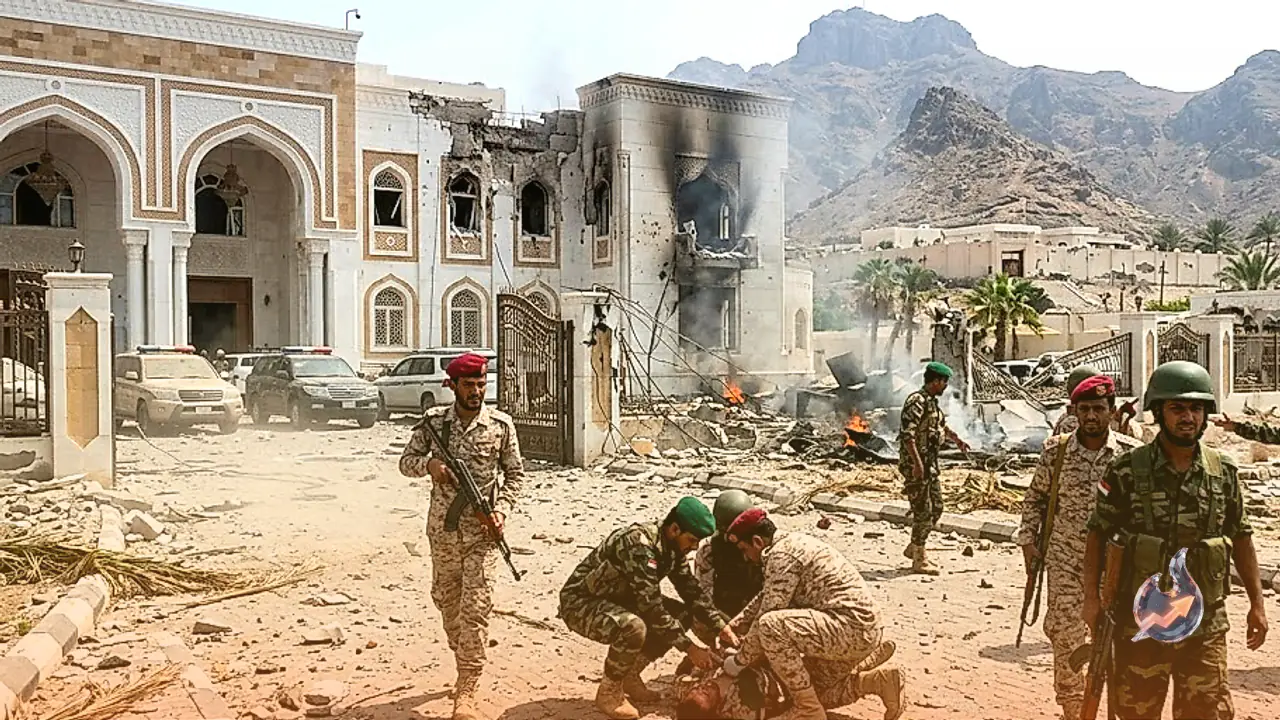

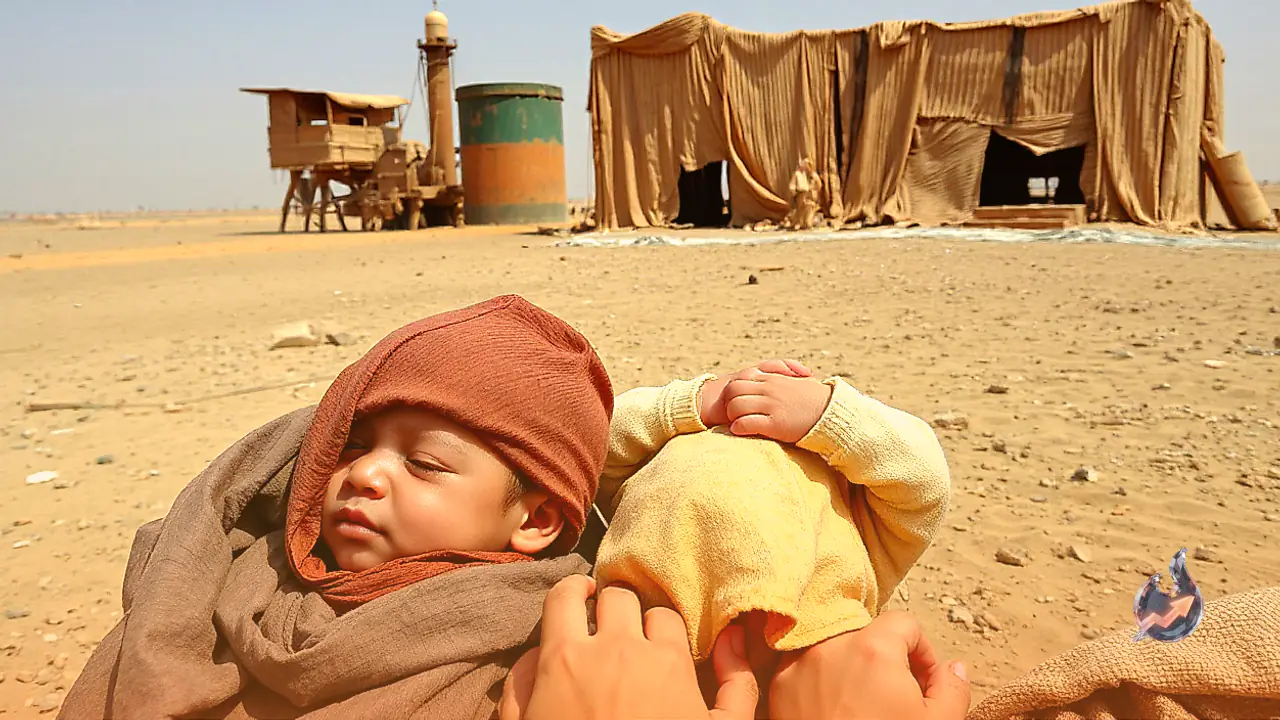



















Just seven weeks after entering the world prematurely, twin infants Raghad Hassan and her brother Raad are locked in a desperate battle for survival. Their premature birth coincided with an intense escalation in Yemen's protracted civil war, which pits Houthi rebel fighters against government forces. When Houthi units advanced into their home village located in the Kahboub mountains of south-west Yemen, a family of seven was forced to flee under a barrage of bombs, missiles, and drone strikes, with the newborn twins shielded only by blankets.
What followed was an arduous three-day trek on foot toward the port city of Aden. Their father, Bajash Ali Sagir Hassan, a softly spoken shepherd, described the journey as extremely difficult, noting that transportation was entirely unavailable. On the fourth day, a compassionate stranger finally offered them a ride after numerous others had turned them away. According to their mother, Lina, the infants grew steadily weaker as the family walked, enduring bitter cold, choking dust, and rapidly worsening bouts of vomiting and diarrhea.
By the time the displaced and homeless family reached al-Sadaqah hospital in Aden, the twins were on the brink of death. A doctor shook his head upon seeing their wasted limbs, describing them as reduced to mere skin and bone. Raad was in the more critical condition, his ribs prominently protruding and his chest heaving with rapid, shallow breaths. He was scarcely larger than the hands of the nurse who tenderly carried him off to be weighed and measured.
Standing nearby, Bajash wore an expression of deep anxiety. He explained that while the twins were supposed to be fed twice daily, soaring milk prices driven by the war often forced him to substitute baby milk with plain water. Medical staff quickly diagnosed the infants with severe acute malnutrition, a condition as lethal as any battlefield bullet. The United Nations reports that more than 250,000 people have been displaced over the preceding three months.
This surging hunger represents a crisis within a crisis, functioning as another devastating frontline in the civil war. While food insecurity preceded the current flare-up, it is expanding rapidly alongside the renewed bloodshed. The United Nations indicates that roughly 800,000 individuals are presently cut off from lifesaving aid following the collapse of an informal ceasefire during the summer months. Since that breakdown, Houthi forces have launched a rapid advance along the Red Sea coast and completely blockaded Taiz, Yemen's third-largest city. The UN warns that civilians there face grave risks and severe food shortages due to skyrocketing prices.
Meanwhile, the internationally recognized government attempts to mount a defense against the advancing Houthis, bolstered by Saudi air strikes. Caught directly in the crossfire are parents like Bajash, who scramble desperately to secure medical assistance. Healthcare workers confront these overwhelming demands daily, managing a facility where resources are severely constrained. Supervising nurse Aisha Ragab, who herself fled the fighting in 2018, stepped in to help Bajash secure an admission slip, determined to arrange a shared bed for the twins to ensure they received urgent treatment.
Inside the malnutrition ward, surrounded by pink walls and locked doors, staff explained that only the 13 most critical cases can be admitted at any given time out of a 22-bed capacity, due to chronic shortages of international funding, personnel, and medical equipment. Dr Noor Mohammed, a harried young physician, expressed deep frustration over losing patients simply because the facility lacks proper ventilation machines, oxygen tanks, and essential laboratory diagnostic tools.
The ward functions as a relentless cycle of suffering where discharged infants frequently return within days or weeks because impoverished parents cannot afford basic nutrition, vitamins, or antibiotics. Bajash, who lost his livelihood as a shepherd and had to leave behind his ten sheep when fleeing, now spends his time caring for his three other young children under the age of five. With no lodging or baggage, the family has been forced to sleep on the streets outside the hospital, bearing the invisible scars of a conflict that is disfiguring an entire generation.