



















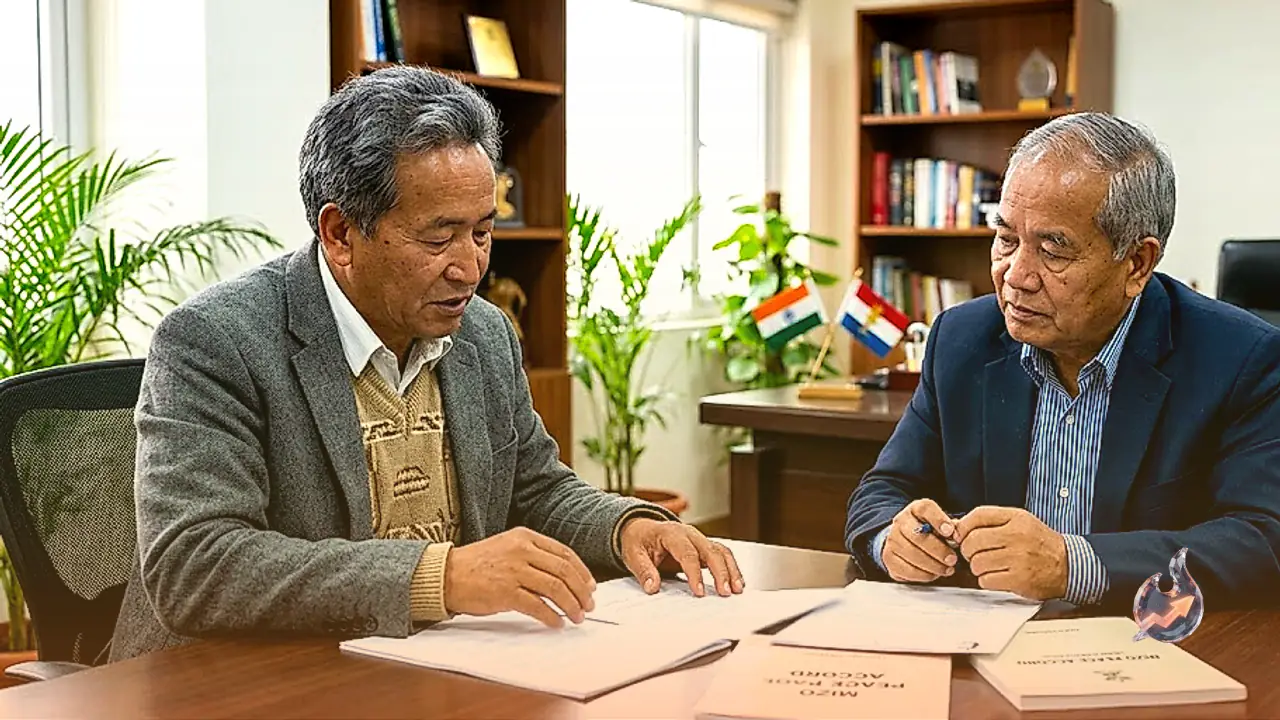

Ladakh-based social activist Sonam Wangchuk held a comprehensive ninety-minute meeting with Mizo National Front (MNF) president and former Mizoram chief minister Zoramthanga at Mizoram House in New Delhi. The high-level interaction focused on conflict resolution, regional governance, and contemporary national affairs. A central focus of Wangchuk's visit was examining the mechanisms of the historic Mizo Peace Accord that successfully brought an end to prolonged insurgency in the northeastern state.
Deliberations on National Affairs and Youth Priorities
The bilateral discussion, held on Monday, explored contemporary governance challenges and the aspirations of young citizens across different regions of India. Reflecting on the dialogue, Zoramthanga wrote on X that their conversation covered broad national and regional political landscapes, international affairs, and urgent questions facing the youth today. The veteran leader expressed deep appreciation for Wangchuk's visit, describing the exchange as both warm and productive.
Examining the Memorandum of Settlement as a Peace Model
According to an official statement issued by the MNF on Wednesday, Wangchuk conveyed a keen interest in analyzing the structural blueprint of the Memorandum of Settlement that restored complete peace in Mizoram. Wangchuk noted his desire to study Mizoram's successful peace settlement and learn directly from the strategic experiences of Zoramthanga, who played a central role in formalizing the Mizo Peace Accord. The documentation and institutional compromises that paved the way for civilian stability remain central to academic and administrative interest.
Central Coordination and Inclusive Stakeholder Engagement
During the session, Zoramthanga explained that the Mizo Peace Accord has gained enduring recognition as one of the most stable and successful reconciliation frameworks in contemporary history. He emphasized that the central government played a pivotal role in enabling constructive negotiations, maintaining logistical backing, and steering formal discussions. The former chief minister highlighted that building sustainable consensus demanded bringing diverse stakeholders into constructive dialogue to ensure collective ownership of the peace process.
Reflections on Transition and an Invitation to Ladakh
Drawing on decades in public life, Zoramthanga revisited his leadership journey, from heading the MNF during the decades of armed conflict to transitioning into mainstream democratic governance as party president and eventually head of the state government. He expressed hope that the principles of compromise and negotiation developed in Mizoram could serve as an effective case study for resolving friction in other frontier areas. Before concluding the meeting, Wangchuk extended an invitation to Zoramthanga to visit Ladakh.