



















State authorities in Mizoram are intensifying their crackdown on official malfeasance. Chief Minister Lalduhoma has issued explicit directives to state anti-graft bodies to accelerate investigations and resolve long-pending cases. Speaking at a specialized training program on the Prevention of Corruption Act, 1988, the Chief Minister emphasized that law enforcement agencies must act without fear or favor, ensuring that no individual found breaking the law escapes accountability.
Strengthening Anti-Graft Institutions and Infrastructure
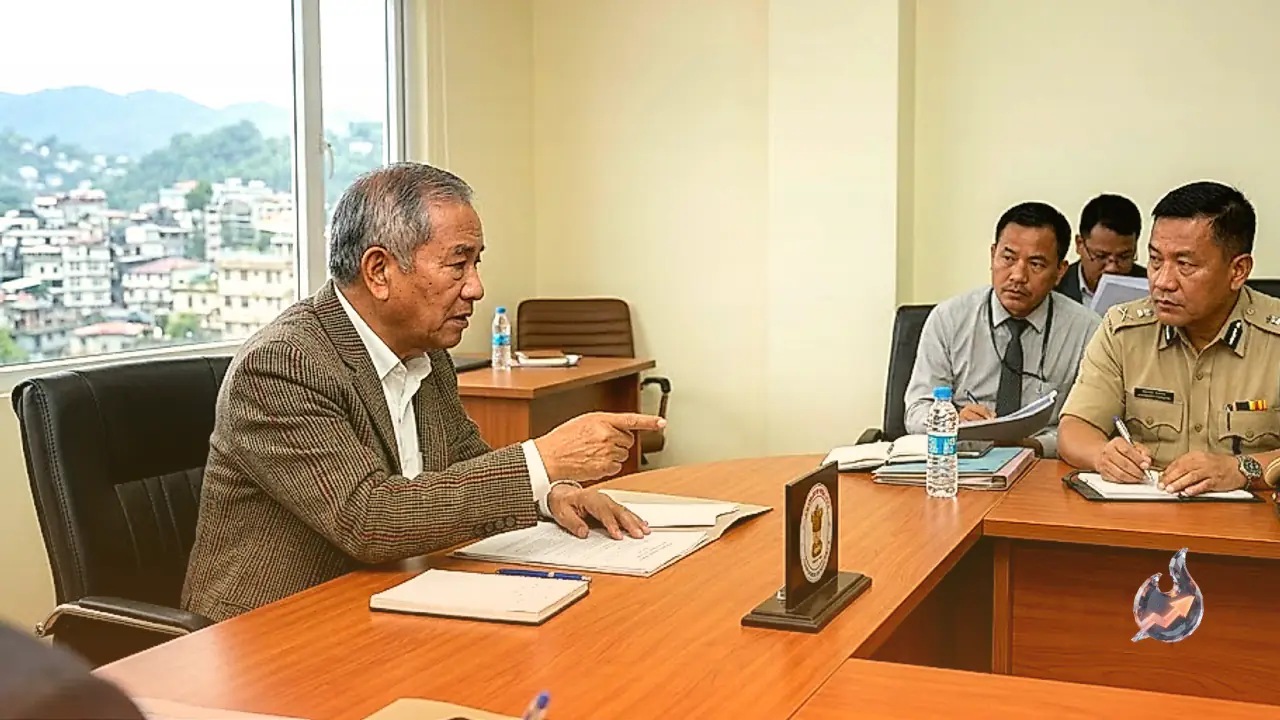
The workshop, organized by the Vigilance Department, brought together key representatives from the Mizoram Lokayukta, the Anti-Corruption Bureau (ACB), and the state police force. During the event, Chief Minister Lalduhoma reaffirmed his administration's unwavering commitment to establishing a clean, ethical, and transparent governance structure across all administrative levels. He highlighted concrete operational steps already executed to bolster the functioning of investigating authorities.
To improve field efficiency, the government has sanctioned brand new service vehicles for the Anti-Corruption Bureau and expanded official vehicle entitlements for inquiry officers serving under the Mizoram Lokayukta. Furthermore, financial support mechanisms have been revived. The special incentive allowance designated for ACB staff, which had been suspended during the COVID-19 pandemic, has been fully restored. Similar monetary incentives have now been introduced for Lokayukta inquiry officers to maintain high morale during complex investigations.
Strict Enforcement and Zero-Tolerance Mandate
Addressing the assembled inquiry officers, Chief Minister Lalduhoma noted that existing legal frameworks provide investigative teams with broad power to root out malpractices. He urged officers to exercise these statutory powers diligently, objectively, and strictly without any form of discrimination. The Chief Minister reiterated that high position or influence will not shield anyone from scrutiny, instructing investigators to maintain absolute impartiality throughout probing procedures.
The Chief Minister also called for seamless, real-time coordination between the Vigilance Department and various government branches to eliminate procedural bottlenecks. While commending ongoing efforts by anti-graft personnel, Lalduhoma expressed concern over the accumulation of uncompleted files. He instructed department heads and inquiry officers to prioritize the rapid clearance of all backlog inquiries within fixed timelines.
Administrative Support and Skill Enhancement
The high-level workshop was attended by prominent state administrators, including Chief Secretary and Chief Vigilance Officer Khilli Ram Meena, along with Director General of Police Sharad Agarwal and several senior departmental heads. The gathering focused on updating officers on statutory nuances and evidentiary standards required under anti-corruption legislation.
Chief Secretary Khilli Ram Meena outlined the core objectives of the training workshop, stating that continuous skill enhancement is critical for administrative integrity. He noted that specialized capacity building enables investigative staff to operate with higher accuracy, speed up case disposal, and foster greater teamwork and professional motivation across oversight bodies.