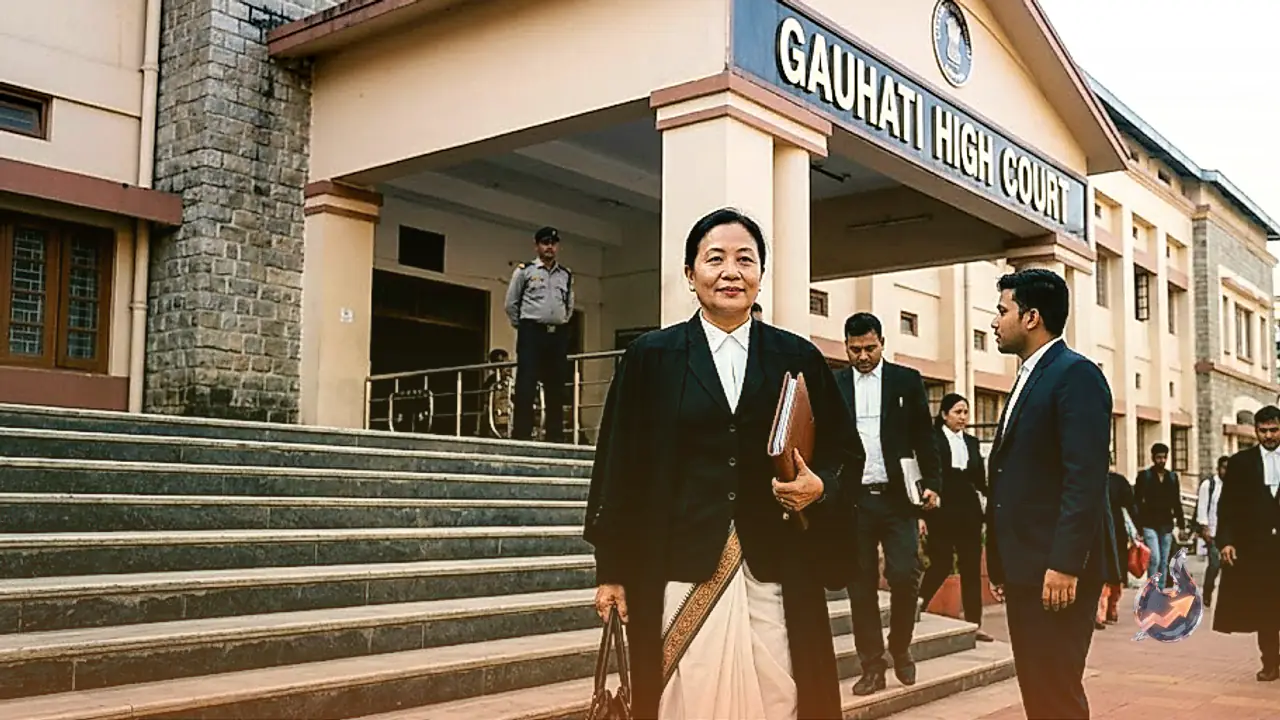























The Supreme Court on Monday instructed a Mizo woman who challenged amendments made to Mizoram’s marriage and property inheritance regulations to take her case to the Gauhati High Court, which holds jurisdictional authority over the state. The bench made it clear that local judicial avenues should be explored first before knocking on the highest court's doors.
Pritetion Filed Under Article 32
The legal challenge was brought forward by Meriam L Hrangchal invoking Article 32 of the Constitution. The petition targets specific provisions within the Mizo Marriage and Inheritance of Property (Amendment) Act, 2026, which altered the original framework laid down by the Mizo Marriage, Divorce and Inheritance of Property Act, 2014.
Bench Emphasizes Local High Court Jurisdiction
A bench consisting of Chief Justice Surya Kant alongside Justices Joymalya Bagchi and V Mohana pointed out to the petitioner's counsel that traveling all the way to Delhi was unnecessary when a functional high court exists within the region. The bench questioned the necessity of bypassing local mechanisms, noting that high courts were established precisely to address such regional legal matters and that the petition could be appropriately filed there.
Concerns Over Non-Mizo Marriages and Identity
The core grievance raised in the petition is that the updated legislative framework discriminates against Mizo women who choose to marry non-Mizo men, while also negatively impacting the legal standing and rights of their offspring. Questions have been brought to light regarding whether such unions could alter a woman's community identity, her Scheduled Tribe status, and the rights accorded to her children.
Overview of the Amended Legislation
The newly updated legislation weaves traditional customary practices into the foundation of the 2014 law while tightening various regulatory provisions. Key changes introduced by the amendment encompass a complete ban on polygamy alongside granting women an equal 50 percent share in matrimonial assets. Helen Dawngliani set to become second Mizo woman judge of Gauhati High Court highlights the ongoing judicial developments in the region. Despite these reforms, the rules governing marriages between Mizo women and non-Mizo men remain a major point of contention.