






















Flowers that are traditionally reserved for daily temple offerings and home rituals in India are now transforming into high-value agricultural commodities. In Bhagalpur, Bihar, an innovator named Manish Singh has converted the ordinary Aparajita bloom into premium blue tea, while using Hibiscus blossoms to create vibrant red tea. This venture illustrates how indigenous floral varieties, often viewed merely as wild garden plants, hold substantial commercial potential in modern health and lifestyle markets across the globe.
The Emergence of Natural Blue and Red Teas
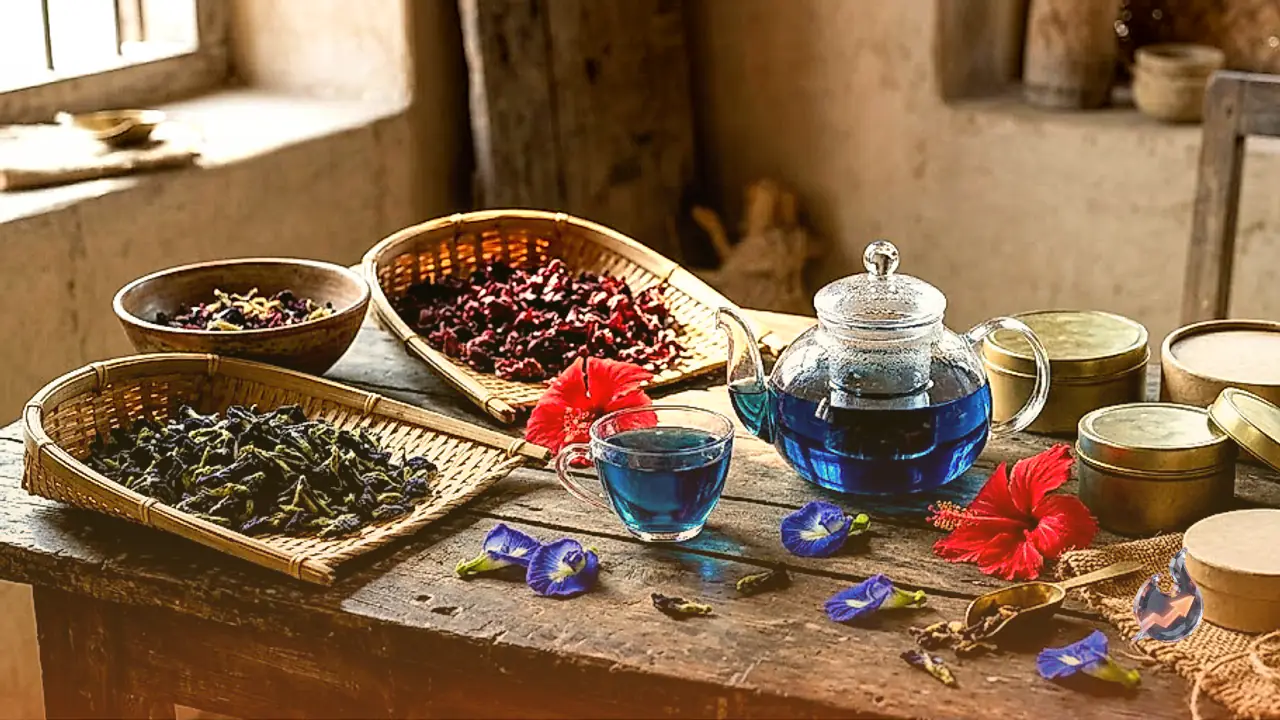
Much like conventional green tea, which has gained widespread acceptance for its wellness attributes, blue tea and red tea are brewed directly from dried flower petals. Manish Singh utilizes the deep blue Aparajita flower, also known as the butterfly pea, to produce an aromatic blue beverage, alongside red tea derived from Hibiscus petals, locally known as gudhal or adhul. Both drinks serve as therapeutic alternatives to standard caffeinated tea, offering natural mood-elevating properties and serving as restorative herbal tonics that support overall daily vigor.
Sparked by Insights at Global Trade Seminars
The inspiration behind the venture emerged during Singh's participation in multiple national and international trade seminars. Observing international consumers and industry delegates frequently ordering blue and red teas at high prices, Singh decided to investigate the origins of these trendy beverages. His research revealed that the coveted blue infusion was sourced entirely from the very Aparajita vines that grow wild across backyards and forest edges in India, while the tangy red tea originated from common Hibiscus bushes widely offered to Goddess Durga.
High Market Value and Expanding International Exports
Cultivating these flowering plants requires minimal capital expenditure, as the species thrive in natural soil environments without demanding expensive inputs or complex crop management. Despite the negligible operational costs, the yield is consistently generous. In specialty consumer markets, premium blue tea fetches rates exceeding 8000 rupees per kilogram. Capitalizing on this economic viability, Singh established a commercial entity named Jardalu and Katarni Agro Farmer. The firm has commenced exporting these herbal teas abroad, finding substantial consumer traction in nations such as Thailand and England.
Scaling Up for Domestic Commercial Orders
Alongside its international shipments, the business is now gearing up to serve institutional clients within India. Two commercial enterprises based in Bengaluru recently procured product samples for quality evaluation, with sizable bulk purchase agreements anticipated in the coming weeks. Preparations are actively underway to ramp up processing capacity to fulfill this incoming demand. The expansion is anticipated to provide local cultivators with a lucrative cash crop opportunity while fostering a broader cultural shift toward healthy, natural infusions.