

















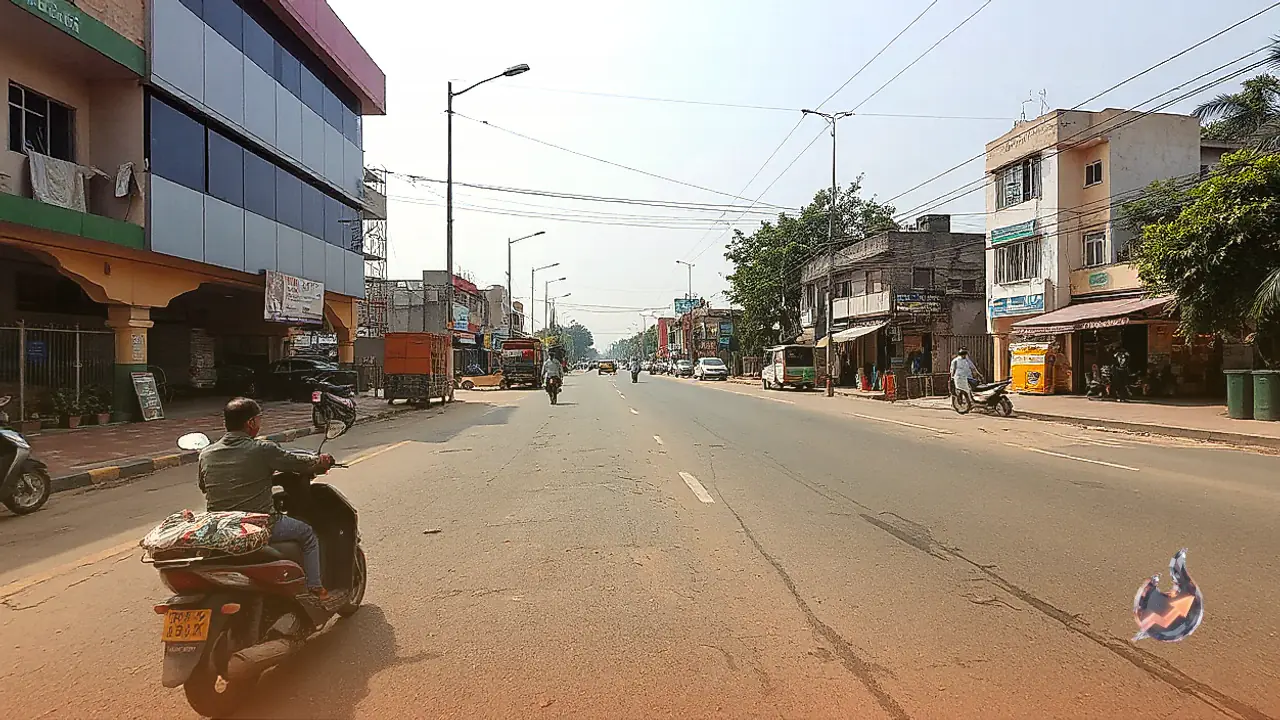

Commuters and commercial drivers across multiple urban centers face higher operating expenses as Mahanagar Gas Limited introduced a Re 1 per kilogram hike on compressed natural gas across Mumbai and adjacent suburban belts starting November 1, 2026. This upward revision marks the sixth occasion in seven months of the ongoing West Asia war that vehicular gas tariffs have climbed. Following this latest adjustment, motorists filling up in Mumbai must now pay Rs 90 per kilogram, up from the earlier prevailing rate of Rs 89 per kilogram.
Input Cost Pressures Drive Sixth Upward Revision
Explaining the financial rationale behind the price increase, Mahanagar Gas Limited stated that the revision aims to absorb mounting raw fuel procurement expenses while maintaining dependable gas distribution to consumers. Upward revisions have become a regular pattern in recent months. The supplier had enforced a Re 1 per kilogram increase in October, which came on the heels of a Rs 2 increase implemented in September. Earlier in the year, both vehicular and household pipeline tariffs underwent revision during May.
Commercial Drivers Warn of Squeezed Incomes
The fresh cost escalation delivers an immediate setback to the metropolis's massive transit ecosystem, where livelihoods are tied directly to daily mileage expenses. Mumbai Rickshawmen's Union representative Thampy Kurien noted that recurrent hikes across the last seven months have created immense strain on operators. He pointed out that recent upward fare adjustments meant to support drivers will essentially be negated by escalating pump prices. The operational footprint affected by the revision is substantial, with an estimated 4.7 lakh autorickshaw drivers, 1.6 lakh taxi operators, and 5 lakh private automobile owners relying on compressed gas across Mumbai.
Price Movements Across Other Major Urban Markets
Price adjustments on vehicular fuel were not confined to Maharashtra alone, as several distribution zones across northern and southern states saw identical increases. In Bengaluru, Bharatpur, and Dewas, fuel stations raised rates by Re 1, bringing the uniform price in all three locations to Rs 99 per kilogram. Motorists in Meerut saw a Re 1 rise to Rs 96.50 per kilogram, while in Sonipat the tariff moved up to Rs 99.90 per kilogram. In Firozabad, an increase of Rs 0.40 brought retail prices to Rs 99.90 per kilogram. Conversely, several major centers escaped revisions: the national capital territory of Delhi maintained its existing rate of Rs 86.98 per kilogram, while Chennai and Rewari held retail prices steady at Rs 99.50 and Rs 91.59 per kilogram respectively.
Kitchen Budgets Spared as Piped Gas Holds Constant
In contrast to the rising cost of transport fuel, household kitchens connected to piped natural gas grids will see no tariff shocks for November 2026, as rates across the country were kept entirely unchanged. Domestic consumers in Delhi continue to pay Rs 49.60 per standard cubic meter, while Kolkata households pay Rs 50 per SCM. In Mumbai and Chennai, piped domestic supplies remain priced at Rs 52 per SCM. Nearby satellite hubs also maintained existing levels, with Gurgaon at Rs 51.50 per SCM and Noida at Rs 49.46 per SCM.
Regional variations in pipeline tariffs persist across the country without fresh increases. In Bengaluru, households pay Rs 53 per SCM, Bhubaneswar stands at Rs 49 per SCM, and Jaipur registers Rs 51.50 per SCM. Piped gas continues to sit at its highest brackets in northern and southern metropolitan pockets, led by Chandigarh at Rs 57.48 per SCM, Lucknow at Rs 56.50 per SCM, and Hyderabad at Rs 56 per SCM. Further south and east, rates in Patna remain at Rs 52.50 per SCM while Thiruvananthapuram holds at Rs 51 per SCM.