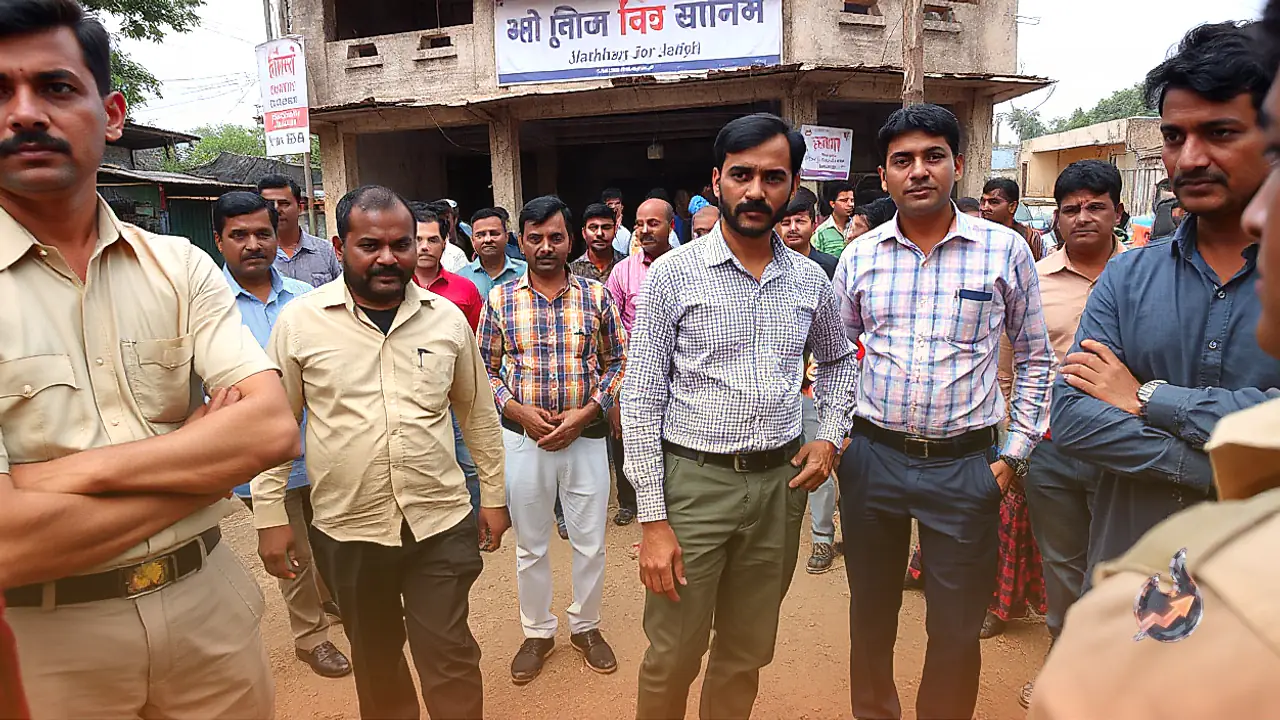

























A tragic incident unfolded on Saturday in Sijua village of Motileda panchayat, situated within the Bengabad block of Jharkhand's Giridih district, where a 65-year-old man lost his life following an unexpected attack by a massive swarm of bees. The victim, identified as Mahesh Kumar Yadav, was engaged in routine cleaning work in his backyard, a small open plot adjacent to the home typically used for cultivating green vegetables. He was working alongside his wife, Khetiya Devi, and sister-in-law, Munni Devi, when thousands of bees abruptly descended upon the trio, surrounding them completely and inflicting relentless stings. Family members rushed to their aid and transported all three individuals to Bengabad hospital, where attending physicians pronounced Mahesh Kumar Yadav dead upon arrival. Both women remain in critical condition and are undergoing emergency medical treatment. The sudden calamity has cast a pall of grief across the entire hamlet.
This fatal encounter in Giridih underscores how standard domestic chores and garden maintenance can quickly turn hazardous if hidden natural hazards go unnoticed. The danger is particularly heightened around festival seasons such as Diwali, during which households routinely engage in intensive clearing of roofs, outhouses, and backyards. Health experts emphasize that avoiding interference with active bee colonies and knowing how to reach safety rapidly during a swarm encounter are essential measures to prevent fatal outcomes.
The Physiological Mechanisms That Make Bee Stings Lethal
When a bee stings, it injects venom into the victim's dermis, triggering instant local inflammation marked by acute pain, burning, redness, and swelling. Under ordinary circumstances, an isolated sting produces manageable discomfort confined to the puncture site. However, when hundreds of insects attack simultaneously, the cumulative venom load enters the systemic circulation and poses severe risks to human life. Victims often experience systemic toxicity manifesting as high fever, nausea, vomiting, dizziness, and intense physical collapse.
Beyond toxic overload, the most dangerous immediate risk is a hypersensitive allergic reaction known medically as anaphylaxis. In such instances, the human immune system overreacts catastrophically to the foreign proteins present in bee venom. The resulting inflammatory cascade leads to rapid angioedema of the pharynx and tongue, narrowing respiratory passages and causing acute respiratory distress. Simultaneously, peripheral blood vessels dilate precipitously, sending blood pressure crashing and inducing unconsciousness. Without instantaneous professional intervention, anaphylactic shock can prove fatal within minutes. Medical specialists point out that for individuals harboring an acute allergy, a single sting can be sufficient to cause death.
From a toxicological standpoint, a healthy adult body can typically neutralize the toxins from 10 to 15 stings without lasting systemic injury. However, once the tally exceeds 50 stings, the massive concentration of venom can cause extensive rhabdomyolysis (muscle tissue breakdown), severe acute kidney injury, and multi-organ failure. In the Bengabad incident, 65-year-old Mahesh Kumar Yadav absorbed hundreds of stings across his body within moments.
In many rural communities, mortality rates are exacerbated by delays in reaching advanced healthcare facilities. Families frequently lose critical minutes attempting traditional home remedies, which postpones the timely administration of life-saving intramuscular adrenaline (epinephrine). By the time patients arrive at emergency wards, irreversible physiological deterioration has often taken hold.
9 Essential Steps to Survive a Bee Swarm Attack
Should you find yourself or others confronted by an agitated swarm of bees, adhering to the following 9 safety protocols can significantly reduce injury and save lives
1. Flee immediately toward open ground: When targeted by a swarm, never attempt to swat, wave your arms, or kill individual insects, as aggressive movement releases distress pheromones that incite the rest of the colony. Run straight and fast toward an open clearing. Bees generally abandon pursuit after 200 to 300 meters. If a secure building with closed windows or an airtight vehicle is immediately accessible, take shelter inside at once.
2. Shield the head, face, and neck: While running, pull available clothing, a towel, or a scarf over your head, facial area, and neck. Bees preferentially target the facial region and head, making protection of the eyes, ears, and oral cavity the paramount priority.
3. Keep mouth and nostrils firmly covered: Maintain a firm barrier over your nose and mouth to prevent insects from entering the airway. Never attempt to drop to the ground and lie flat, as a stationary target allows the swarm to land and sting freely across exposed skin.
4. Do not jump into water bodies: Leaping into ponds, rivers, or pools is a dangerous misconception. Swarming bees hover above the water's surface, waiting to sting the face and head each time the victim surfaces for air, while the risk of drowning escalates rapidly.
5. Scrape the stinger out instead of squeezing: If stung, avoid pinching the stinger with tweezers or fingers, as compression empties the attached venom sac deeper into the skin. Instead, gently scrape across the surface using the edge of a credit card, a dull knife, or a fingernail to dislodge the barb.
6. Seek emergency medical care without delay: If a sting recipient develops breathing difficulty, dizziness, lightheadedness, nausea, or rapid swelling, proceed immediately to the nearest hospital or call an ambulance. For acute anaphylactic emergencies, physician-administered adrenaline (epinephrine) is the definitive life-saving antidote. Do not squander precious time applying household remedies like clarified butter (ghee) or wet mud.
7. Utilize smoke before clearing overgrown areas: Smoke interferes with bee communication and drives them into defensive sheltering. Before clearing overgrown yards, sheds, or rooftops, generate gentle smoke around the perimeter. Furthermore, schedule outdoor clearing before 10 AM or after 4 PM, hours when cooler temperatures keep bee colonies relatively docile.
8. Apply cold compresses to alleviate swelling: Once the stinger is extracted, apply ice wrapped in a clean cloth directly to the affected region. Cold application restricts blood flow, minimizing localized swelling, inflammation, and discomfort.
9. Avoid wearing dark clothing and strong fragrances: Honeybees react aggressively to dark black clothing and pungent scents such as heavy perfumes or scented deodorants. When venturing into garden areas or brush, choose light-colored apparel and avoid scented grooming products.
Safe Practices for Property Maintenance and Gardening
Bees predominantly build hives under sturdy tree branches, beneath eaves of older structures, within deserted attics, and around secluded building corners. Before undertaking major yard cleanups, pruning trees, or clearing vegetable patches, conduct a thorough visual survey of the surroundings to detect nesting activity. According to the forest department, honeybees exhibit peak defensiveness during the autumn months of October and November, which coincide with prime honey storage activity. In villages bordering forest belts, homeowners who locate active hives should never attempt to smoke them out or dislodge them using sticks. Instead, immediately alert the local forest department or engage experienced apiculturists to relocate the hive safely.