



















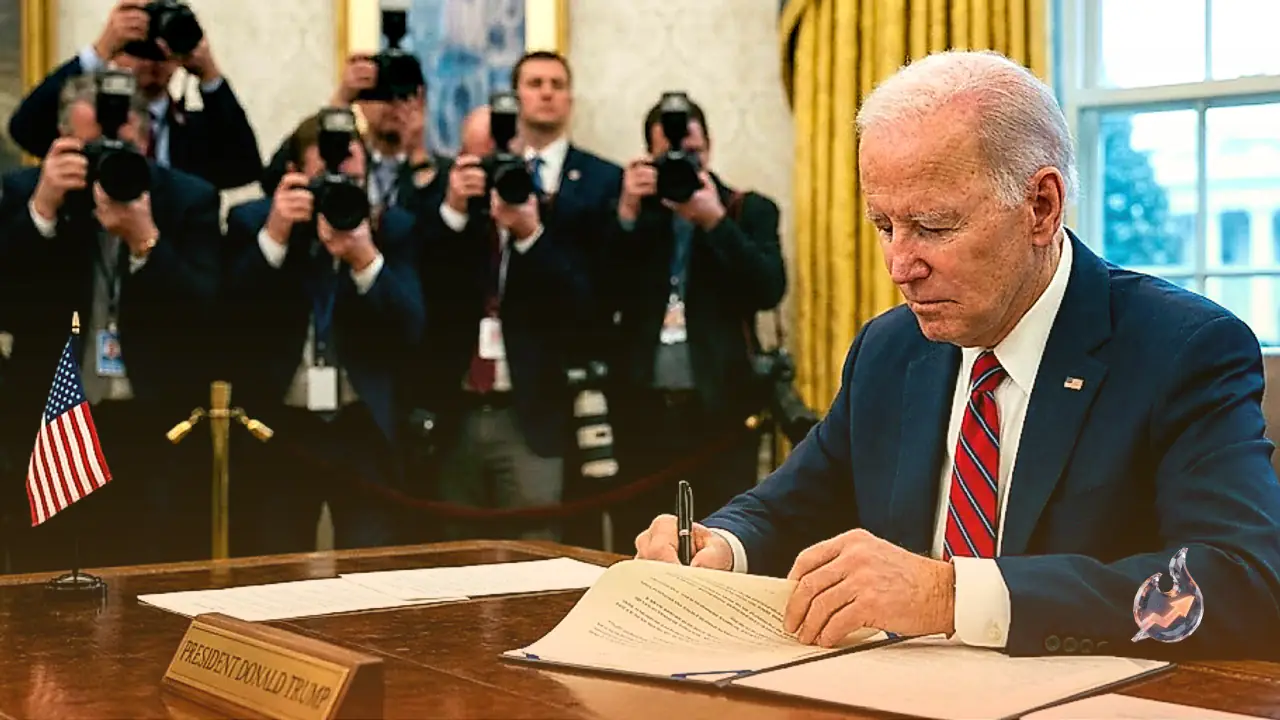

A sharp escalation in trade friction has emerged after US President Donald Trump signed into law the Lindsey O. Graham Sanctioning Russia and Iran Act of 2026, creating an aggressive mechanism that could slap 100% tariffs on nations purchasing Russian oil and gas. The move directly places major energy consumers like India and China in the crosshairs of punitive American trade enforcement. Although India had previously seen some shifts in its import volumes, it remains heavily reliant on Russian crude supplies, making this new statutory authority a significant geopolitical and economic flashpoint between Washington and New Delhi.
Legislative Passage in a Republican-Led House
The legislative vehicle moved swiftly through Capitol Hill, securing passage in the Republican-led House of Representatives by a decisive 262-159 margin just two days prior to receiving the presidential signature. Information published on the official US Congress Government Bill repository indicates that the statute establishes an expansive matrix of economic sanctions, duties, and targeted restrictions aimed squarely at dismantling Russia's sovereign financing apparatus and war economy.
Detailed Sanctions Architecture and Tariff Provisions
The comprehensive legislation outlines severe trade and financial penalties across multiple domains
- Visa revocations and property-blocking sanctions will be instituted against designated individuals and entities, including the Russian president, specified Russian military commanders, and any foreign actor that knowingly supplies goods or professional services supporting Russia's defense industrial base.
- Import tariffs applied to all Russian-origin merchandise entering the United States can be elevated to an ad valorem rate of up to 500%, meaning the duty will scale directly relative to the declared valuation of the goods.
- An ad valorem tariff of up to 100% may be levied on all products imported into the United States from any country that ranks among the five largest importers of Russian crude oil or natural gas, provided that nation knowingly executes new procurement contracts for those commodities following the bill's formal enactment.
- Mandatory asset-blocking actions will target financial institutions chartered under Russian law that are held under full or partial state ownership.
- Property-blocking measures will be enforced against foreign commercial vessels knowingly transporting designated Russian commodities, specifically encompassing crude oil, uranium, and coal shipments.
Beyond these direct trade levies, the measure bans the export, reexport, or domestic transfer within Russia of any US-produced energy resources or refined energy products. American individuals and institutional investors are barred from deploying fresh capital into Russian ventures or acquiring Russian sovereign debt instruments. The statute additionally outlaws the listing and exchange trading of securities issued by Russian state-owned, state-controlled, or state-affiliated corporate entities across all US national securities exchanges.
War in Ukraine and Transatlantic Economic Pressures
The fundamental strategy driving this sanctions offensive is to exert acute economic leverage against third-party nations that have maintained substantial hydrocarbon trade with Moscow since the conflict in Ukraine erupted. Washington has sustained uninterrupted alignment with Ukraine since the Kremlin commenced its full-scale military campaign in late February 2022. Operating in coordination with Canada and numerous European allies, the United States has steadily escalated punitive sanctions against Moscow over the intervening years, striving to cut off the sovereign cash inflows that sustain Russian battlefield logistics.
New Delhi Cites Energy Needs for 1.4 Billion People
Reaction from the Indian capital arrived promptly after the bill cleared the lower chamber of the US legislature. Expressing formal apprehension regarding the scope of the measure, the Ministry of External Affairs highlighted the potential fallout on bilateral diplomatic ties and the stability of global energy supply chains.
Articulating the sovereign perspective of the world's most populous nation, the MEA noted that meeting the everyday energy demands of its 1.4 billion citizens is an unavoidable national necessity, emphasizing that the country will preserve its policy of sourcing fuel requirements from a diversified array of global suppliers. Indian officials maintain that domestic fuel affordability is a fundamental public obligation that cannot be subordinated to external sanctions regimes.
Trade Trajectory and Rising Dependence on Russian Crude
India and China have maintained expansive economic engagements over several decades, and New Delhi chose to sustain uninterrupted imports of energy commodities from Russia notwithstanding Western opposition. Figures compiled by Trading Economics illustrate the velocity of this trade shift: India's inbound shipments from Russia stood at just $8.7 billion in 2021 before surging dramatically to $40.6 billion in 2022. The upward trend intensified throughout 2023 and 2024, with annual bilateral imports topping an unprecedented $67 billion in each year, prior to a modest reduction to $62.9 billion in 2025.
During 2025, the overwhelming majority of India's Russian imports consisted of mineral fuels, petroleum oils, and related distillation outputs, generating an import bill totaling $53.84 billion. The remaining import mix included fertilizers, animal and vegetable oils and fats, cleavage derivatives, raw commodities, pearls, precious metals, iron, steel, and industrial aluminum.
Russia remains India's dominant supplier of unrefined petroleum. In July 2026, the country under Vladimir Putin supplied more than 51% of India's total crude import volume, setting an unprecedented historical peak. Official customs statistics further demonstrate that Indian merchandise receipts from Russia jumped 57% across the initial five months of FY27, reaching $41.44 billion compared to $26.45 billion recorded between April and August of the preceding year. This deepening trade nexus underscores the substantial economic exposure Indian export sectors now face should Washington enforce its 100% retaliatory tariff framework.