


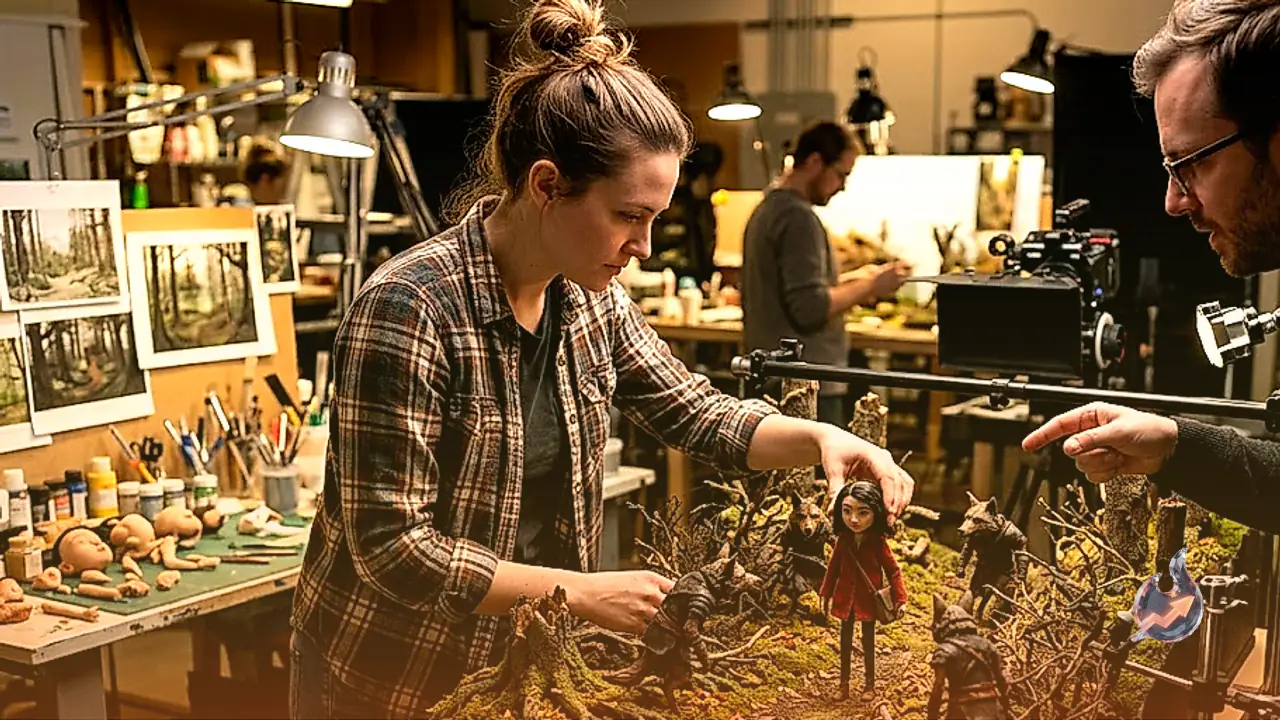
















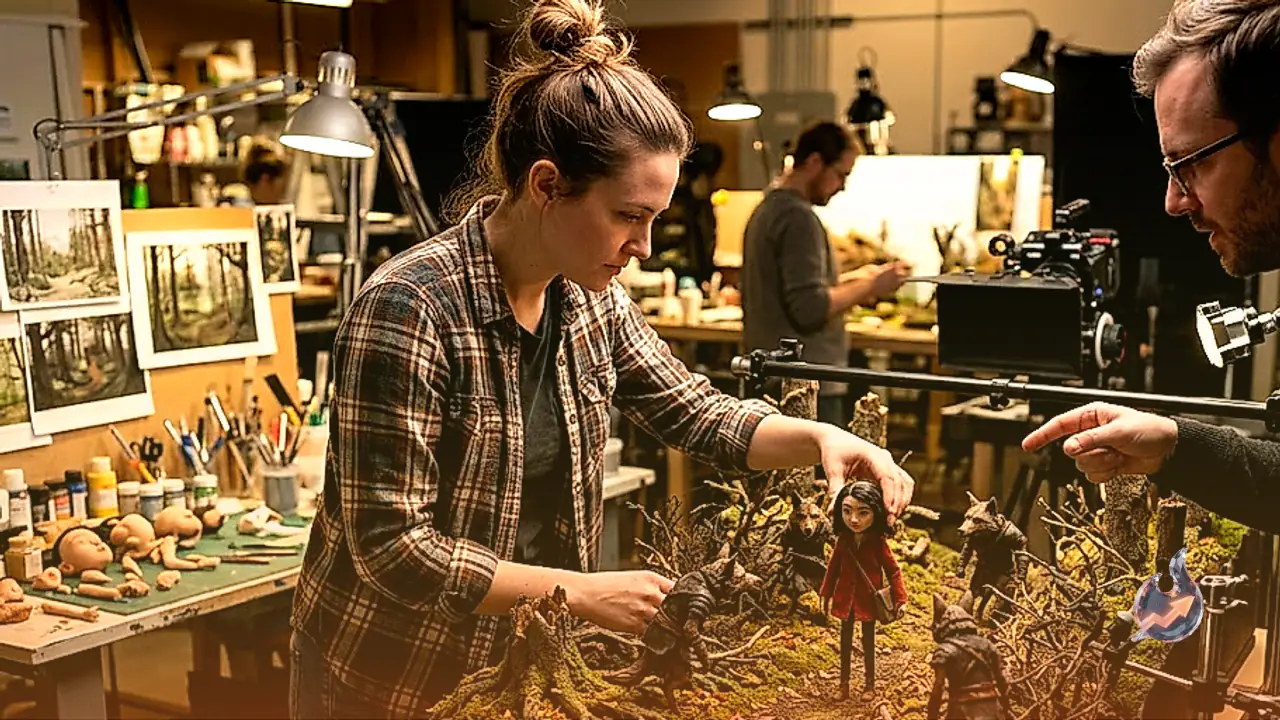

It is the sets you notice first. Production design is not normally the primary element that stands out, and it will certainly not serve as your only takeaway from watching Wildwood. But what sets! What vistas! Reportedly over 100 different locations were constructed for this cinematic enterprise, a massive undertaking that seems to openly defy the normal limitations imposed on stop-motion animation, a technology once dismissed as quite primitive. Yet watching this feature unfolds a curious sensation, making you feel as though you are viewing a live-action movie while never once letting you forget that it was all meticulously conjured by hundreds of artists moving miniature models incrementally by mere millimetres.
Laika Steps Up Its Technical And Narrative Game
In every possible sense, this project marks a significant step-up for Portland’s Laika in its sixth feature film. The advancement is not merely technical, featuring animation that feels far more naturalistic and realistic alongside smoother motion and a greater integration between practical craftsmanship and computer-generated assists, but it also encompasses a more mature narrative structure and a much larger, bolder canvas. Their previous venture, 2019’s Missing Link, was an agreeable yet slight comedy revolving around a Sasquatch named Susan. This new release, serving as the second animated film directed by the company’s chief executive officer Travis Knight, aligns much closer to his previous directorial effort Kubo And The Two Strings as a serious yet playful adventure centered on grief and loss.
Literary Roots And Portlandian Flavor
The foundation of the narrative stems from a book penned by Colin Meloy, lead singer of the Portland rock band The Decemberists, and illustrated by his wife Carson Ellis. For Laika, which eagerly secured the cinematic rights prior to publication, the story matched their core sensibilities perfectly with its sensitive and earnest material brimming with fantasy and magic alongside a deep-rooted interest in humanity and pathos.
Much like the studio itself, this creation is a product of, inspired by, and set entirely within Portland, Oregon. Director Travis Knight has plenty of fun gently playing with familiar local stereotypes, treating audiences to sights like a unicycling, fire-rendering Darth Vader without ever crossing into judgmental territory. Instead, it functions as an affectionate love letter to the quirky and independent-minded city, beautifully rendered through laser-printed pink blossoms and charming cobbled streets.
The McKeel Family And The Impassable Wilderness
It is within this idiosyncratic urban setting that the audience is introduced to the McKeel family. The mother and father, voiced by Jake Johnson and Maya Erskine respectively, are classic Oregon hippies and Burning Man veterans who proudly knit their own beanies. Their daughter Prue, portrayed by Peyton Elizabeth Lee, is a precocious teenager wise beyond her years who flatly refuses to believe in magic, finds her hometown peculiar, and frequently grumbles about being forced to babysit her younger brother Mac. However, when Mac is abruptly kidnapped by a murder of crows, she quickly learns to accept fairy tales because she has landed right inside one.
Alongside a dorky yet well-meaning hanger-on and tabletop role-playing game enthusiast Curtis, played by Jacob Tremblay, Prue embarks on a dangerous rescue mission into the titular wildwood known as the Impassable Wilderness. Upon passing through a mysterious bridge-set portal, the pair find themselves thrust headfirst into a fantastical realm populated by talking animals, druid mystics, and warring factions where the city's inherent weirdness is mirrored tenfold.
A Tapestry Of Literary And Cinematic Influences
Alongside clear touches reminiscent of C.S. Lewis, keen viewers will spot flashes of J.R.R. Tolkien, Guillermo del Toro, the intricate animal bureaucracy seen in Zootropolis, and the all-out eccentricity of Labyrinth, complete with coyotes wielding muskets. Furthermore, through its profound reverence for and underlying terror of the majesty of the natural world, the film carries a tone reminiscent of Studio Ghibli’s Princess Mononoke, proving equally mysterious, moody, and visceral.
Like Hayao Miyazaki’s masterwork, this is a decidedly dark piece of cinema. At one point, the camera lingers over a burnt-out battlefield strewn with the bloodied corpses of fallen soldiers, and the narrative even commences with a suicide of sorts. Carrying a body count typically associated with a 1980s action blockbuster, the film is undoubtedly unsuitable for very young children.
Meaty Themes And Technical Triumph
The darkness extends beyond mere violence into heavier thematic territory dealing with trauma, family secrets, and poisonous ideologies spreading like ivy, alongside learning to move past differences to join a deadly collective effort for an honourable cause. Ultimately, it operates as a grand war film featuring a jaw-dropping final battle sequence that evokes comparisons to a major set-piece from Game Of Thrones or the traditional martial arts choreography of Zhang Yimou.
Even amidst the high-fantasy elements featuring characters such as an enormous bird named Owl Rex, voiced by Richard E. Grant, and a law-enforcement bunny designated as Constable Samuel, voiced by Rob Delaney, Knight maintains an unwavering focus on grounded character work. The nuanced and lovingly studied character animation elevates Wildwood into a remarkable technical achievement that continuously blurs the line between physical craftsmanship and digital enhancement, ultimately succeeding in its core mission of making viewers believe in magic.