





















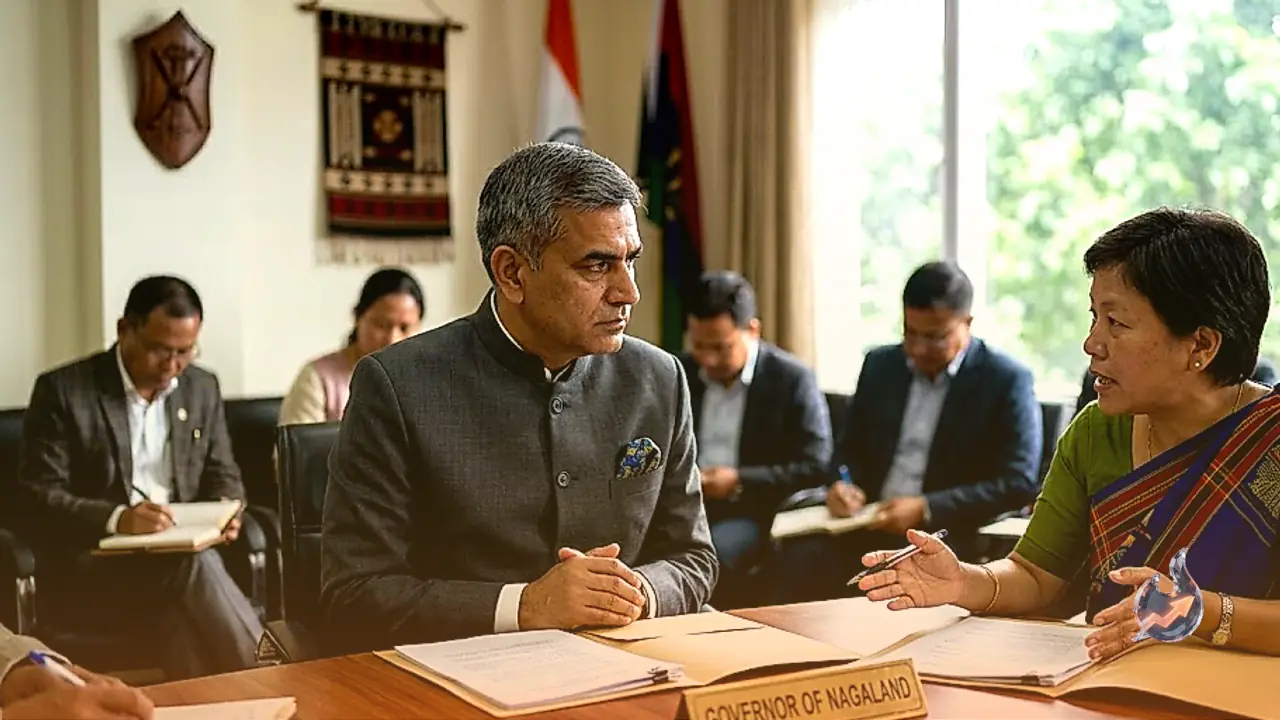

Nagaland Governor Nand Kishore Yadav conducted a comprehensive operational review of the Nagaland State Commission for Protection of Child Rights on Thursday. Held at Lok Bhavan in Kohima, the evaluation focused on institutional readiness and administrative bottlenecks affecting youth welfare mechanisms across the state. Commission officials informed the Governor that persistent shortages of modern infrastructure, specialised field personnel, and dedicated financial allocations continue to constrain everyday operations and outreach capabilities.
Institutional Deficits for Vulnerable Minors
During the briefing, representatives from the rights panel underscored the acute shortage of specialised support systems for minors needing immediate care and institutional custody. The lack of tailored infrastructure is particularly pronounced for young people confronting acute psychological distress, chemical dependency, and physical or cognitive disabilities. Officials pointed out that existing shelters often lack clinical staff and therapeutic environments necessary to manage complex rehabilitation requirements, making dedicated institutional upgrades an urgent priority.
Enforcing Statutory Protections and Multi-Agency Coordination
The Commission delivered a detailed presentation tracing its interventions and compliance monitoring from 2023 to the present. A central focus of its mandate has been overseeing the strict enforcement of critical statutes across every district in Nagaland. These legal instruments include the Juvenile Justice (Care and Protection of Children) Act of 2015, the Protection of Children from Sexual Offences Act of 2012, the Right to Education Act of 2009, and the Child and Adolescent Labour (Prohibition and Regulation) Act of 1986. Beyond statutory supervision, the commission facilitated joint operational frameworks uniting the police, judicial officers, social welfare authorities, healthcare personnel, education departments, labour inspectors, and non-profit groups. Community-level engagement was also deepened through structured dialogues with tribal organisations, village councils, and district administrative heads.
Institutional Audits, Capacity Building, and Strategic Priorities
Field oversight remained an essential pillar of the commission's work, involving regular inspections of Child Care Institutions, Observation Homes, Special Homes, and local schools to verify living standards and procedural compliance. The panel also rolled out specialized training modules for law enforcement personnel at both state and district tiers, focusing on standard operating protocols under juvenile justice and child abuse prevention legislation. To promote responsible public reporting, dedicated workshops were convened with journalists to address ethical standards surrounding child-friendly media coverage. On a broader regional stage, the panel participated in the high-level convergence summit hosted in Tawang, Arunachal Pradesh, contributing directly to the drafting of the Tawang Declaration for regional child protection standards.
Outlining its upcoming priorities, the Commission stressed the necessity of creating designated, trauma-informed child-friendly rooms inside police stations and judicial complexes. The panel plans to accelerate district-wide campaigns targeting modern threats such as online exploitation and digital safety risks, alongside traditional concerns including human trafficking, substance abuse, and community awareness for children with disabilities.