

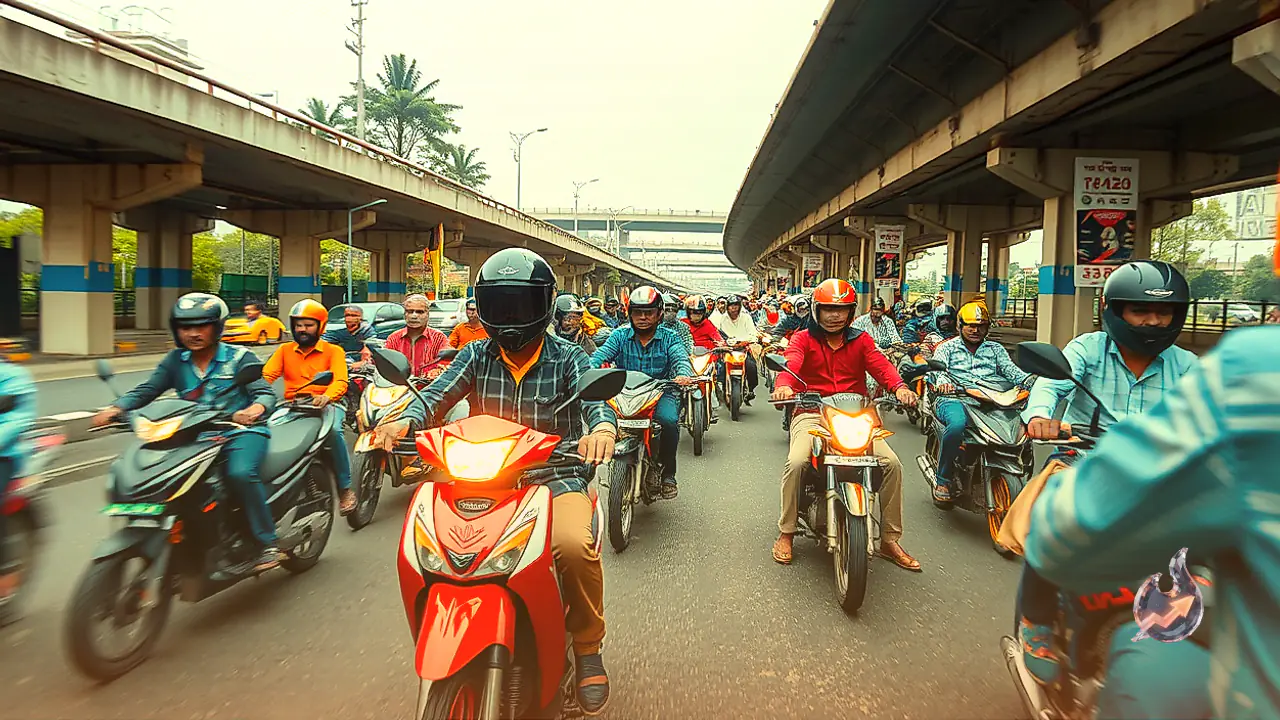














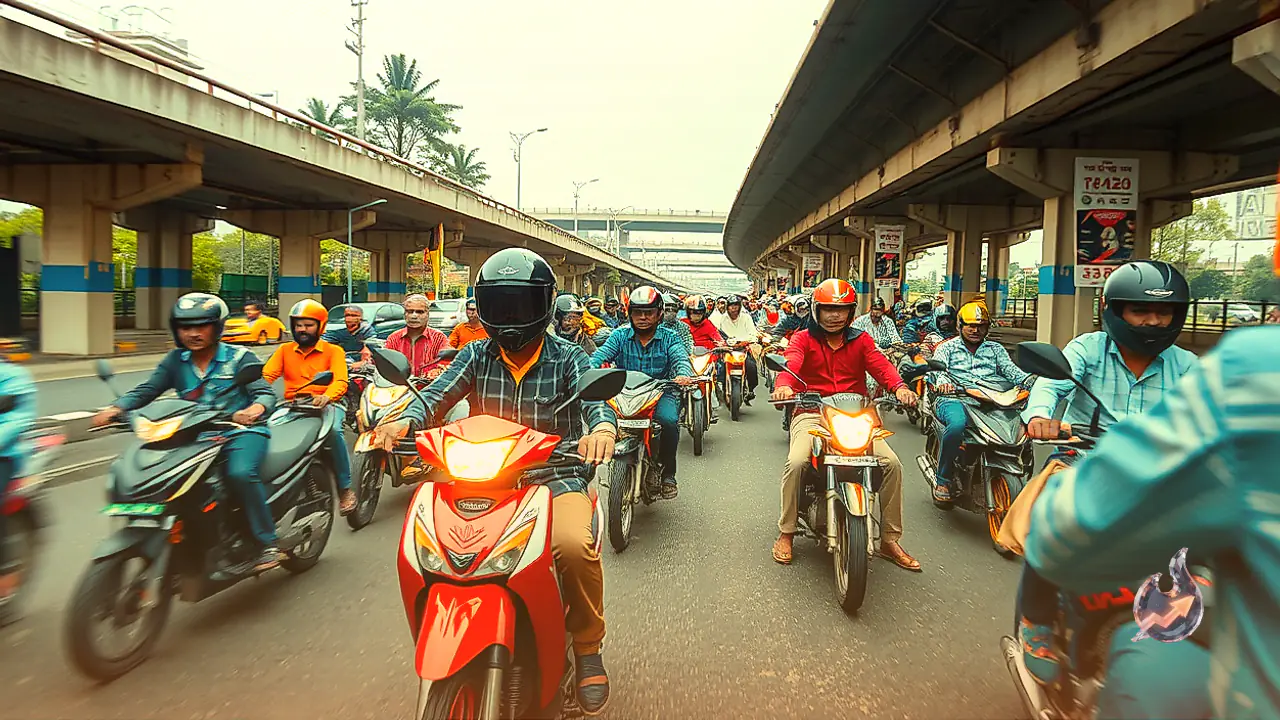

Extensive beautification efforts have been undertaken across Kolkata on state initiative to prepare the metropolis for the upcoming Durga Puja festivities. Streets throughout the city are being adorned with sparkling decorative lights and traditional alpana patterns. As part of these celebratory upgrades, the Kolkata Municipal Corporation and the Hooghly River Bridge Commissioners (HRBC) arranged to give a colorful makeover to several bridges and flyovers across the city. Painting operations had already commenced on the roadway surfaces of the Gariahat and Chingrighata flyovers. While the initiative initially drew praise from several onlookers for adding festive vibrancy to urban infrastructure, it simultaneously raised immediate apprehensions among motorists and observers regarding potential visibility distractions and heightened accident hazards on multi-colored road surfaces.
Viral Video of Skidding Motorcyclists Sparks Alarm
The controversy escalated sharply following the emergence of video footage on social media depicting multiple two-wheeler riders losing control on a brightly coated, rain-slicked stretch of a Kolkata flyover on a Wednesday afternoon. The visuals showed three motorbikes skidding in quick succession and crashing onto the deck, ostensibly after encountering an oil paint surface combined with rainwater. According to reports published on October 14, several riders lost their balance while navigating the rainbow-hued structure. Initial accounts did not clearly establish the precise physical aftermath of these incidents or confirm whether any commuters sustained injuries. Both the absolute authenticity of the recorded footage and the exact underlying causes behind the repeated skidding remain subject to formal verification.
Administrative Probe and Official Defense
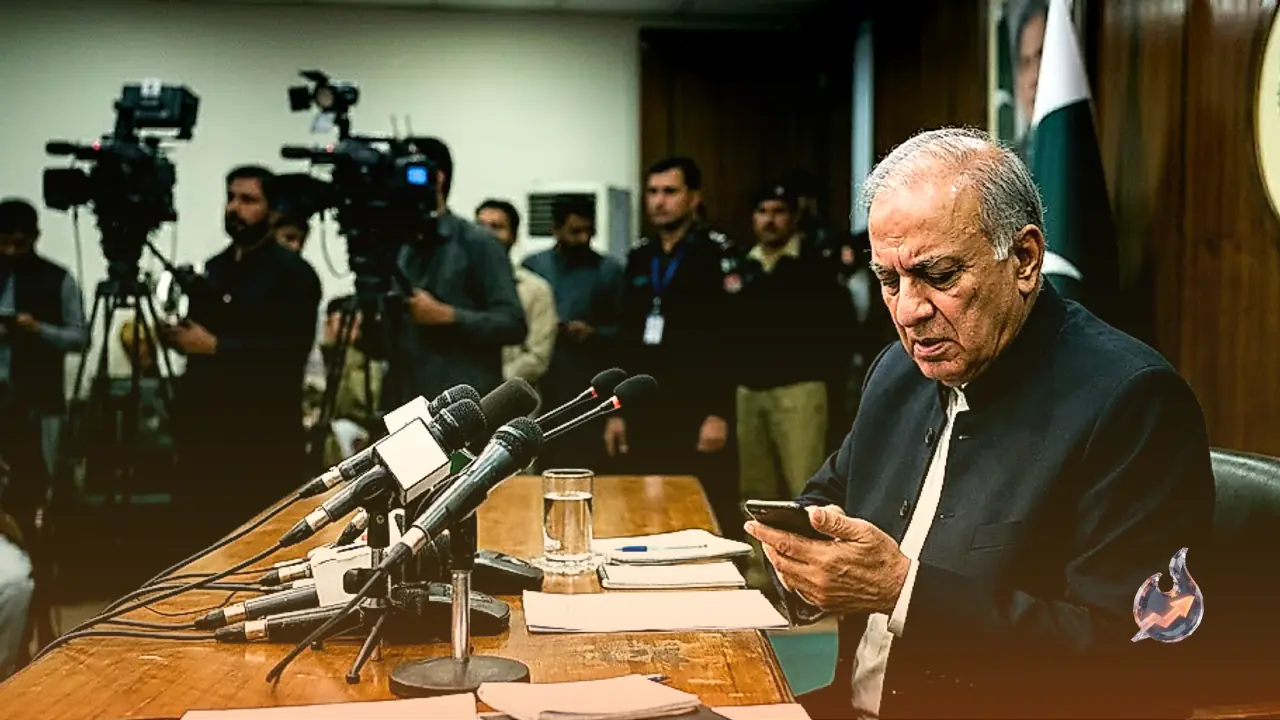
The viral footage quickly drew fierce criticism toward the urban development department overseen by West Bengal Urban Development and Municipal Affairs Minister Agnimitra Paul. In response to the growing public concern, Paul ordered officials to conduct a thorough inquiry to determine the exact factors that precipitated the vehicular falls. Paul stated that an anti-skid paint formulation had been specifically utilized for the beautification project. She emphasized that if the applied coating causes visual hindrance or operational difficulties for motorists, the administrative machinery will actively evaluate alternative arrangements. The formal inquiry is expected to ascertain whether the vehicular loss of control stemmed primarily from the chemical paint layer, ambient moisture from rainfall, or other contributing roadway variables.
Political War of Words Between Rival Parties
The painted flyover initiative quickly turned into a high-voltage political flashpoint in West Bengal. Kunal Ghosh questioned the rationale of the civic administration, asking why such an unscientific and dangerous painting exercise was undertaken if the surface treatment ultimately had to be scraped off. He demanded accountability regarding who would assume responsibility for the accidents and answer for the waste of public funds, highlighting visuals from the Chingrighata mishap and subsequent paint removal efforts at Gariahat. The TMC leveled sharp accusations, alleging that the BJP government, which it claimed came to power by stealing the people's mandate in Bengal, was now endangering public lives. The party alleged that the newly painted flyover had been transformed into a virtual death trap where bikes were slipping during the very first rain, asserting that Minister Agnimitra Paul must be held accountable for gross negligence because the people of Bengal demand safe roads rather than hazardous infrastructure.
Tire Grip Mechanics and the Physics of Road Coatings
The viral incident has underscored fundamental engineering questions regarding how aesthetic surface coatings interact with vehicular traction. Safe automotive movement relies intrinsically on consistent friction generated between the tire rubber and the pavement surface. This critical frictional interface allows a driver to safely accelerate, apply brakes, maneuver directional changes, and preserve vehicle balance, particularly along curved flyover alignments. When regular asphalt surfaces are overlaid with paint, the topical coating alters the intrinsic micro-texture and macro-texture of the pavement. Depending on the chemical makeup of the paint, its binder materials, surface finish, and the existing condition of the underlying bitumen, the newly created surface can offer substantially less grip than worn asphalt. Wet conditions amplify this risk significantly, as a film of water reduces direct tire-to-pavement friction. If the resultant friction coefficient falls below what is required for routine braking or steering, tires inevitably skid, though not all road coating materials pose identical hazard levels.
Reconciling Artistic Beautification with Roadway Safety
Transportation safety experts emphasize that visual enhancements can be integrated into urban environments without jeopardizing foundational motoring safety. Decorative artwork should be strictly restricted to zones that do not intersect with vehicular wheel paths. Traditional cultural motifs, such as Kolkata's iconic alpana art, can be safely rendered on pedestrian footpaths, public plazas, roadside retaining barriers, traffic island surfaces, and other non-trafficked public spaces. Whenever coatings must be applied to roadway environments, authorities must utilize materials specifically engineered, tested, and certified for vehicular use. Prior to widespread deployment, candidate products must undergo rigorous testing to evaluate wet-surface skid resistance, operational durability, daytime and nighttime visibility, and chemical compatibility with existing pavement layers. On high-demand stretches such as curves and intersections where intensive braking or steering occurs, specialized high-friction surfacing systems consisting of calcined bauxite or tough aggregates bonded with thermosetting resins should be installed under strict engineering specifications.
Alternative Design Approaches for Urban Infrastructure
Urban planners advocate that relying on structural embellishments is far more sustainable than coating high-speed driving surfaces. Color and texture can be introduced thoughtfully through designed curbs, raised crosswalks, and textured traffic-calming treatments within designated low-speed zones. Furthermore, incorporating murals on bridge retaining walls, painting support pillars, installing artistic architectural lighting, using ornate railings, and placing standalone public art installations can dramatically uplift flyover aesthetics without modifying the physical driving plane. Above all, core safety elements must take precedence, including prompt pothole repairs, efficient storm drainage, high-reflectivity lane striping, unambiguous signage, adequate lighting, and consistent roadway maintenance. Decorative treatments must never be used to conceal underlying structural defects, nor should they confuse drivers by obscuring official traffic markings. Before reopening any coated road to standard traffic, authorities must conduct comprehensive evaluations of wet and dry skid resistance, texture depth, drainage efficacy, and overall durability under varying weather conditions.