






















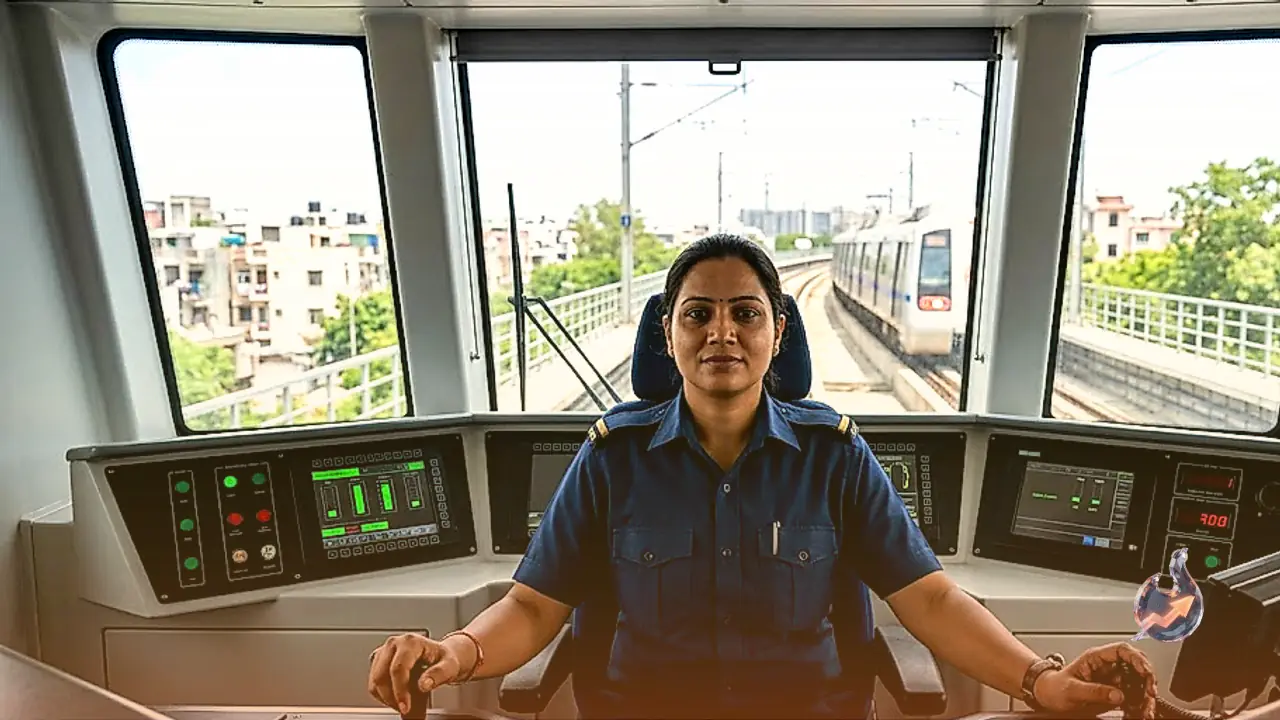

Serving as the vibrant lifeline of the national capital region, Delhi Metro has once again elevated India's global stature. Through exceptional operational precision, strict punctuality, and dependable service quality, Delhi Metro has outpaced several major urban transit networks worldwide. Standing tall among prestigious systems in global cities like Hong Kong, Paris, and New York, this remarkable feat is being celebrated as a major milestone for India.
In a comprehensive comparative study conducted by the Community of Metros (COMET) involving 45 prominent global metro systems, Delhi Metro emerged at the very top as the most reliable transit network. The evaluation primarily focused on train punctuality and operational accuracy. A defining characteristic of Delhi Metro's stringent standards is that even a delay exceeding 59 seconds in reaching a destination is officially categorized as a delay. In contrast, many international transit networks routinely permit a normal threshold of two to five minutes of delay.
Highlighting this significant achievement, an official update was shared on X detailing these findings.
Punctuality Growth Over 23 Years
Ever since its commercial inception in 2003, Delhi Metro has consistently refined its operational efficiency across all parameters. Back in its initial years of operation, the punctuality rate stood at approximately 98.27 percent, which has now climbed to a remarkable record level of 99.95 percent. The rapid expansion has brought the total metro network across the Delhi-NCR region to roughly 416.5 kilometers in length. Furthermore, headway intervals between consecutive trains have shortened significantly. While the initial operational phase saw a gap of around 7 minutes between trains, the frequency on busy corridors has now dropped to approximately 2.18 minutes.
Driverless Operations Span 29 Percent of the Network
Delhi Metro is expanding its technological footprint alongside its scheduling precision. Automatic train operation facilities are currently deployed across nearly 29 percent of its entire network, which includes the Pink and Magenta lines. Spanning roughly 71.55 kilometers, the Pink Line holds a prominent position among the longest driverless metro corridors anywhere in the world, showcasing the network's advanced engineering and operational capabilities.
Persistent Operational Challenges
Despite these sweeping successes, Delhi Metro continues to navigate several critical challenges. Severe passenger congestion during peak commuting hours on heavily utilized corridors like the Yellow and Blue lines, ensuring seamless last-mile connectivity, and managing ongoing Phase 4 construction projects remain primary concerns. Additionally, occasional technical glitches involving signaling equipment or overhead electrical wires in older network segments can temporarily disrupt smooth operations.