





















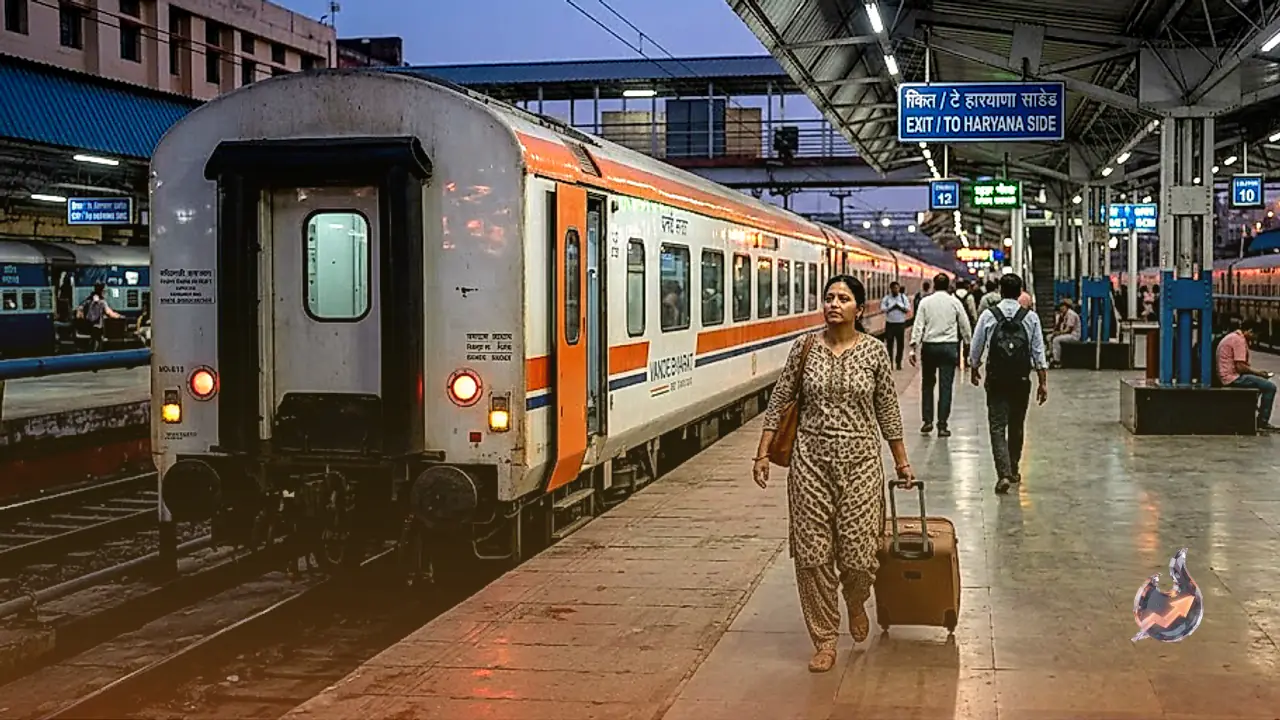

Travelers navigating one of northern India's busiest railway corridors may soon gain access to a faster overnight travel option as Indian Railways assesses the feasibility of introducing a Vande Bharat sleeper train between Delhi and Varanasi. The proposed service aims to connect the capital with the pilgrimage hub overnight, allowing passengers to depart late in the evening and arrive early the next morning.
Under the initial framework, the semi-high-speed service is slated to route through Prayagraj and Kanpur Central, serving vital transport nodes across Uttar Pradesh. However, the proposal awaits formal clearance and a gazette notification from the Railway Board, meaning route specifics and operating windows remain tentative until administrative sign-offs are complete.
Projected Timetable and En Route Stops
Tentative scheduling details indicate that the journey could commence from Varanasi Cantt at 9:20 pm. Moving westward through the night, the train is expected to arrive in Prayagraj around 10:45 pm, followed by a scheduled transit through Kanpur Central at roughly 12:35 am. The rake would then complete its run at New Delhi station around 5:00 am the following day.
The return leg follows a mirrored timetable. Under the drafted plan, the service departs New Delhi at 9:20 pm and reaches Varanasi Cantt at approximately 5:00 am the next morning. Railway authorities emphasize that these time brackets remain subject to revision based on sectional traffic density, line capacity constraints, and operational adjustments across the Northern and North Central Railway zones.
Coach Configuration and Seating Capacity
The proposed trainset is anticipated to consist of a 16-coach rake capable of accommodating around 823 passengers across various sleeper comfort tiers. The bulk of the configuration prioritizes high-demand berths while maintaining multi-tiered travel options.
Current projections outline a layout featuring 11 AC three-tier coaches, four AC two-tier coaches, and a single First AC coach. This internal configuration matches the operational strategy deployed for extended overnight runs, though Indian Railways will confirm the final coach allotment only upon publishing the commercial rollout circular.
Operational Speeds and Modern Amenities
Engineered for high acceleration, the train platform is capable of operating at speeds ranging from 130 kmph to 160 kmph. Realized speeds across the Delhi-Varanasi corridor will depend heavily on track geometry, track fencing, signaling upgrades, and intermediate speed restrictions. Full-fledged passenger runs will be preceded by comprehensive technical trial runs, dynamic brake evaluations, and safety clearances from railway commissioners.
Designed specifically to reduce travel fatigue on long-distance routes, the trainset is anticipated to include automatic exterior doors, dynamic passenger information systems, sound-damped cabin interiors, and upgraded safety infrastructure. Enhanced suspension systems and rapid acceleration capabilities are expected to deliver a smoother transit experience than conventional express formations.
Tariffs and Commercial Rollout Status
The Railway Board has not yet finalized passenger fares, ticketing timelines, or the formal date for commercial inaugural runs on this sector. Until statutory clearances and operational preparations are formally completed, the service remains an active planning proposal within the expanding Vande Bharat portfolio. Official announcements regarding reservation access and verified station timings will follow formal board sanctions.