



















India's 7.8 percent economic expansion rate is far more than an abstract macroeconomic headline; it translates into tangible daily savings, reduced commute times, and expanding commercial opportunities for everyday citizens. Over the past twelve years, the rapid buildout of expressways, highways, rail corridors, metro systems, airports, and maritime ports has forged a multiplier effect across the national economy. Capital expenditure on public infrastructure circulates directly through wages for engineers and laborers, increased footfall for small merchants, and streamlined supply chains for industrial manufacturing. Travel time savings immediately reduce personal transport expenses while creating additional productive hours for businesses and families alike.
Rail Network Overhaul and the Rs 2.78 Lakh Crore Budgetary Allocation
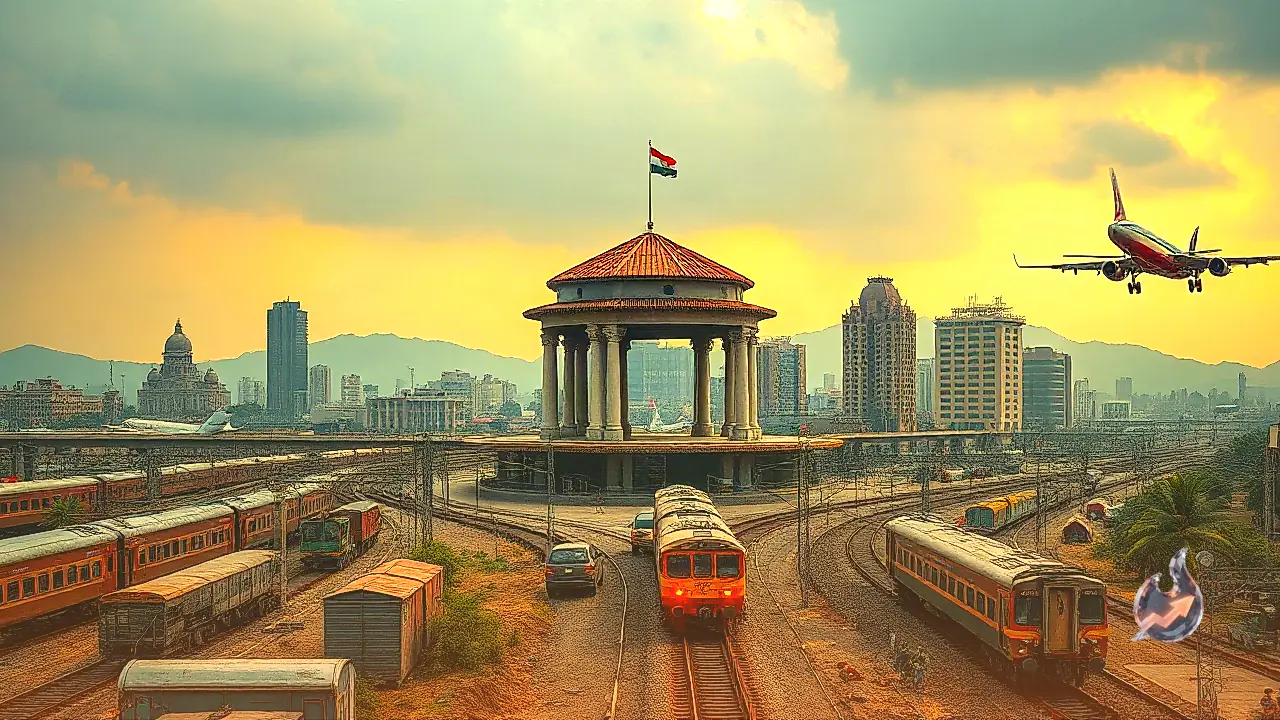
Indian Railways serves as the central circulatory system of the national economy, transporting commuters to workplaces, agricultural produce to central markets, and industrial goods across state borders. Public capital allocation for the railway network underwent a structural shift, soaring from Rs 32,000 crore in 2014-15 to a record budget of Rs 2.78 lakh crore for FY2026-27. This financial injection has funded accelerated track laying, electrification, and safety upgrades that directly enhance regional freight and passenger transit efficiency.
Freight logistics achieved historical volume records during the recent fiscal year. In FY2025-26, Indian Railways moved 1.67 billion tonnes (167 crore tonnes) of cargo, marking a substantial increase over the 1,098 million tonnes carried in 2014-15. This milestone positions Indian Railways as the second-largest rail freight operator globally. Uninterrupted transport of core commodities, including coal, cement, steel, fertilizer, and food grains, ensures that industrial manufacturing plants run without supply interruptions while expanding employment across transport, loading, packaging, and warehousing operations.
Amrit Bharat Station Scheme and Local Economic Opportunities
Transit hub modernization is progressing rapidly under the Amrit Bharat Station Scheme, which targets 1,340 stations across the country for transformation into world-class facilities. As of July 18, 2026, comprehensive redevelopments have been completed at 261 stations. Beyond aesthetic improvements, upgraded station hubs increase passenger throughput, driving commercial footfall toward surrounding micro-enterprises. Taxi operators, auto-rickshaw drivers, porters, food stall owners, and neighborhood hospitality establishments experience direct revenue increases as passenger traffic expands.
Aviation Infrastructure Expansion and the 165-Airport Network
Aviation connectivity represents a parallel growth engine propelling broader economic activity. The construction of modern airports generates immediate demand for steel, cement, architectural glass, electrical systems, and heavy construction equipment. Once operational, these facilities stimulate aircraft maintenance, repair, and overhaul (MRO) services, ground handling operations, and airline fleet expansions. India operated 74 functional airports in 2014; this figure rose to 164 in 2025 and reached 165 by July 2026, representing a 2.2-fold expansion over ten years.
Passenger throughput reflects this structural expansion in air transport capacity. In FY2024-25, domestic air carriers transported 16.55 crore passengers, up from 15.37 crore recorded in the preceding year, while international passenger volume expanded to 7.41 crore. Supported by regional connectivity initiatives such as the UDAN scheme and growing air cargo services, expanded flight operations generate secondary employment in city airport transfer logistics, regional tourism, and hospitality sectors.