





















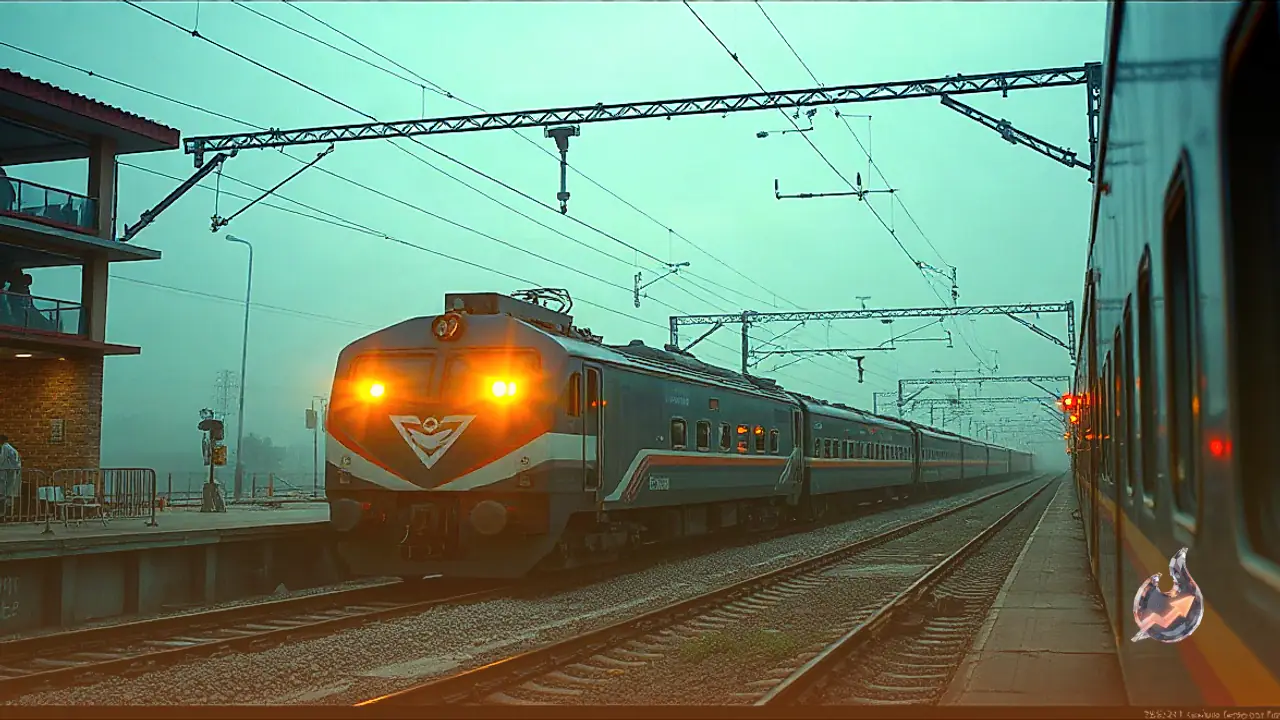

The introduction of Vande Bharat trains has marked a significant transformation in the operational landscape of Indian Railways. Beyond its passenger comfort and modern aesthetics visible across social media, the high-speed train features an exceptionally sophisticated safety infrastructure. Unlike conventional trains that rely on older pneumatic arrangements, Vande Bharat utilizes a braking framework engineered much like a modern motor car. Incorporating Electro Pneumatic disc brakes, the system ensures immediate deceleration, reduced stopping distances, and higher operational safety. Moreover, the train incorporates energy-harvesting capabilities that allow it to generate electricity every time the brakes are engaged.
Electro-Pneumatic Disc Brakes Inspired by Automotive Design
At the core of Vande Bharat's braking mechanism are Electro Pneumatic disc brakes. Unlike traditional railway coaches where brake shoes press against the tread of the wheels, Vande Bharat mounts disc brake assemblies directly alongside the wheels. In standard trains, braking force travels through air pressure lines, creating a minor delay as pneumatic pressure drops along the length of the train. In contrast, Vande Bharat transmits braking signals electronically. When the driver activates the brake, electrical impulses travel instantaneously across every coach. Similar to the combination of disc and drum brakes in automobiles, this setup delivers rapid response times and superior control during speed reduction.
Emergency Braking Distance (EBD) and Track Trials
To prevent accidents during unforeseen track obstructions, Vande Bharat incorporates an Emergency Braking Distance (EBD) protocol, mirroring emergency braking systems found in passenger cars. The primary goal of EBD is to bring a high-speed train to a complete halt safely without damaging rolling stock or endangering cargo. Comprehensive trials for this feature were successfully conducted in early August. Testing encompassed both dry and wet track conditions to evaluate performance under varying friction levels. Initially implemented in freight train operations to validate reliability, Indian Railways envisions expanding this advanced emergency braking system to passenger services as well.
Three-Tier Emergency Braking Operations
The freight iteration of the Vande Bharat system features three distinct emergency braking controls: the loco brake, the train brake, and an independent push-button brake. During field testing, all three braking modes performed flawlessly. Traditional trains suffer from propagation delays because air pressure must drain sequentially through pneumatic pipes across all wagons. Vande Bharat's electronic signal transmission bypasses these physical delays, allowing all brakes to engage simultaneously. This rapid activation is designed to increase the average operating speed of freight trains across India, accelerating supply chains and simplifying freight logistics.
Regenerative Braking and 30 Percent Energy Efficiency
The most impressive technological innovation in Vande Bharat is its Regenerative Braking system. Whenever the driver applies the brakes, the vehicle's kinetic energy is captured and converted directly into electrical energy instead of being dissipated as waste heat. This recovered electricity feeds back into the power supply line and is utilized directly by the train's internal systems or redistributed to the grid. Through this regenerative process, Vande Bharat reclaims approximately 30 percent of its total electricity consumption. The specialized disc brake design works in tandem with this regenerative framework, enabling safe, short-distance stopping while conserving substantial power.