




















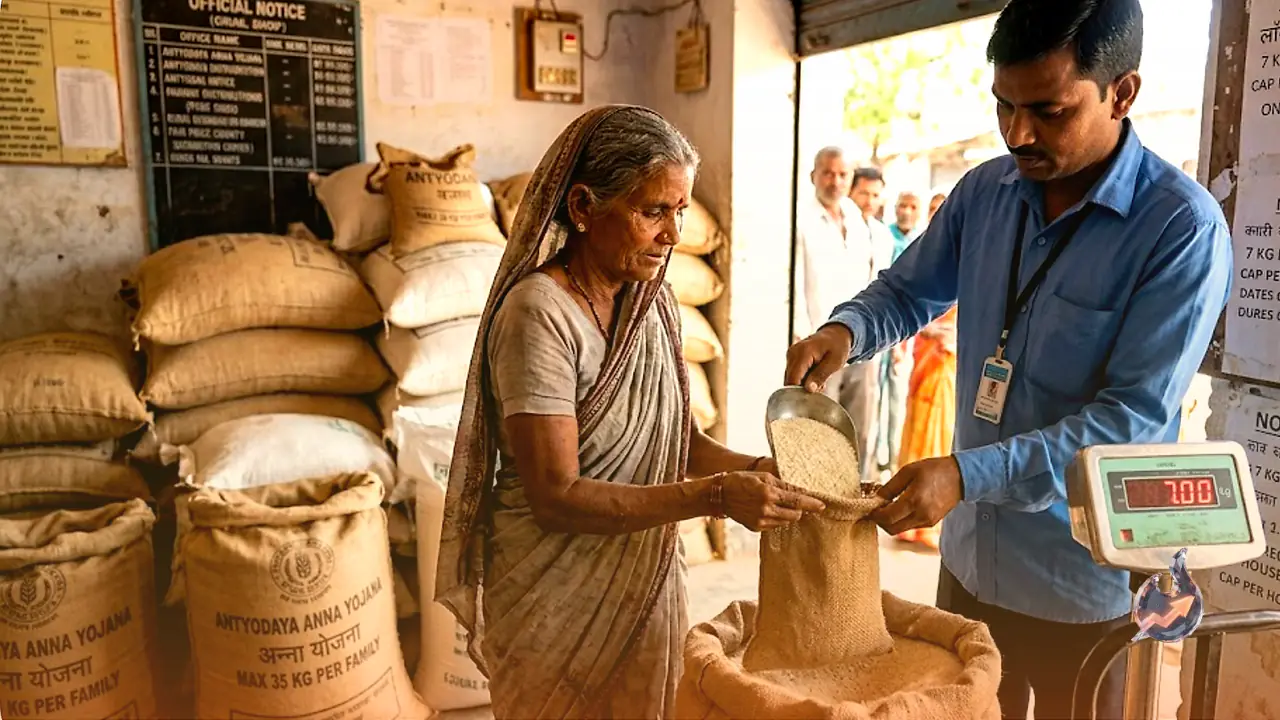

The way India's poorest families receive their monthly ration could soon change in a big way. Under the Antyodaya Anna Yojana (AAY), every eligible household currently gets a flat 35 kg of grain each month, no matter how many people live in it. The central government now wants to switch to a per-member formula. Under the new proposal, each person would get 7 kg of grain every month, while the maximum a single family can receive would stay capped at 35 kg.
The Department of Food and Public Distribution has released a draft of the National Food Security (Amendment) Bill, 2026 for this change, and has invited suggestions from the public until July 13.
The Current System and Its Flaw
Under the existing arrangement, an Antyodaya Anna Yojana household receives 35 kg of grain a month whether it has two members or eight. Priority Household beneficiaries, on the other hand, get 5 kg of grain per person. The government says this is why members of larger AAY families often end up with very little grain each, even though these households fall in the poorest category. The new proposal aims to fix exactly this imbalance.
In its statement, the Food Ministry said the family-based system under the Antyodaya Anna Yojana was meant to protect weaker sections, but it has created considerable inequality depending on the size of the household. The ministry believes the proposed change will benefit larger families and make ration distribution far more equitable.
How Much Each Family Would Get
According to the proposal, an AAY family with just two members would receive 14 kg of grain a month. Families with five or more members would continue to get the maximum of 35 kg, as before. In other words, larger families would gain more grain in line with their headcount, while the allocation for smaller families could come down comparatively.
Why the Government Calls It Important
The government has described the amendment as a major step toward strengthening food and nutrition security. The ministry says the change is in keeping with a human life-cycle based approach, which aims to make adequate, good-quality food available to every individual at affordable rates. At present, under the National Food Security Act, beneficiaries in both the Priority and Antyodaya categories receive rice and wheat free of cost.