





















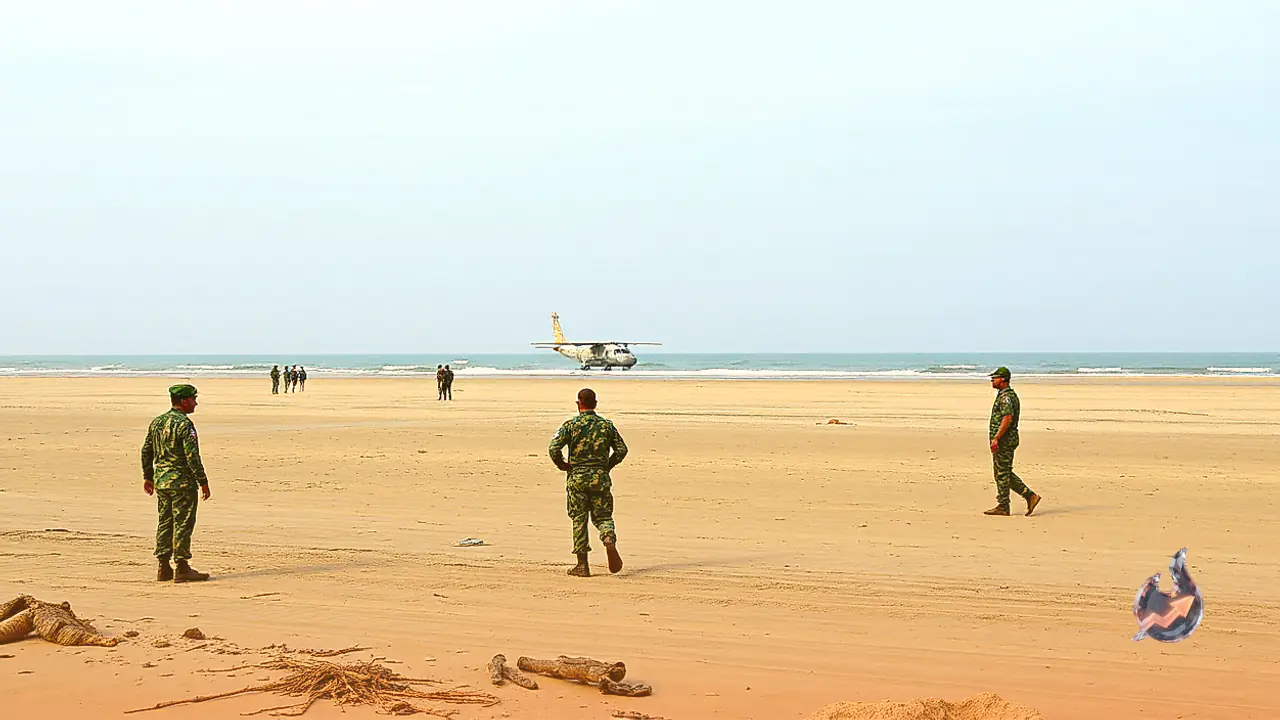

Armed forces from India and Australia successfully conducted a rapid sea to shore troop deployment exercise off the coast of Thiruvananthapuram in Kerala during the joint military exercise Austrahind 2026. The tactical drill saw Indian Navy warship INS Sharda and a Sea King helicopter operating alongside Indian Army and Australian Army personnel to practice comprehensive Humanitarian Assistance and Disaster Relief procedures. The operation focused on moving rescue and operational forces swiftly from maritime vessels directly onto coastal ground during critical emergency situations.
Tri Service Synergy Across Land, Sea, and Air
The operational demonstration integrated land, maritime, and aerial capabilities to execute a seamless coastal insertion. Utilizing the naval vessel INS Sharda alongside the Sea King helicopter, participating units simulated transferring specialized troops and emergency equipment directly to designated shoreline landing points. The primary objective of this coordinated amphibious manoeuvre was to establish frictionless communication and operational harmony among distinct military branches, ensuring that disaster mitigation and relief efforts can be deployed with minimal delay when crises strike.
Strengthening Interoperability and Joint Operations
A core priority of Austrahind 2026 remains enhancing operational readiness, jointness, and structural interoperability between the armed forces of India and Australia. Through these shared field drills, military personnel from both countries are actively familiarising themselves with each other's operational doctrines, battlefield tactical procedures, and command methodologies. This mutual exposure enables both defence establishments to seamlessly integrate assets and execute unified operations whenever required in multilateral humanitarian or security scenarios.
Specialised Focus on Coastal Disaster Management
The exercise holds particular strategic value for coastal zones that are routinely vulnerable to extreme natural disasters, maritime accidents, and severe weather emergencies. Rapidly accessing isolated or devastated shorelines demands synchronized execution across naval, army, and aviation commands. The drills evaluated rapid deployment mechanisms, specialized maritime transport, and tactical air support, validating standard operating procedures that allow military first responders to establish logistics and medical relief bases on coastal ground quickly.
Deepening Bilateral Defence Cooperation
The successful amphibious deployment underscores the expanding scope of bilateral defence and strategic cooperation between India and Australia. Regular collaborative exercises under the Austrahind framework build operational trust, mutual doctrinal comprehension, and long-term security synergy. By demonstrating precision in landing personnel from open water to the coast, the participating Indian and Australian units highlighted their high degree of inter-service execution and collective preparedness for humanitarian emergencies.