






















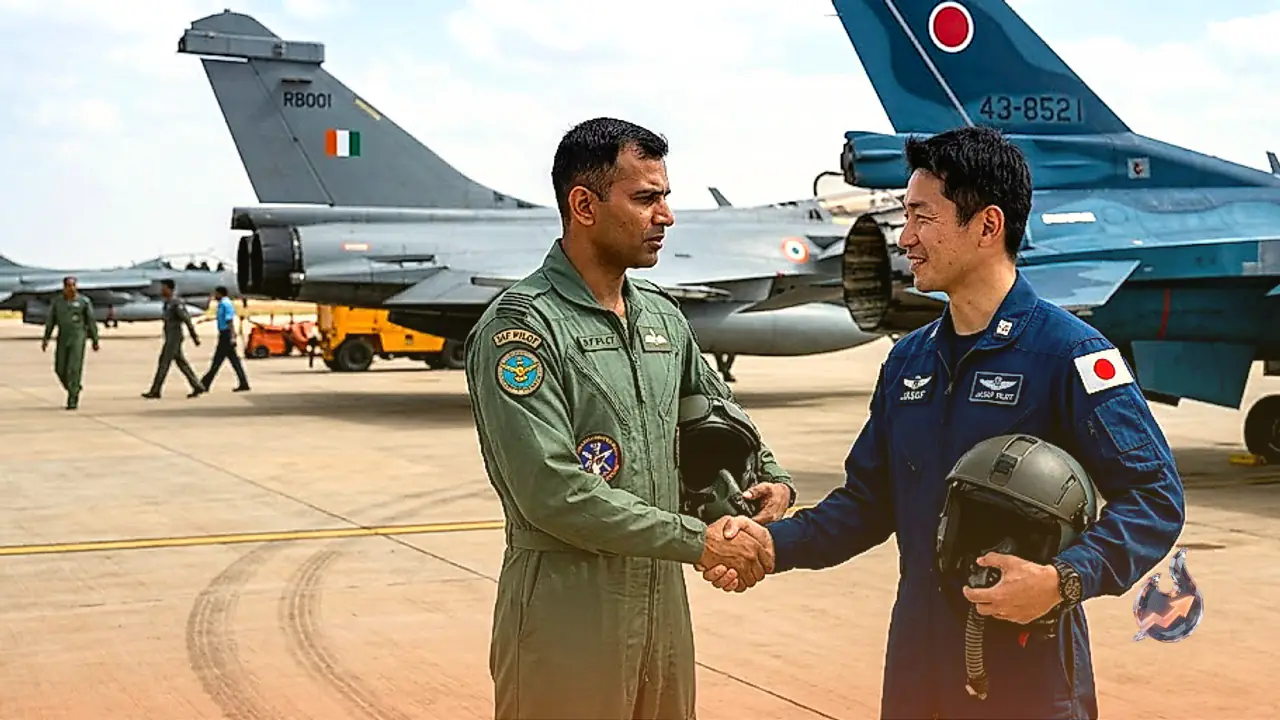

The Indian Air Force and the Japan Air Self-Defense Force (JASDF) have officially launched the second edition of their bilateral air exercise, 'Veer Guardian-2026', at the Jodhpur Air Force Station in Rajasthan. Scheduled to take place from September 9 to September 22, 2026, this 14-day high-intensity exercise brings together front-line combat aircraft and military personnel from both nations. Upon their arrival in Jodhpur, the Indian Air Force extended a formal welcome to the Japanese air warriors. Over the two-week period, the air forces will jointly execute a series of complex, advanced, and challenging operational missions.
Arrival of the Japanese Contingent and C-2 Aircraft in Jodhpur
The specialized military contingent from the Japan Air Self-Defense Force arrived at Jodhpur Air Force Station aboard two Japanese C-2 transport aircraft. The participating Japanese detachment comprises 3 F-2A fighter jets from the 8th Air Wing based at Tsuiki Air Base, alongside approximately 110 military personnel. Following the touchdown of the fighter aircraft, the media coordination team of the Indian Air Force shared on X that the skies of Jodhpur are now primed for intense joint aerial action and tactical combat maneuvers.
According to the Japan Air Self-Defense Force, the primary objective of participating in this exercise is to enhance the tactical proficiency of its operational units while deepening mutual understanding with the Indian Air Force. The deployment of F-2A fighter jets to Jodhpur is designed to significantly improve interoperability between the two military forces, allowing pilots and support crews to familiarize themselves with each other's operational doctrines and protocols.
Deployment of Primary Indian Air Force Combat Assets
For exercise Veer Guardian-2026, the Indian Air Force has fielded a diverse fleet of its most capable and advanced fighter aircraft. The lineup includes India's indigenous Light Combat Aircraft (LCA) Tejas, the multi-role Su-30MKI fighter, and the French-built Rafale jets. These front-line Indian fighters will operate alongside the Japanese F-2A jets in simulated air combat scenarios, tactical formations, and aerial warfare exercises.
The integration of different fighter platforms featuring varied radar systems, avionics, and weaponry presents an invaluable training opportunity for air strategists from both sides. As shared on X by the IAF media coordination center, the joint drills will allow aircrews to exchange operational insights, compare combat tactics, and refine air-to-air combat skills in a collaborative environment.
14-Day Exercise Schedule and Professional Subject Matter Exchanges
The 14-day exercise encompasses much more than tactical flight maneuvers and aerial dogfights in the sky. A structured framework for professional interaction among officers, pilots, and technical personnel has been established throughout the event. Scheduled activities include comprehensive mission planning conferences, subject matter expert exchanges, technical discussions on engineering practices, and specialized briefings on aerospace safety.
These joint interactions aim to foster best practices in mission planning, aircraft maintenance, logistics support, and aerospace safety management. Engineering and maintenance teams from both forces will analyze ground support protocols and operational maintenance procedures to ensure seamless support during joint air operations.
Strengthening India-Japan Strategic and Defense Cooperation
According to the Ministry of Defence, the execution of Veer Guardian-2026 underscores the deepening strategic alignment and defense partnership between India and Japan. Building upon the foundation laid during the inaugural edition, this second iteration of the exercise elevates bilateral military cooperation and operational coordination in the aerospace domain.
The exercise holds strategic importance in promoting stability, peace, and security across the Indo-Pacific region. By training together at the Jodhpur Air Force Station, both air forces gain critical exposure to each other's tactical methods, operational workflows, and combat experiences, further solidifying their long-standing diplomatic and defense relationship.