

















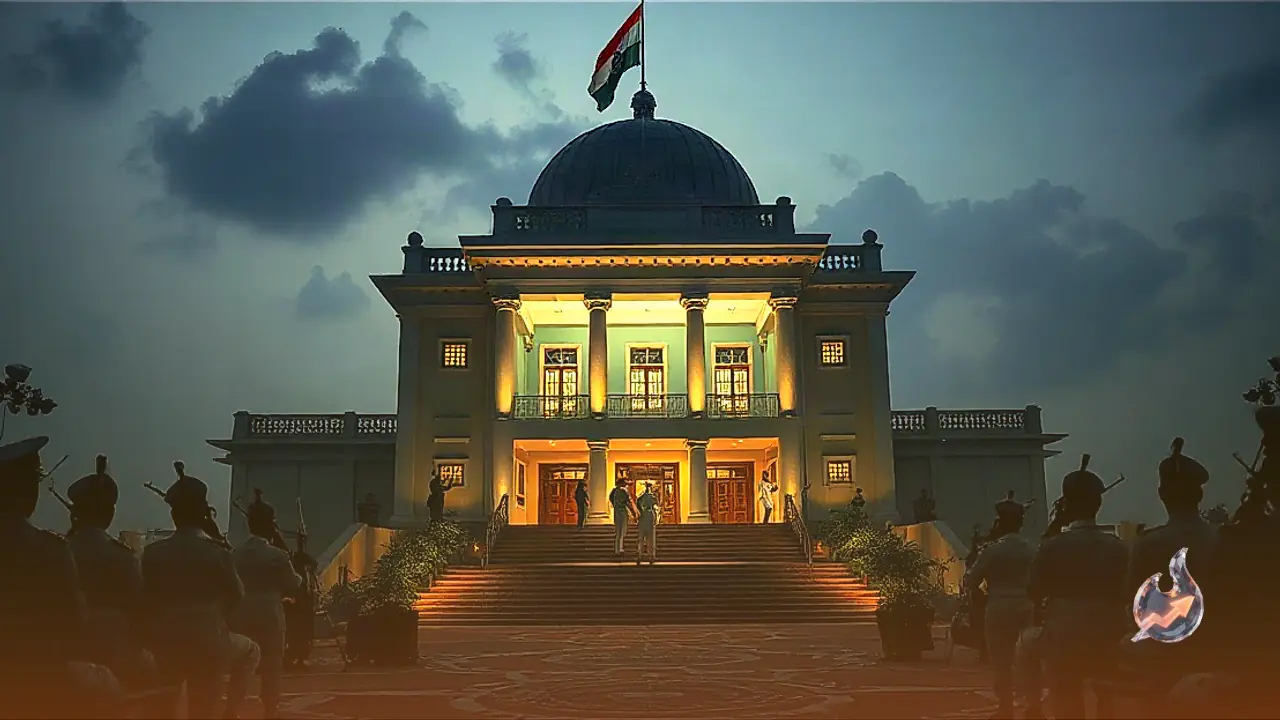

Top military leadership of the Indian Navy has gathered at the Navy Bhavan in New Delhi for a comprehensive three-day Commanders Conference running from September 29 to October 1. Far from being a routine administrative review, this apex-level forum serves as a critical platform to conduct a thorough assessment of naval readiness across military and strategic domains. Discussions during the sessions centre on evaluating ongoing operational challenges, maritime security dynamics, and future preparedness requirements across India's zones of influence.
High-Level Participation and Operational Strategy
The conference brings together the topmost naval brass alongside area commanders directly engaged in operational deployments across various maritime sectors. Their active involvement enables a grounded evaluation of field challenges, logistical hurdles, and evolving mission requirements. Institutional dialogues with senior government officials are also integrated into the schedule. As the second edition of the biennial commanders conference for 2026, the timing coincides with active geopolitical conflicts in West Asia, which have elevated the strategic importance of safeguarding vital sea lanes and energy supply routes, thereby placing the Indian Navy's proactive role at the center of the agenda.
Strengthening Maritime Partnership and Security
The operational footprint of the Indian Navy has expanded significantly in recent times. Particularly during operations tied to energy security, the naval force successfully safeguarded maritime commerce and energy assets, reinforcing its reputation as a reliable security partner across the Indian Ocean Region and beyond. With the fleet operating at a consistently high operational tempo, delegates are reviewing how the navy can further enhance its combat punch and mission readiness in an increasingly fluid geopolitical environment.
Leadership Addresses and Tri-Services Integration
Defense Minister Rajnath Singh will deliver the opening address on the first day, outlining the broader vision for national maritime security and the nation's expectations from the naval force. The Chief of Defense Staff and the Chief of the Army Staff are also scheduled to interact with the naval commanders. This inter-service engagement is designed to foster deeper synergy, enhance joint operational execution, and accelerate military integration among the armed forces.
Embracing Artificial Intelligence and Advanced Tech
Over the subsequent two days, the Chief of the Naval Staff and the commanders-in-chief will review vital verticals including active operations, material management, logistics, human resources, and specialized training programs. Given the rapidly evolving character of modern warfare, special attention is dedicated to the rapid adoption of emerging technologies. Artificial intelligence, big data analytics, autonomous and unmanned systems, along with cyber operations, form the core agenda of these strategic deliberations. The overarching goal extends beyond mere acquisition, focusing on building practical combat utility for contemporary battlefield conditions.
Pillars of Self-Reliance and Future Readiness
The entire modernization roadmap rests upon three fundamental pillars of jointness, self-reliance, and innovation. These guiding principles align directly with national objectives such as Atmanirbhar Bharat and the broader vision for a developed nation by 2047, ensuring that the Indian Navy remains a future-ready, technologically dominant force capable of protecting national interests.