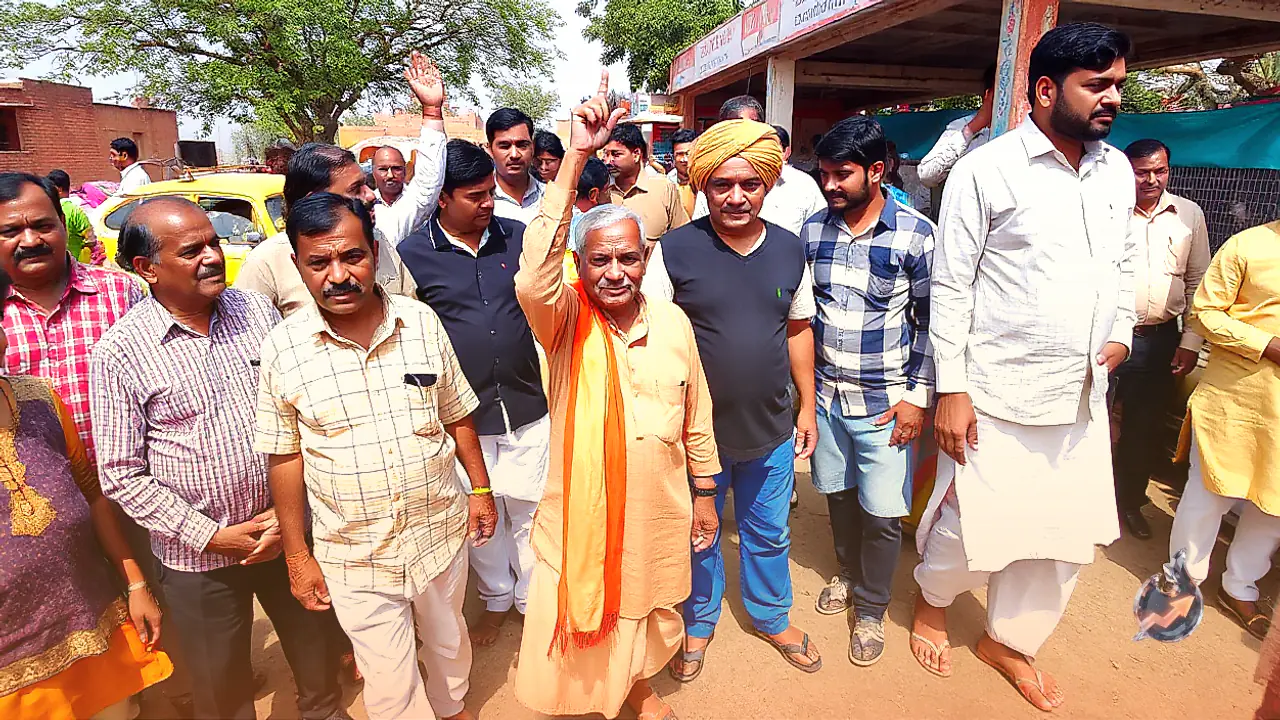
















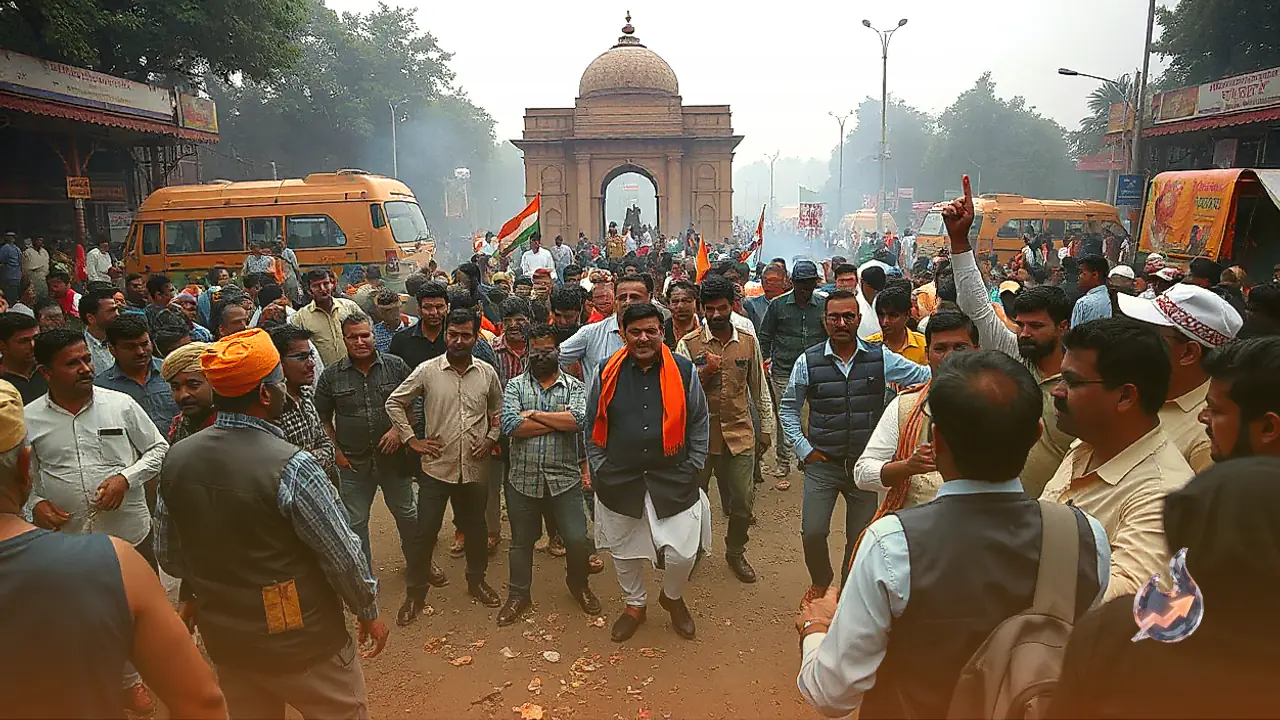

A sharp political confrontation has erupted between the Bharatiya Janata Party and the Congress as the opposition INDIA bloc convened a massive gathering at Delhi's historic Ramlila Maidan. Union Health Minister and Bharatiya Janata Party President JP Nadda directly targeted Congress leader Rahul Gandhi, accusing him of attempting to orchestrate public disorder and push an agenda of national instability. Nadda emphasized that governance in India rests upon constitutional mandates rather than disruptive demonstrations on the streets. This sharp reaction coincided with the opposition's mobilization demanding the resignation of Chief Election Commissioner Gyanesh Kumar and protesting against SIR.
Constitutional Order and the Banana Republic Rebuttal
Challenging the premise of the opposition mobilization, JP Nadda warned Rahul Gandhi against undermining India's established democratic processes. Delivering an unequivocal response, Nadda stated, “Rahul Gandhi, listen carefully: this is India, not some ‘banana republic’ where you can incite arson, trigger riots, or push an agenda for ‘regime change’ whenever you please.”
The BJP chief stressed that Rahul Gandhi must abandon such illusions immediately. India stands as the world's oldest and most resilient democracy, capable of withstanding attempts to foster unrest or lawlessness. The nation operates strictly under constitutional principles and the sovereign verdict of the electorate, rather than through tactics aimed at undermining elected governance. Nadda further argued that organizing mass agitations under frivolous pretexts is a deliberate effort to erode public confidence in vital state institutions.
Evoking the 1984 Anti-Sikh Riots to Confront Congress
Broadening the scope of his offensive, JP Nadda invoked the 1984 anti-Sikh riots, characterizing November 1st as the most infamous and darkest stain on India's democratic journey. He asserted that on this exact date decades ago, elements patronized by the Congress perpetrated a brutal massacre of innocent Sikhs. The violence displaced thousands of families overnight and left countless women widowed, shattering lives across the national capital.
Pointing out enduring scars, Nadda observed that the Widow Colony in Delhi remains living testimony to that gruesome chapter of modern history. He underscored that the Gandhi family has never tendered an honest, heartfelt apology to the Sikh community for that historic atrocity. The BJP president questioned the moral compass of the Congress leadership, noting that on a somber day intended for remembering victims and honoring martyrs, Rahul Gandhi chose to stage a political spectacle at Ramlila Maidan to advance partisan interests. Nadda also challenged the allied parties within the INDIA bloc, asking whether their presence in the rally signifies active complicity in rubbing salt into the historical wounds of the Sikh community.
Commercial Disruptions and Multi-Thousand Crore Trade Losses
Moving beyond historical and political friction, JP Nadda drew attention to the immediate economic toll inflicted on Delhi's traders, merchants, and small shopkeepers by such massive rallies. He noted that during peak festive periods around Diwali and Chhath, when retail businesses anticipate high footfall, large-scale traffic curbs and demonstrations deal a severe blow to daily commerce.
Nadda referenced communications addressed to Rahul Gandhi and other opposition figures by the Chamber of Trade and Industry, widely known as CTI. Recalling past demonstrations, he highlighted that previous disruptions had already inflicted a commercial loss close to 3,000 crore rupees upon local businesses. In the case of the present Ramlila Maidan gathering, trade bodies project potential losses exceeding 10,000 crore rupees. Pushing urban centers into gridlock during critical shopping periods directly damages the livelihoods of retail entrepreneurs who rely heavily on festive demand to sustain their annual operations.
Scrutiny of Foreign Remarks and Attacks on Economic Stability
Concluding his rejoinder, JP Nadda criticized Rahul Gandhi's broader political trajectory, accusing him of systematically maligning the country during trips abroad before returning to target the domestic economy and democratic institutions. He alleged that there exists a deliberate pattern of discrediting India's growth narrative and institutional framework on international platforms.
Nadda maintained that the Indian public sees through these maneuvers and will refuse to be swayed by rhetoric designed to foster pessimism and chaos. He reiterated that India will march ahead guided by the authority of the ballot box and the framework of the constitution, leaving no room for attempts to derail national progress through orchestrated instability.