


















A fresh wave of political and legal maneuvering has swept across Uttar Pradesh as Samajwadi Party stalwart Azam Khan faced re-arrest within moments of stepping out of Rampur prison. Following his appearance before an MP MLA court in Ghaziabad under a fresh financial inquiry, the trajectory of regional politics leading up to the 2027 assembly elections has become increasingly intricate. Legal analysts and party observers suggest that prolonged custody under federal enforcement provisions could effectively sideline the veteran leader until the electoral battle concludes. This sudden turn of events forces the main opposition party to re-evaluate its organizational machinery, outreach tactics, and grassroots campaign blueprint across the state.
The Core of the Financial Inquiry and Disputed Valuation Figures
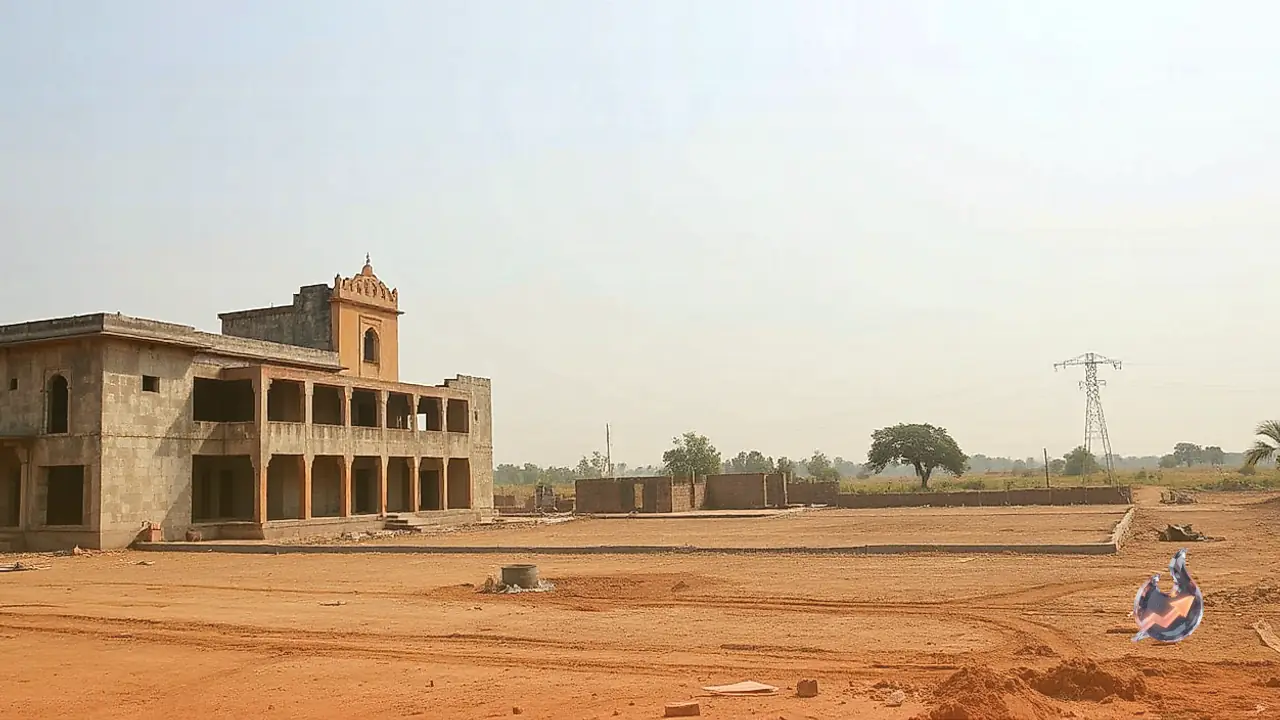
The sequence of events unfolded on October 31, 2026, when Azam Khan and his son Abdullah Azam walked out of Rampur jail after securing bail from the Allahabad High Court in an alleged dual PAN card matter. While Abdullah Azam was allowed to return home, officials from the Enforcement Directorate intercepted Azam Khan to take him into custody under money laundering provisions. At the center of this probe lies the infrastructure development and fund flow of the Maulana Mohammad Ali Jauhar University established in Rampur.
According to figures presented by the investigating authorities, property valuation assessments conducted through the income tax department placed the overall construction cost of the university campus buildings at approximately 494.46 crore rupees. In contrast, the financial declarations and income tax returns filed on behalf of the governing trust between financial years 2013-14 and 2024-25 reflected a capital expenditure outlay of only 78.32 crore rupees. The federal agency claims that this presents an unexplained gap of roughly 416.14 crore rupees. Investigators are examining the precise origin of the funding that financed this disputed gap, along with related banking channels. These claims currently stand as allegations brought forth by the agency, subject to formal judicial scrutiny and final determination in court.
Strategic Ramifications for Party Mobilization Across Western Districts
Azam Khan has occupied a singular space in regional state politics for decades, serving as a founding pillar of the Samajwadi Party and winning election as a lawmaker on ten occasions. His administrative clout remained visible throughout the tenures of both Mulayam Singh Yadav and Akhilesh Yadav, positioning him as an influential voice inside governance circles. Had he been able to campaign freely for the 2027 assembly contest, the party might have leveraged his stature across multiple operational fronts.
His direct participation on the campaign trail was widely seen as an asset to re-energize veteran field cadres in strongholds such as Rampur, Moradabad, Sambhal, and Bareilly. A series of rallies and speeches addressed by him could have provided a distinct platform of engagement for traditional party constituencies. Furthermore, his active presence would have signaled that legacy leaders retain substantial authority beyond mere vote collection. Nevertheless, local electoral dynamics have evolved noticeably in recent years. The triumph of Mohibullah Nadvi during the 2024 general election in Rampur, coupled with local intra-party friction involving Khan's supporters, highlights that while his sway remains notable, it no longer operates without domestic political counterweights.
Countering Alternative Political Narratives and Community Representation
The prolonged legal confinement of Khan also intensifies the task before the Samajwadi Party in responding to aggressive political narratives raised by rival outfits. All India Majlis-e-Ittehadul Muslimeen president Asaduddin Owaisi has repeatedly asserted during public forums that traditional secular formations extract electoral backing without extending proportionate leadership shares in governance. During an address in Rampur in October 2026, Asaduddin Owaisi targeted Akhilesh Yadav, alleging that the party prioritizes a specific community base while treating other groups as passive ballot banks. He explicitly cited Khan's enduring legal entanglements to question the depth of the party's institutional solidarity.
Had Azam Khan been available on the public podium, party leadership could have pointed to his stature to push back against claims of marginalization. An active partnership would have served as tangible evidence that senior leaders from diverse backgrounds hold influential positions within the party hierarchy. However, political analysts observe that neutralising such criticisms requires comprehensive measures beyond showcasing an individual veteran. It demands equitable ticket distribution, meaningful leadership roles across the organization, robust representation within legislative bodies, and unambiguous policy stances on regional concerns.
Leadership Engagement and Organizational Realities
Navigating these constraints, Samajwadi Party chief Akhilesh Yadav traveled to Rampur jail on October 22 to hold an extensive meeting with Azam Khan. In the aftermath of that interaction, Yadav publicly asserted that Khan has always been and will remain a permanent pillar of the party. The gesture was interpreted as an effort to reassure regional party loyalists and Khan's dedicated base before the electoral buildup gathered full speed. Although Khan managed to coordinate regional party affairs to some degree from behind bars, his physical absence from the upcoming 2027 campaign trail will compel the party to lean heavily on decentralized local leadership and restructured regional alliances.