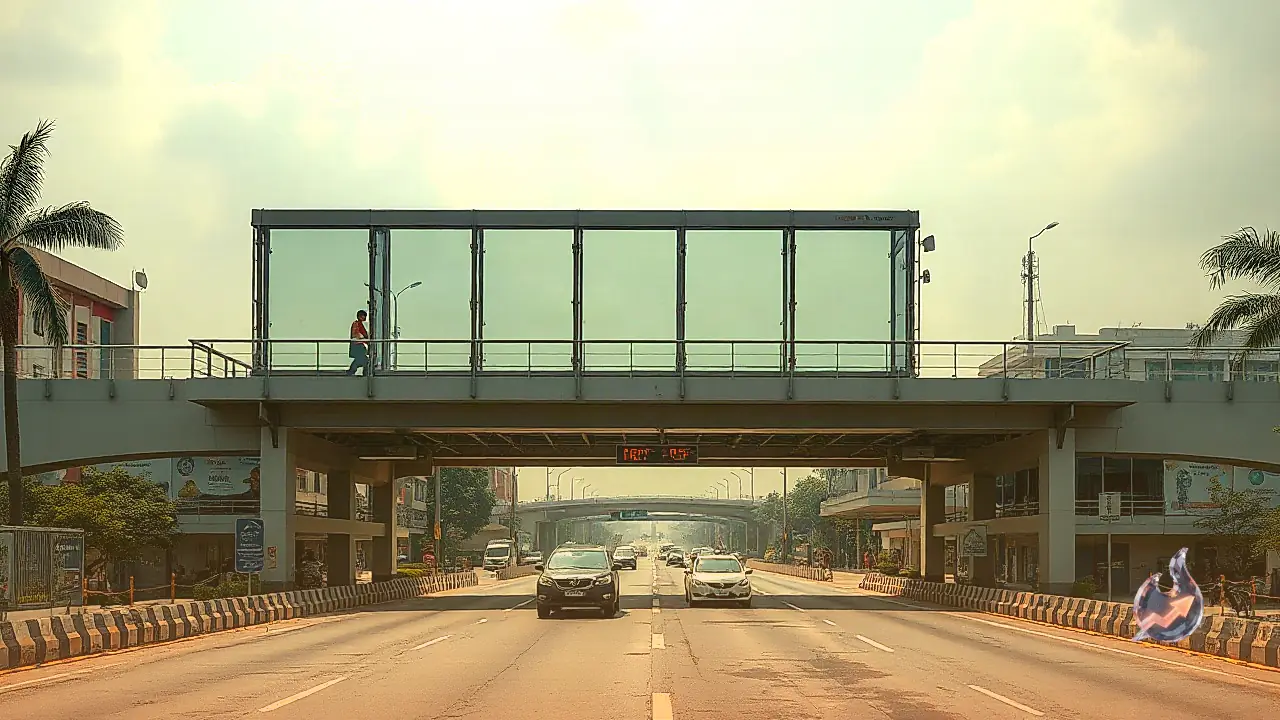





















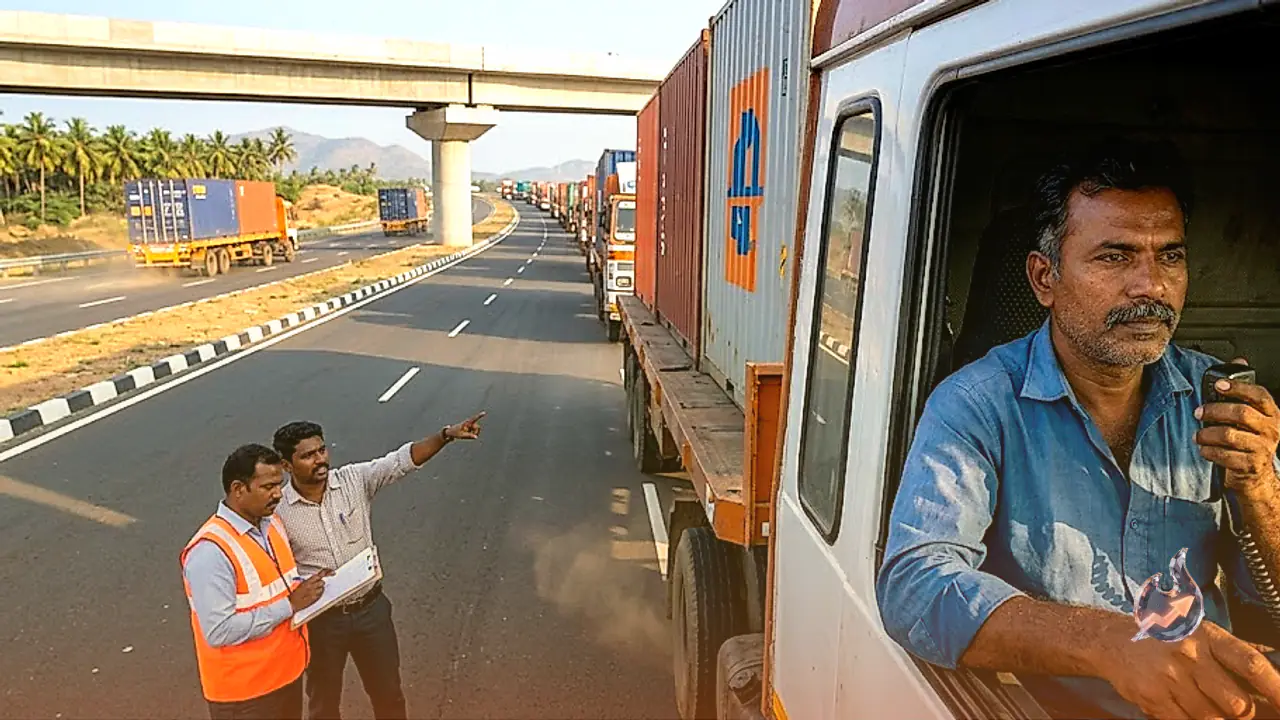

A high-capacity logistics artery across southern India is taking shape to fundamentally overhaul the movement of commercial freight between the Arabian Sea and the Bay of Bengal. Covering an expanse of approximately 443 kilometres, the Thoothukudi-Kochi Economic Corridor, designated as EC-21, links the industrial hinterlands of Tamil Nadu with the commercial hubs of Kerala. Moving far beyond ordinary passenger connectivity, the corridor is engineered specifically to cater to high-density inter-port cargo traffic. Anchored by the V.O. Chidambaranar Port on the eastern seaboard and the Port of Kochi on the western coastline, this dedicated road infrastructure is poised to bridge two vital maritime gateways, drastically cutting vehicle transit durations and curbing supply-chain expenditure across the southern peninsula.
Strategic Integration Under Bharatmala Pariyojana
EC-21 has been marked as a critical commercial transit route under the national Bharatmala Pariyojana framework. The core objective of this central highway programme is not merely establishing direct physical links between urban clusters, but actively re-engineering freight corridors to enhance vehicular throughput, eliminate cargo chokepoints, and modernise national logistics corridors. Along this 443-kilometre expanse, execution encompasses a dual-track strategy: extensive capacity augmentation and widening of legacy highways, alongside the greenfield construction of fresh alignments. By realigning winding stretches and bypassing congested township bottleneck zones, the route aims to provide heavy multiaxle freight carriers with uninterrupted, higher-speed transit.
Complementary Maritime Profiles of Thoothukudi and Kochi Ports
The strategic necessity of EC-21 stems directly from the distinct yet complementary maritime operations handled by the two terminal harbours. Thoothukudi, historically functioning through the V.O. Chidambaranar Port, serves as a prime deepwater conduit for bulk imports such as thermal coal, industrial machinery, raw manufacturing supplies, agricultural consignments, and heavy containerized loads. Conversely, the Port of Kochi on the western shore is a major hub for container transshipment, petroleum fuels, bunker oil, premium spices, and processed marine seafood exports. Previously, the lack of an uninterrupted, heavy-duty road spine forced cross-peninsular cargo to navigate narrow arterial corridors and strenuous mountain terrains. EC-21 establishes a continuous, reliable overland bridge connecting both coastal terminals.
The Critical Role of the Kochi-Theni Greenfield Alignment
A pivotal engineering component of this larger transportation web is the Kochi-Theni greenfield highway project. Designed specifically to navigate the transition between lowland coastal plains and inland trade junctions, this access-controlled bypass route allows freight originating from or destined for Kochi to transit swiftly toward Theni and onwards to Thoothukudi. By steering heavy freight vehicles away from fragile, high-congestion mountain passes, this alignment reduces vehicular mechanical wear, improves driver safety, and supports the seamless transit of long container trailers that require uniform road gradients and wide turning radiuses.
Optimising Turnaround Times and Lowering Logistics Costs
The most immediate commercial dividend of dedicated port-to-port connectivity lies in cargo economics. Accelerating the road transit of export-import containers directly cuts operational expenditures by curbing diesel consumption, reducing truck idle hours, and minimizing vehicle wear and tear. Faster inland transit translates directly into improved turnaround metrics for shipping lines and fleet operators, enabling companies to plan predictable delivery cycles. For manufacturing plants, exporters, and logistics aggregators that depend on tight international shipping vessel schedules, reduced overland transit times mitigate the persistent risk of missed port cut-offs and costly maritime demurrage fees.
Catalysing Industrial Growth in Tamil Nadu and Kerala
Beyond coastal shipping yards, EC-21 passes through agricultural and manufacturing heartlands that stand to gain direct access to wider commercial markets. Southern Tamil Nadu hosts a dense cluster of automotive component plants, cement works, petrochemical refineries, and textile hubs that require rapid distribution routes. On the Kerala side, rural cooperatives and commercial processing units produce substantial volumes of natural rubber, high-grade spices, tropical plantation produce, and seafood. A reinforced road link allows Kerala's agricultural and plantation sectors to access shipping routes departing from the eastern coast through Thoothukudi, while raw materials landed at Thoothukudi can swiftly reach value-addition centres across Kerala.
Local Economic Spillovers and Service Sector Expansion
The influence of the 443-kilometre expressway extends deeply into local employment and enterprise development. During its development phase, highway construction generates immediate opportunities for local civil contractors, heavy equipment operators, material vendors, and skilled workers. Over the longer horizon, the establishment of this high-speed arterial road naturally draws capital investments in modern automated warehousing hubs, cold chain logistics facilities, customs handling depots, and truck servicing terminals along its bypass corridors. Furthermore, improved inter-state road geometry benefits regional commercial travel, easing connectivity for inter-city trade and tourism between the two states.
Execution Complexities Across Varied Topographies
Executing an infrastructure project spanning 443 kilometres across two states involves managing distinct administrative and geographical challenges. Several legs of the corridor have already completed upgradation and surface strengthening, while other stretches remain under ongoing civil construction. Key project hurdles include completing complex land acquisition procedures across densely inhabited semi-urban belts, securing necessary environmental and forest clearances, and engineering stable highway alignments through difficult mountainous geography near the Western Ghats. Overcoming these spatial constraints remains central to delivering a highway corridor capable of sustaining heavy commercial tonnage.
Synergy With the Wider South Indian Highway Grid
EC-21 cannot be understood in complete isolation; it forms a major lateral axis connecting with mega-highway initiatives across the southern peninsula. The corridor intersects and integrates with the broader Mumbai-Kanyakumari Coastal Corridor and the East Coast Economic Corridor. By establishing an east-west cross-peninsular trunk link, this corridor ties together highway systems running parallel to the Arabian Sea and the Bay of Bengal. When heavy freight moves seamlessly from Thoothukudi to Kochi without mid-route transit barriers, it binds two vibrant regional economies into an integrated, competitive commercial zone.