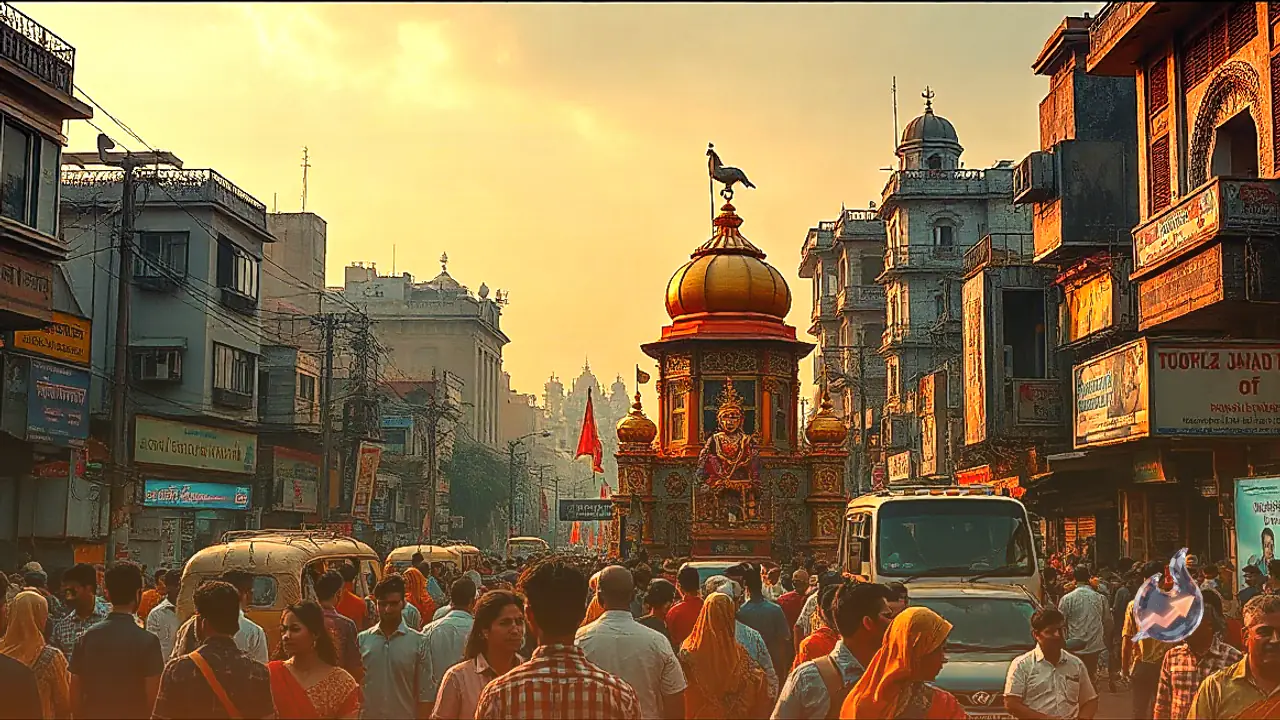




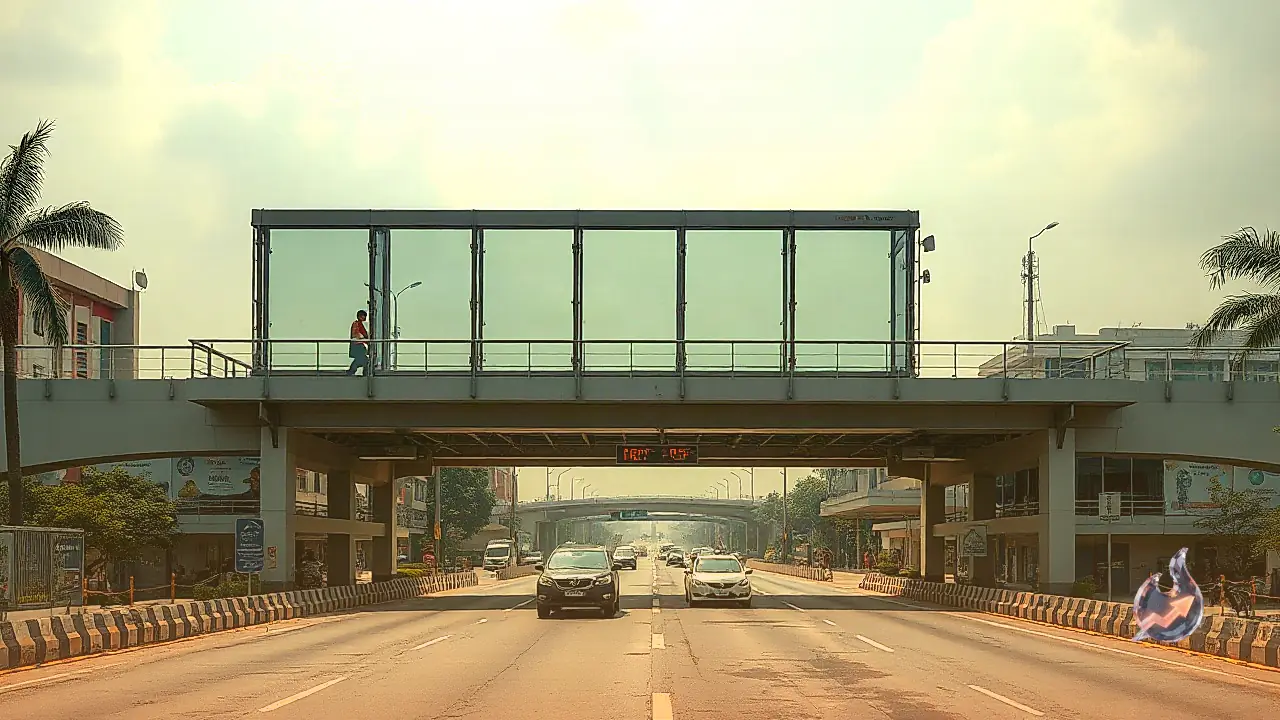
















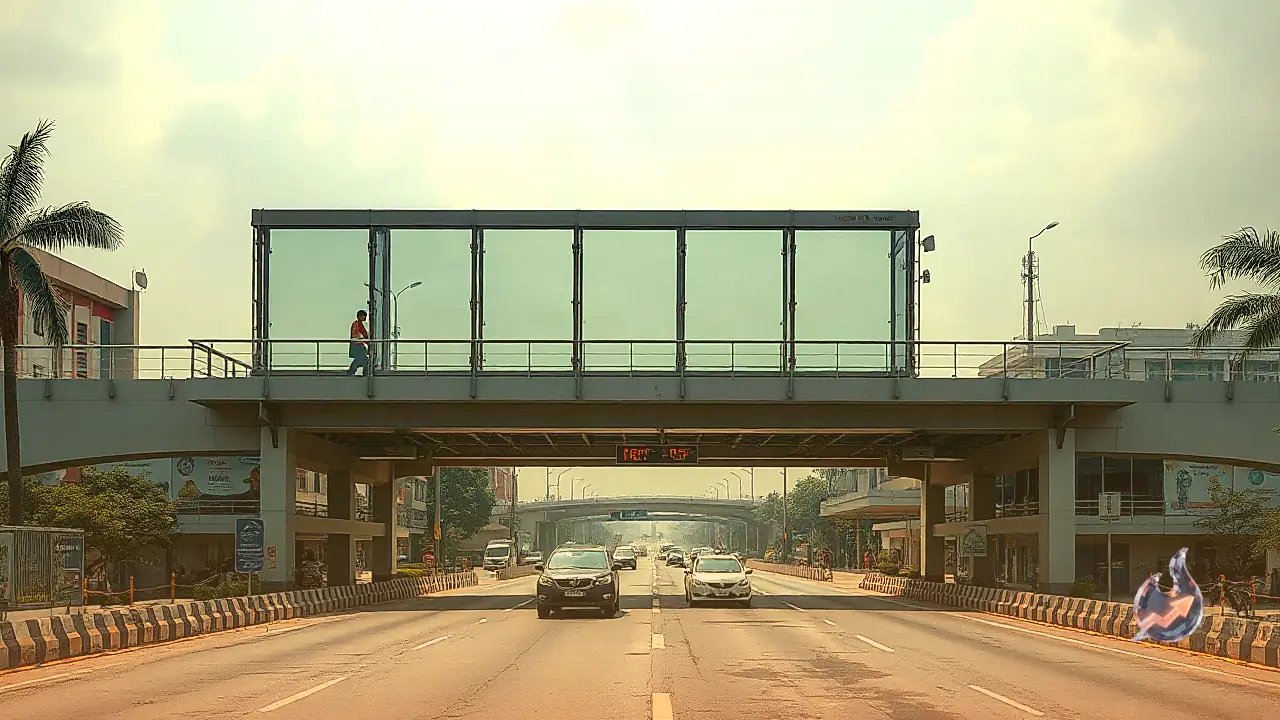

Navigating the busy surface corridors of East Delhi is set to become considerably safer for daily commuters, shoppers, and local residents. With high-speed traffic dominating the emerging expressway network, pedestrian crossing infrastructure is being built to segregate foot traffic from high-velocity vehicular movement. Harsh Malhotra, Union Minister of State for Road Transport and Highways, laid the foundation stone on Wednesday for a major foot overbridge connecting the Gandhi Nagar and Geeta Colony stretches, providing much-needed relief to one of the most crowded trade hubs in the capital.
Project Locations Along the Highway Corridor
The construction spans three critical junction points across the highway alignment. The Gandhi Nagar bridge is located at kilometer marker 5+100, directly serving the commercial zone. Further down the route, another overbridge is being constructed at Ramesh Park in Laxmi Nagar at kilometer 2+800. Additionally, administrative clearance has already been granted for a third pedestrian bridge situated near Bhajanpura and Garhi Mendu at kilometer 10+800.
Budget Allocation and Modern Infrastructure Specs
An estimated sum of 12.90 crore rupees is earmarked for the construction of these three pedestrian crossings. Designed to ensure complete accessibility for elderly citizens and differently-abled individuals, every bridge will feature passenger lifts alongside standard staircases. Smooth approach ramps and high-capacity lighting systems will also be integrated across the structures to maintain visibility and round-the-clock safety, allowing pedestrians to traverse across multiple road lanes without stepping into the path of moving traffic.
Commercial Significance and Highway Connectivity
Gandhi Nagar holds prominent status as Asia's largest wholesale textile and garment market, drawing a footfall of thousands of traders, retailers, and bulk buyers every day. The artery cutting through this sector is National Highway 709B, an expansive 210-kilometer access-controlled highway linking Delhi with Dehradun across Uttar Pradesh. The arterial route passes through key regional urban centres including Baghpat, Baraut, Shamli, Muzaffarnagar, and Saharanpur. Elevating pedestrian crossings away from the highway lanes ensures that long-distance motor transit remains uninterrupted while street-level vulnerability is minimized.
Pedestrian Safety Across the NCR Network
Highlighting the focus on protecting everyday walkers from high-speed transit risks, Harsh Malhotra noted that safety remains central to ongoing infrastructure upgrades. “Pedestrian safety is being prioritized, and such projects will be rapidly expanded across the entire Delhi-NCR region,” the minister stated. Once operational, these structures will safeguard local residents and market visitors from high-velocity vehicles on the corridor.