

















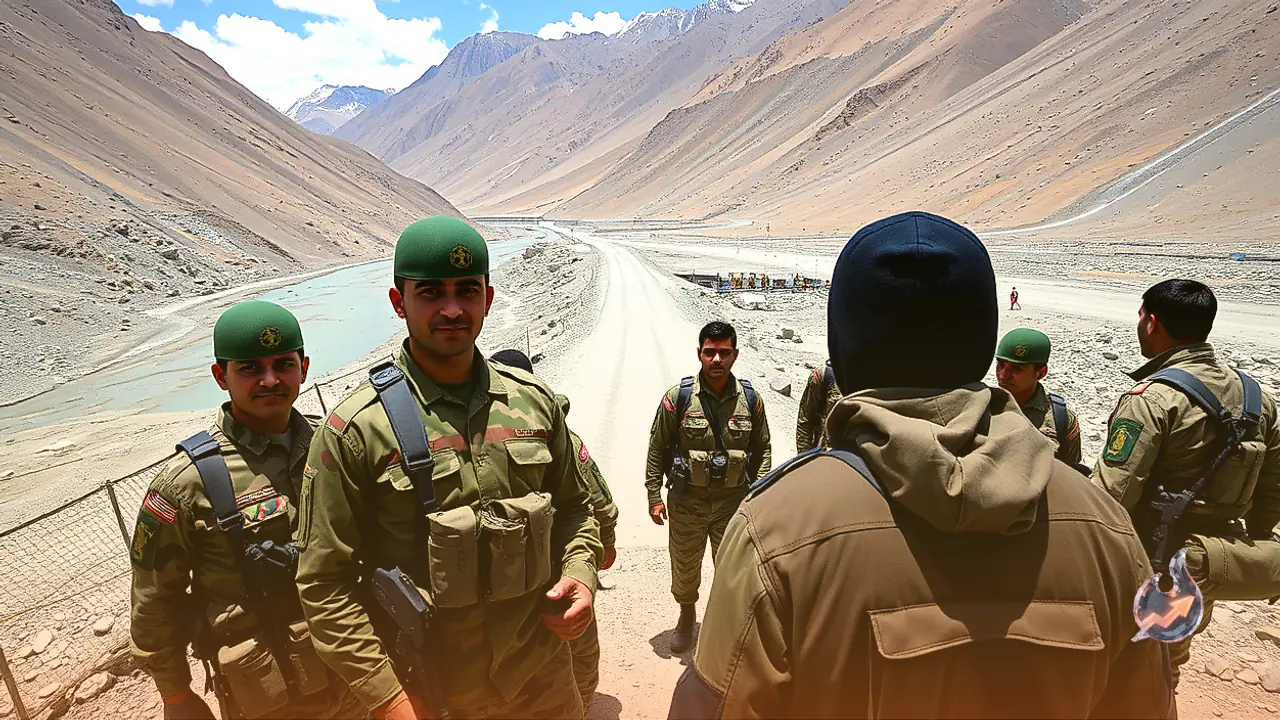

A strategic initiative has been set into motion to establish a dedicated alternate vehicular corridor toward Daulat Beg Oldie, a vital forward military base situated close to the Line of Actual Control (LAC) in eastern Ladakh. To reinforce troop mobility and logistical durability across this high-altitude frontier, the Border Roads Organisation (BRO) has commenced drafting the Detailed Project Report (DPR) for a 150-kilometre-long road that will trace the eastern bank of the Shyok River. The project forms an integral addition to the broader Darbuk-Shyok-Daulat Beg Oldie road network, aimed at ensuring uninterrupted transport capacity in extreme border conditions.
Five-Package Execution Under National Highway Double Lane Norms
The proposed 150-kilometre corridor will be engineered according to National Highway Double Lane (NHDL) specifications, ensuring it can accommodate heavy logistical vehicles, heavy artillery, and armored movements. To streamline construction along this harsh corridor, planners have divided the entire length into five individual execution packages. The ongoing DPR preparation by BRO evaluates topographical constraints, alignment stability, bridge requirements, and material logistics across the fragile valley, laying the technical foundation for long-term operational resilience.
Engineering Hurdles Along the Rugged Shyok River Valley
Executing infrastructure along the eastern bank of the Shyok River presents severe civil engineering complexities. The valley traverses some of Ladakh’s most unforgiving topography, marked by sub-zero temperatures, thin atmospheric oxygen, and brutal winter freezes that compress workable construction windows into a few months each year. During late spring and summer, extensive glacial runoff and melting snow dramatically surge river volumes, causing sharp shifts in water currents and increasing erosion risks along the riverbanks.
To shield the corridor against sudden flash floods and slope degradation, the project demands extensive slope protection work, specialized retaining walls, deep-foundation bridges, and high-altitude engineering methods. Building and maintaining a resilient double-lane corridor directly adjacent to an active mountain river will require robust structural interventions to survive both seasonal hydrological surges and heavy permafrost freeze-thaw cycles.
Strategic Redundancy for Northern High-Altitude Garrisons
The high-altitude terrain of eastern Ladakh remains inherently prone to unpredictable natural hazards, including glacial outbursts, sudden landslides, rockfalls, and severe weather conditions that can paralyze single-artery routes. The existing Darbuk-Shyok-Daulat Beg Oldie road historically redefined operational capabilities by linking southern bases directly to the northernmost sector. Nonetheless, sole reliance on a single axis carries operational risks during physical disruptions.
By developing a parallel alignment along the Shyok River's eastern bank, the logistical network gains essential redundancy. Should any stretch of the primary road experience temporary blockages due to mudslides or river overflow, the alternate 150-kilometre route will sustain the flow of fuel, ammunition, provisions, vehicles, and troop rotations. This dual-route setup ensures that frontline positions remain permanently connected to logistical depots regardless of ground impediments.
Consolidating Presence Across Depsang Plains and Karakoram Axis
Daulat Beg Oldie lies positioned in Sub-Sector North, directly adjoining the LAC and overlooking the strategically sensitive Depsang Plains while anchoring access toward the Karakoram Pass. Superior all-weather connectivity along this axis serves as the operational backbone for security deployments and reconnaissance capabilities across the cold desert plateau.
Over recent years, systematic upgrades have accelerated across border infrastructure stretching from Arunachal Pradesh through Leh and Ladakh. Roads, bridges, and protective corridors built by the BRO directly dictate the response timeline of armed units deployed at forward outposts. Once executed, the Shyok eastern bank corridor will complete an essential logistical link, cementing long-term defensive access across the Depsang and Daulat Beg Oldie sectors.