





















A major infrastructure initiative is taking shape to tackle recurring drinking water shortages across the national capital and meet rising urban demand. Authorities are drawing up blueprints to lay an entirely new raw water transmission pipeline alongside the existing Munak Canal corridor, connecting Haryana directly to city treatment facilities. Once executed, this strategic network is intended to ensure steady, round-the-year water availability and eliminate recurring supply deficits during seasonal peak demand periods.
A 100-Kilometre Pipeline Network with Pumping Stations
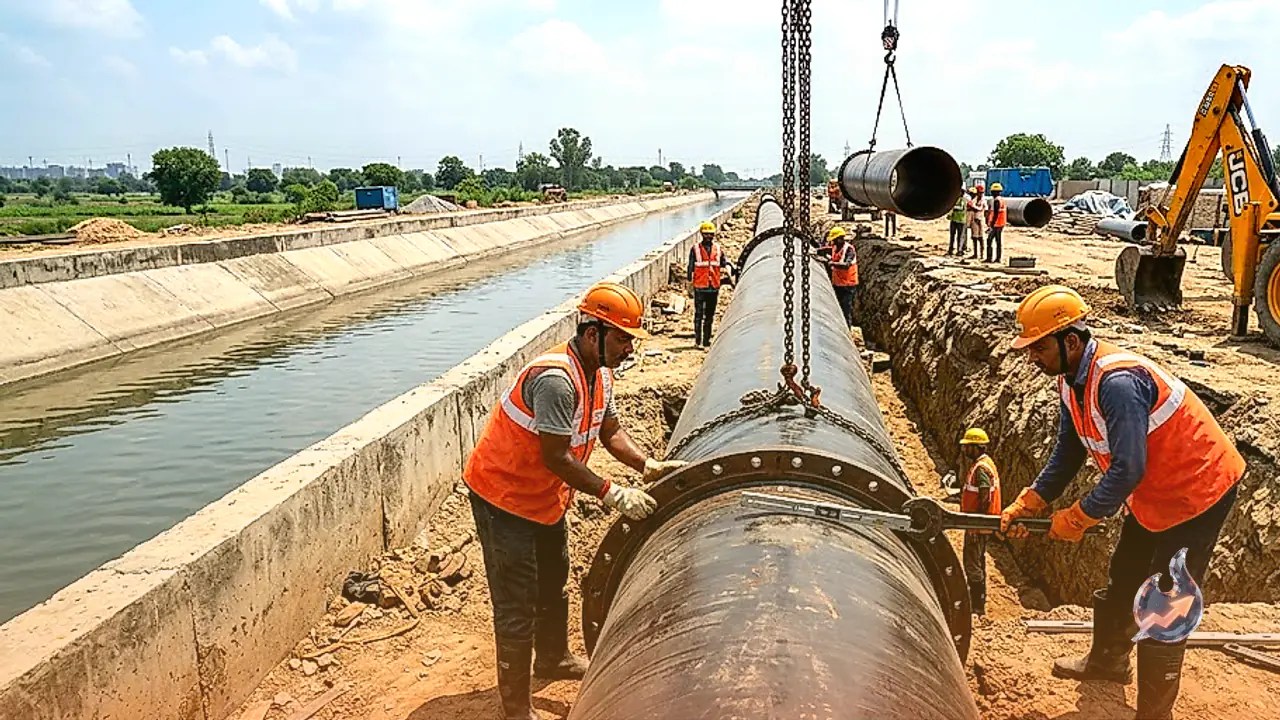
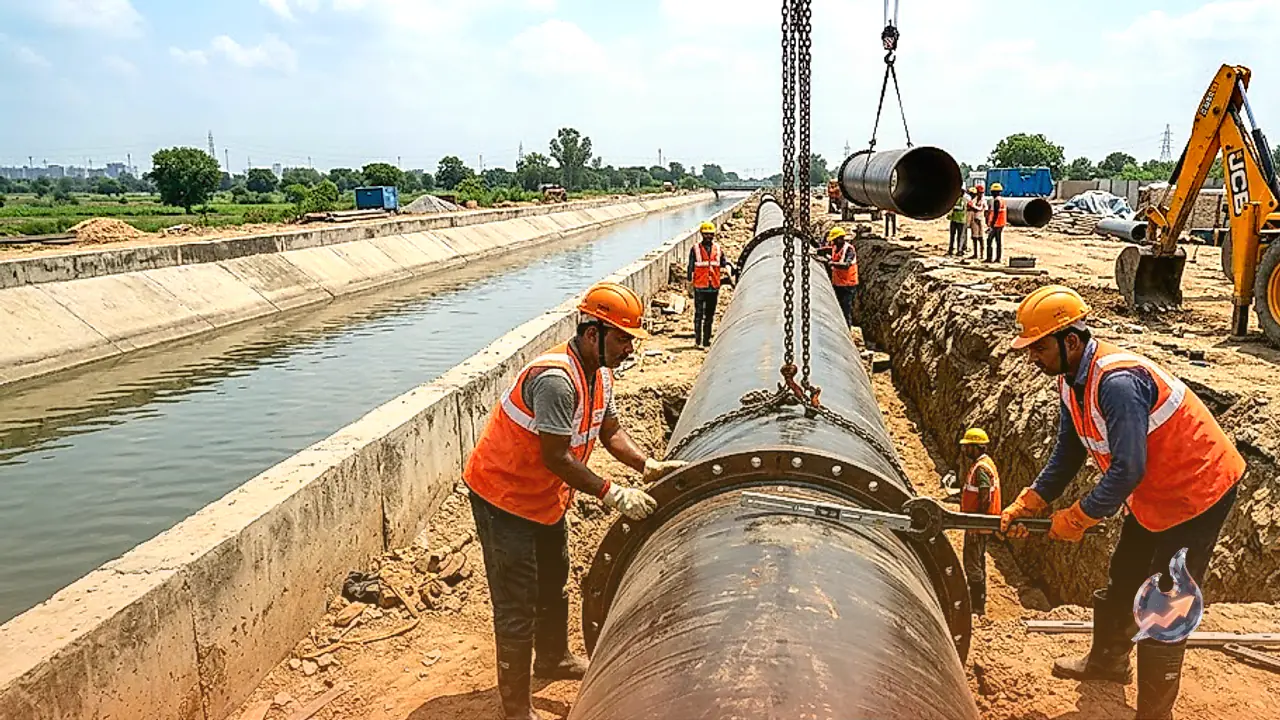
Under the proposed blueprint, Delhi Jal Board aims to lay an expansive conduit spanning approximately 100 kilometres from the Munak regulator in Haryana to the Haiderpur water treatment hub in northwest Delhi. The dedicated pipeline has been designed to carry an operational capacity of 1,050 cusecs of raw water. Dedicated booster pumping stations are planned along the route to maintain optimal line pressure. To ensure flawless structural execution, Indian Institute of Technology Roorkee has been tasked with assessing technical feasibility, mapping the precise pipeline alignment, and designing the network layout.
Choosing the Pressure-Flow System over Gravity Route
Engineers submitted two distinct technical pathways for laying the conveyance corridor. The first approach relied purely on a natural gravity-fed flow model, which was estimated to require an investment of roughly ₹13,000 crore. The second pathway incorporated a pressure-flow mechanism driven by booster pumping stations, carrying an estimated outlay of ₹7,240 crore. Following comparative evaluations, the planning wing favored the pressure-flow system as the substantially more cost-effective and viable design. Consequently, the technical team from IIT Roorkee has been instructed to proceed with the engineering blueprint anchored to this ₹7,240 crore layout, which is projected to meet Delhi's long-term volumetric requirements.
Solar Pumping Solutions and Project Timeline
To keep ongoing operational overheads in check, planners are actively studying the incorporation of solar-powered pumping mechanisms to slash recurring grid electricity costs. IIT Roorkee is expected to finalize the comprehensive financial structure, detailed engineering models, and definitive right-of-way maps by November. Formal approvals and ground implementation will commence once this definitive project documentation is submitted and reviewed.
Legacy Munak Canal and Supply Constraints
The original Munak Canal mechanism originated from a bilateral memorandum reached between the Delhi and Haryana governments in 1996, though construction faced extensive delays stemming from inter-state disagreements. Formal construction spanned between 2003 and 2012, concluding when concrete lining was completed. The existing channel system channels over 1,000 cusecs of Yamuna water from the Munak regulator in Karnal via two distinct conduits: the Carrier-Lined Channel (CLC) and the Delhi Sub-Branch (DSB). Despite this inflow, surging population figures and ongoing conveyance limits have left the existing surface canal unable to cover all urban deficits, making a closed, parallel conduit a pressing logistical necessity.