



















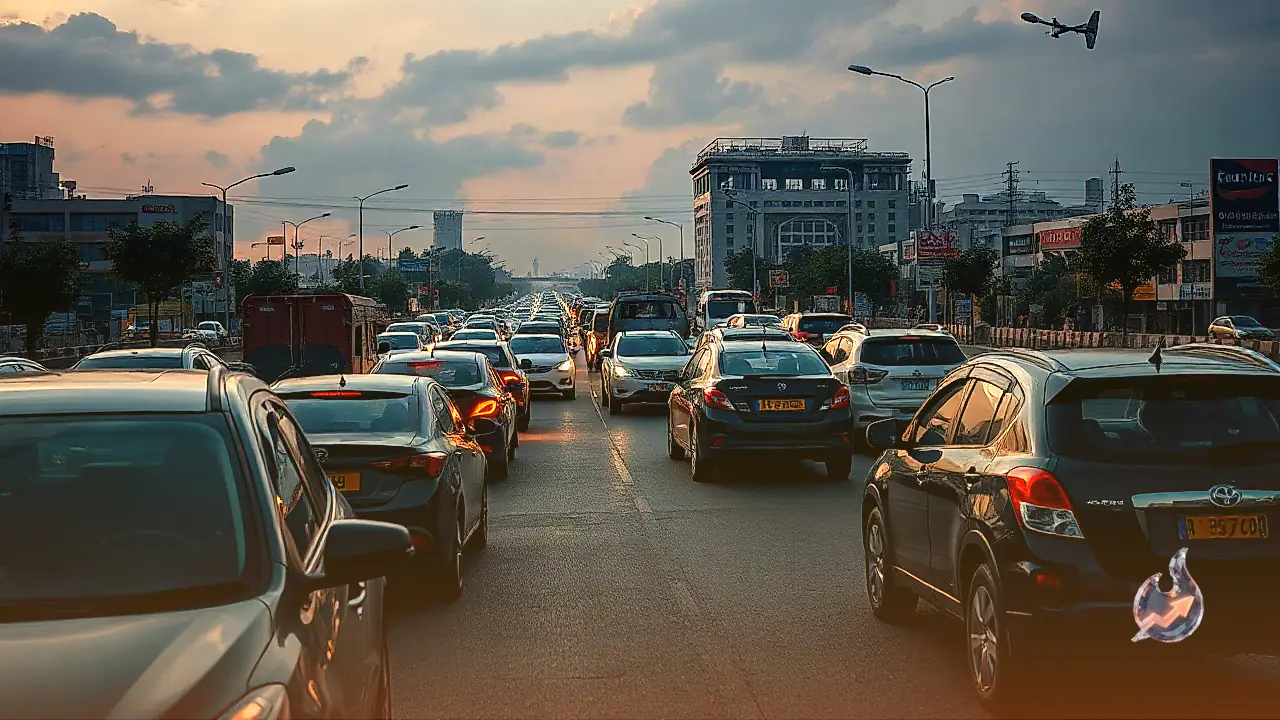

The rapidly escalating headcount of motorized transport in the high-tech hub of Noida is placing immense strain on city infrastructure and environmental stability. Official vehicular registration statistics reveal that total registered vehicles in Noida have climbed to 12,88,594. This surge in vehicular density is directly triggering severe traffic bottlenecks along key arteries, worsening parking shortages in residential and commercial hubs, and intensifying air pollution due to heavy fossil fuel consumption.
Dominance of Private Mobility and Two-Wheeler Density
A detailed breakdown of the city fleet reveals that private personal vehicles account for the overwhelming majority of daily road traffic. Two-wheelers form the single largest category in Noida, registering a count of 7,36,501 units. In addition, personal four-wheelers or private cars stand at 4,05,307 registered vehicles. Combined, these two categories of personal transport account for 11,41,808 vehicles, reflecting how heavily commuters rely on individual modes of travel. Beyond private transport, commercial and intermediate public transport fleets are also substantial, comprising 31,817 goods transport vehicles, 21,248 passenger taxis, and 18,343 auto-rickshaws operating across urban routes.
Fuel Classification: Heavy Reliance on Petrol Infrastructure
In terms of fuel usage, traditional petrol-driven vehicles maintain a dominant footprint across the city. Out of the overall 12,88,594 registered vehicles, petrol-fueled models account for 9,55,149 units, representing approximately 74.1 percent of Noida's total vehicular population. Compressed Natural Gas (CNG) vehicles follow next with 1,37,400 registrations, capturing a share of around 10.7 percent. Diesel vehicles total 1,33,676 units, comprising roughly 10.4 percent of the city fleet. On the clean energy front, electric vehicles (EVs) have reached 62,369 registrations, which translates to nearly 4.8 percent of total vehicles. This electric segment includes 28,023 e-rickshaws and 14,908 electric auto-rickshaws, signaling a gradual transition toward green mobility options.
Public Transit, School Transport, and Utility Fleet Breakdown
To cater to civic movement and commercial commerce, a significant number of specialized and utility vehicles share the road network. Public and private bus fleets together stand at 4,571 registered buses. School transport is managed by 2,102 registered school buses, while medical emergency response is backed by 636 registered ambulances. The city also registers 11,537 agricultural tractors involved in farming and construction support, alongside 5,297 three-wheeler goods vehicles. Furthermore, 3,290 commercial two-wheelers and 5,014 other miscellaneous vehicles contribute to daily traffic volumes, adding to overall road congestion.
Annual Growth Rate Exceeding 10 Percent and Strategic Remedies
Transportation planners highlight that Noida's vehicular population is expanding by more than 10 percent annually. If this upward trajectory continues unchecked, urban mobility could face severe gridlock in coming years. The presence of over 9.55 lakh petrol vehicles poses a major ecological challenge, releasing significant carbon emissions into the local atmosphere. Addressing this challenge requires urgent structural reforms, including expanding public bus and metro networks, constructing dedicated lanes for pedestrians and cyclists, and expanding EV charging stations to support the growing fleet of 1.37 lakh CNG and 62,369 electric vehicles.