

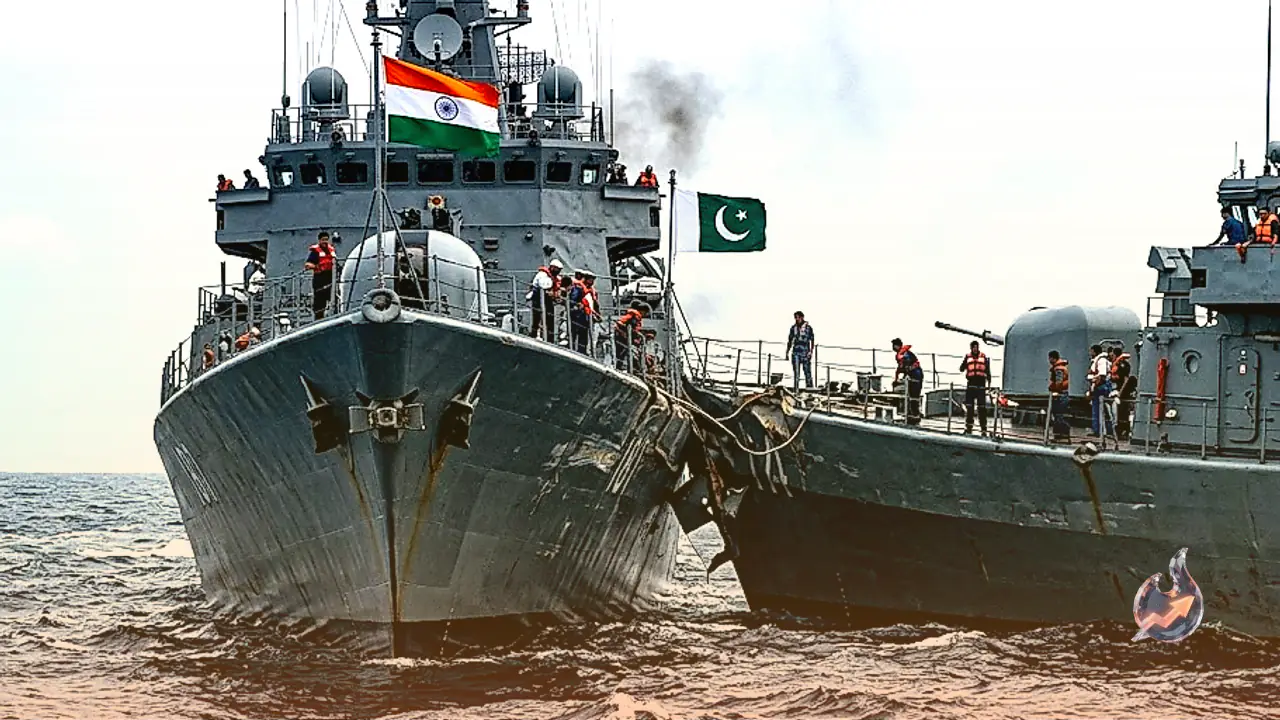




















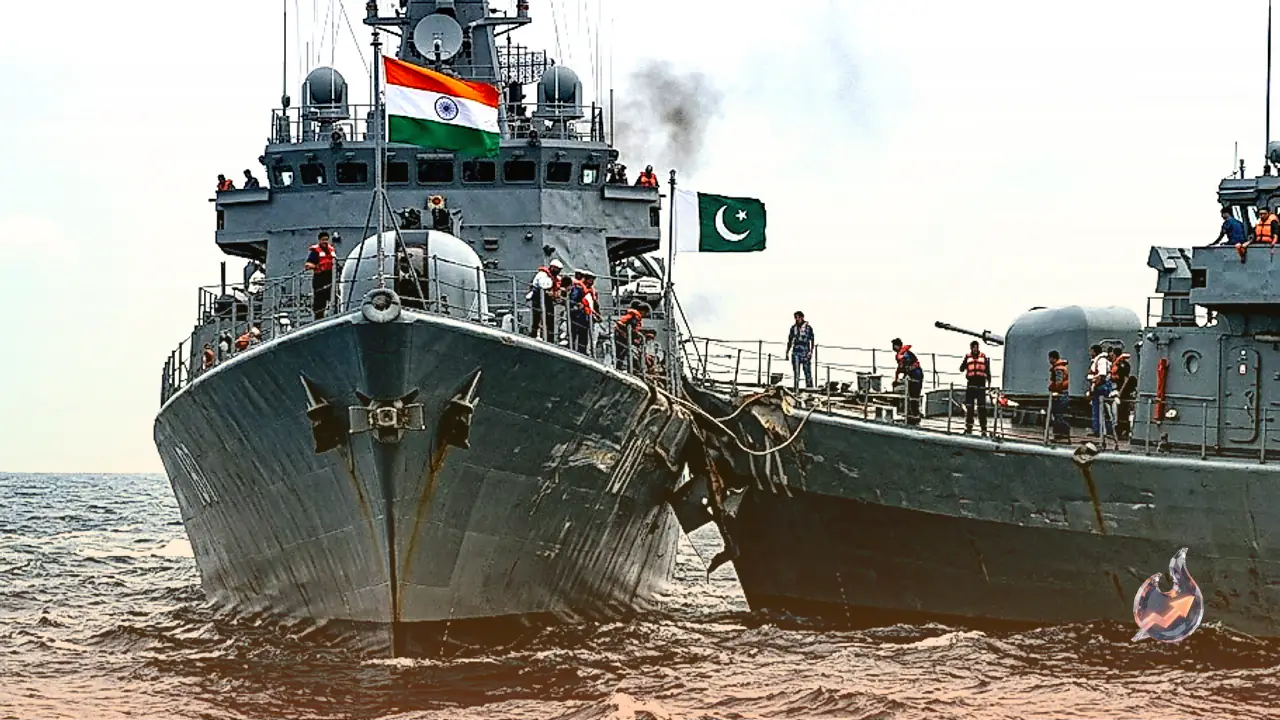

A sensitive maritime incident unfolded in the international waters of the Arabian Sea after a Pakistani naval vessel collided with an Indian Navy warship during routine operations. The collision occurred on Tuesday evening when the Indian warship was conducting standard surveillance patrols. According to official sources, the Pakistani vessel approached at high speed and executed dangerous, unprofessional navigational maneuvers, leading to direct contact between the two ships. While no major structural damage or casualties were reported, India has treated the incident as a significant navigational violation and initiated immediate diplomatic protocols.
Diplomatic Demarche Issued in New Delhi and Islamabad
Following the encounter at sea, India acted swiftly on Wednesday by taking up the matter through diplomatic channels. The Ministry of External Affairs summoned the Chargé d'Affaires of the Pakistan High Commission in New Delhi to issue a stern protest. Indian officials conveyed deep dissatisfaction over the unprofessional and unsafe conduct displayed by the Pakistani naval personnel. Simultaneously, India instructed its Chargé d'Affaires in Islamabad to lodge a corresponding formal protest directly with Pakistan's Ministry of Foreign Affairs, underscoring that such maritime misconduct remains completely unacceptable.
Violation of the April 1991 Bilateral Accord
India specifically highlighted that the Pakistani vessel's conduct violated the April 1991 bilateral agreement designed to prevent misunderstandings and accidental military confrontations between the two nations. Key aspects of this bilateral framework include
- Mandate of Article 10: Article 10 of the 1991 pact explicitly governs maritime conduct, directing naval ships and submarines of both countries to maintain safe operational distances while navigating international waters.
- The 3-Nautical-Mile Buffer: The agreement mandates that military vessels must not operate within 3 nautical miles of each other without prior coordination.
- Conflict Prevention Goal: The primary objective of these rules is to eliminate unexpected proximity between armed vessels, thereby preventing accidental collisions or potential military escalation on the high seas.
Navigational Recklessness Rather Than Military Attack
Government officials clarified that while the collision does not represent a deliberate military attack or armed engagement, it constitutes a severe operational lapse and reckless navigation on the part of the Pakistan Navy. International maritime safety regulations, including standard collision prevention protocols, dictate clear right-of-way and safe speed requirements. The sudden maneuver and high-speed approach by the Pakistani vessel directly breached these basic maritime safety norms.
Echoes of the June 2011 INS Godavari and PNS Babar Incident
Friction between the two navies in international waters has a documented history. In June 2011, a similar confrontation occurred involving the Indian Navy frigate INS Godavari and the Pakistan Navy vessel PNS Babar. During that encounter, India accused the Pakistani ship of engaging in dangerous maneuvers that compromised naval safety. India had invoked Article 10 of the 1991 pact during that dispute as well, pointing to a recurring pattern of unsafe naval maneuvers by Pakistani ships.
Strategic Implications and Maritime Vigilance
With India lodging formal protests in both capitals, attention now turns to Pakistan's diplomatic response and whether corrective operational measures will be communicated to its naval command. Given the delicate geopolitical dynamics between the two nuclear-armed neighbors, adhering to established bilateral protocols remains essential to preventing localized maritime miscalculations from turning into broader security crises. India has reiterated the necessity for strict compliance with all existing agreements to preserve stability across international sea lanes.