

















Prime Minister Narendra Modi addressed a massive gathering of young citizens in Vadodara, Gujarat, highlighting India's youth power as the cornerstone of self-reliance while inaugurating and laying foundation stones for developmental projects valued at approximately 35,000 crore rupees. Concurrently, in the national capital of Delhi, municipal authorities launched an aggressive crackdown on illegal and structurally unsafe PG hostels following a tragic building collapse in Satya Niketan. Meanwhile, in Maharashtra, a fierce political confrontation erupted ahead of the Navratri festival over guidelines issued by the Vishva Hindu Parishad restricting entry into Garba venues through mandatory identity checks.
PM Modi's Rockstar Entry and 35,000 Crore Rupee Infrastructure Launch in Vadodara
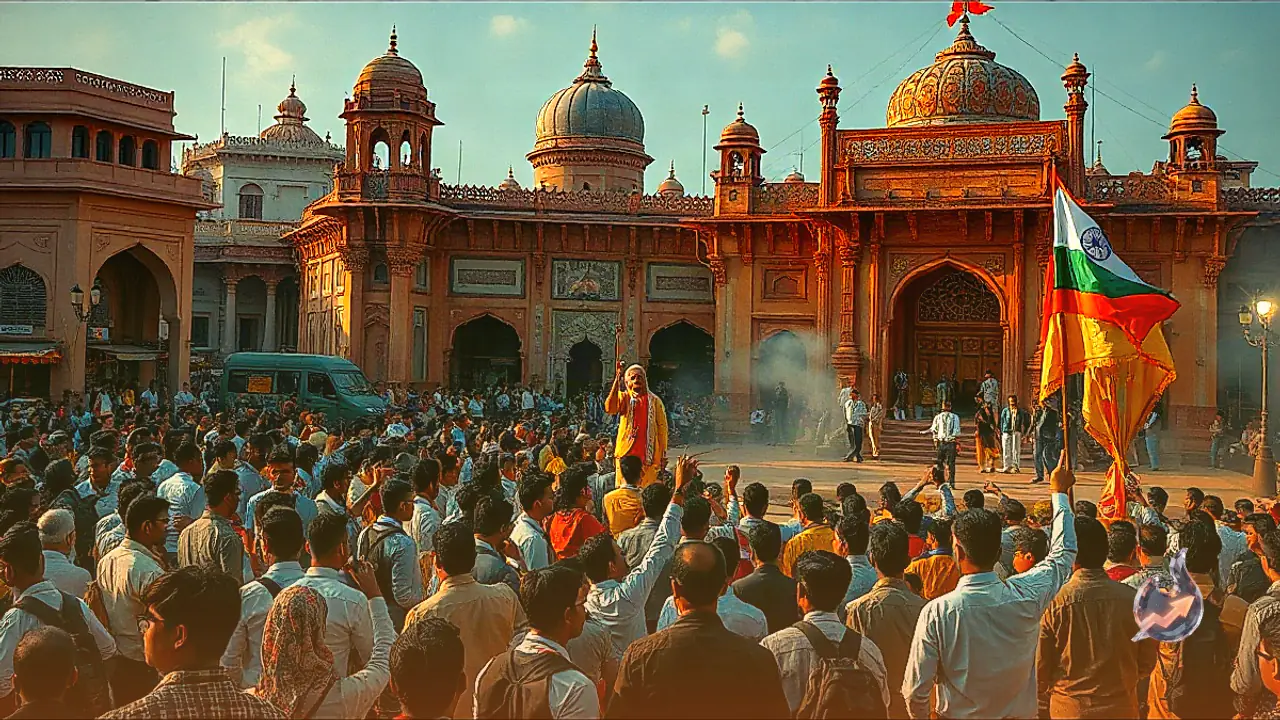
The youth outreach event in Vadodara featured a dynamic setup where Prime Minister Narendra Modi entered the venue along a central ramp surrounded by thousands of attendees holding up smartphones, accompanied by background music from the movie 'Dhurandhar'. For the first time, online registration for the Prime Minister's public event was hosted on the Book My Show platform. Demand was so exceptionally high that all available capacity was booked within one hour, leaving nearly 42,000 youth on the waiting list before registration had to be closed.
During the event, the Prime Minister inaugurated and laid foundation stones for infrastructure works worth nearly 35,000 crore rupees. A centerpiece of these inaugurations was the Dedicated Freight Corridor connecting Vadodara to the Jawaharlal Nehru Port Trust in Mumbai. Designed to operate double-stack container freight trains, this dedicated rail corridor aims to drastically boost logistics speed and freight efficiency across Western India.
Rejection of Negativity and Comparison with Past Administrations
Addressing the assembled crowd, Prime Minister Modi emphasized that the youth of India will no longer be misled by the 'echo of lies' or negative narratives. He took aim at persistent critics, referring to them as disgruntled figures who habitually find fault in every constructive national initiative. He maintained that such negativity would fail to derail India's momentum toward complete self-reliance.
Comparing current progress with previous governance, the Prime Minister noted that past administrations produced declarations that remained confined to official files for years. In contrast, he stated that the present government delivers infrastructure at bullet-train speed, establishing world-class highways and rail networks across the country.
Addressing Student Concerns, Exam Reforms, and Emerging Tech Sectors
Reflecting on recent interactions at Shri Ram College of Commerce in Delhi and Vadodara, the Prime Minister assured students that the administration recognizes their pressing concerns, including examination paper leaks, test cancellations, and substandard accommodation. He stated that an expert committee is actively working to reform the national examination framework, and confirmed that demands raised by student demonstrators at Jantar Mantar have been accepted. He also referenced ongoing enforcement action against illegal constructions in Delhi.
Looking ahead, Prime Minister Modi outlined the national roadmap for high-growth sectors, including Artificial Intelligence, Information Technology, space research, data infrastructure, and semiconductor manufacturing. He reiterated that his direct engagement with young citizens is an ongoing commitment demonstrated through initiatives like 'Pariksha Pe Charcha' and regular interactions with national athletes.
Delhi PG Hostel Collapse Triggers Arrests and New Regulatory Legislation
Following the structural collapse of a PG hostel building in Delhi's Satya Niketan area, law enforcement authorities arrested two individuals, specifically the PG operator and the construction contractor. Simultaneously, municipal teams began demolishing an adjacent building deemed structurally compromised and hazardous to public safety.
To establish long-term oversight, the Delhi government announced plans to enact new legislation regulating hostels and PGs across the capital. Urban Development Minister Ashish Sood is heading a specialized committee tasked with drafting the proposed PG law, which is scheduled to be tabled in the Delhi Legislative Assembly within two months.
MCD Inspections: 51 Dangerous Buildings Identified and 27 Demolition Orders Issued
The Municipal Corporation of Delhi launched rigorous site inspections across major student hubs, including Laxmi Nagar, Lalita Park, and Shakarpur. Inspection teams are verifying Fire NOC compliance, registration permits, and structural stability. During one notable inspection, an MCD Junior Engineer discovered extreme overcrowding, with ten rooms constructed on a single floor, three beds crammed into each room, and thin plywood partitions replacing solid walls between units.
The municipal body issued formal notices to 35 non-compliant PG facilities. Across three municipal zones, inspectors identified 51 buildings as structurally dangerous, issuing immediate demolition notices for 27 of those properties.
Student Displacement and Systemic Accommodation Challenges
Enforcement efforts have faced resistance from property owners refusing to vacate or demolish unsafe structures, leading to standoffs with municipal officers. The sudden crackdown has left numerous students facing acute displacement, unable to remain in unsafe quarters while struggling to secure alternative lodging on short notice. Furthermore, several hostel operators have refused to refund advance security deposits paid by students.
The crisis highlights chronic accommodation shortages in Delhi, where students are frequently forced into cramped, box-like spaces lacking adequate ventilation or fire exit measures. Urban policy observers emphasize that while punitive demolition of illegal structures is necessary, authorities must also implement a comprehensive housing master plan to guarantee safe, affordable lodging for incoming students.
VHP Garba Entry Rules Spark Political Friction in Maharashtra
In Maharashtra, preparations for the Navratri festival turned controversial after the Vishva Hindu Parishad issued explicit directives for organizers of public Garba events. The guidelines mandate a complete restriction on entry for Muslims, compulsory checking of Aadhaar identity cards at entry gates, and the application of Tilak and tying of sacred thread (Kalawa) for all verified attendees. A VHP spokesperson defended the measures, stating that Garba is a sacred religious observance dedicated to the worship of the Goddess rather than a commercial entertainment event.
Political Backlash and Counter-Accusations
The VHP guidelines drew sharp opposition from the Shiv Sena faction led by Uddhav Thackeray. Aaditya Thackeray publicly questioned the authority of external organizations to demand identity papers, asking whether they held a monopoly on Hindutva. Uddhav Thackeray criticized both the VHP and the BJP, calling their actions politically motivated and describing them as 'fake Hindus' trying to provoke social disharmony.
Responding to the criticism, Maharashtra Minister Nitesh Rane countered that organizers should require attendees to recite the Hanuman Chalisa at Garba venues. He added that any non-Hindus wishing to participate in Garba should first undergo 'Ghar Wapsi' and accept Hinduism. The escalating rhetoric between political factions has overshadowed the cultural preparations for the upcoming festival.