



















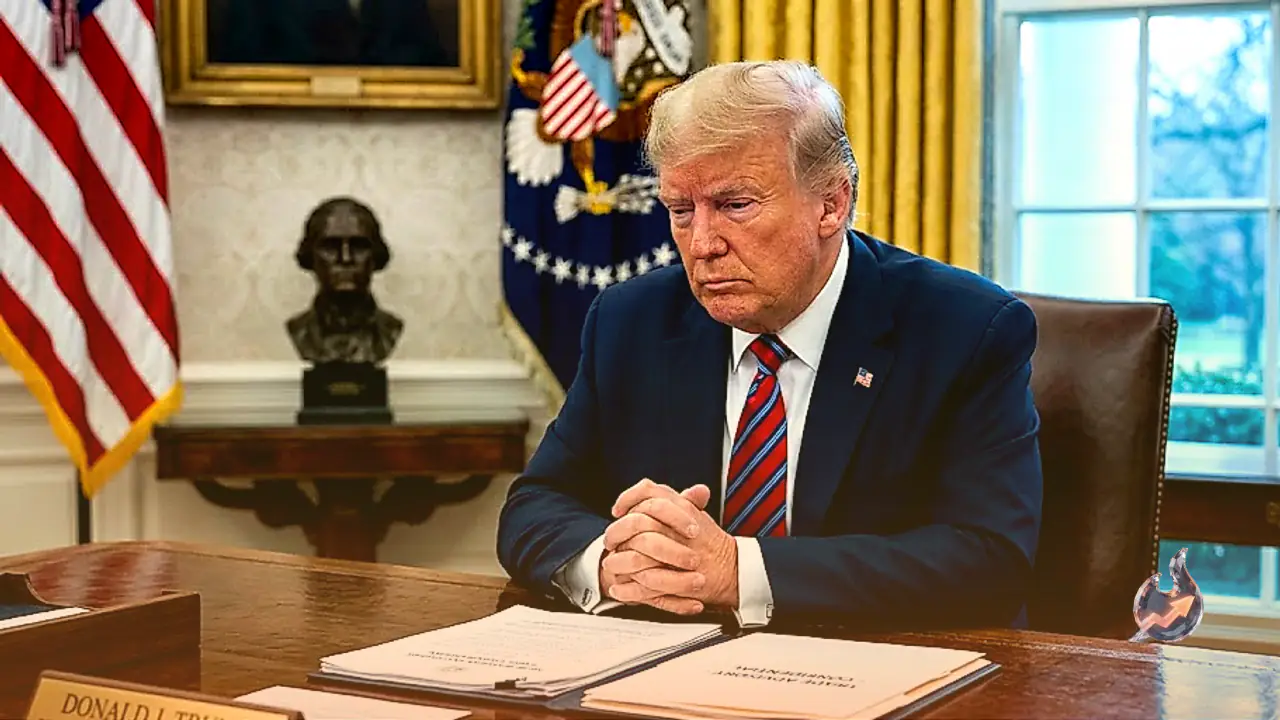

A visible realignment across international diplomacy has disrupted Washington's strategic playbook following recent high-level multilateral interactions. An image capturing Prime Minister Narendra Modi, Russian President Vladimir Putin, and Chinese President Xi Jinping together at the BRICS gathering highlighted a durable multipolar coordination that challenged unilateral economic threats. Facing this combined geopolitical weight, Donald Trump has unexpectedly shifted away from his trademark confrontation toward diplomatic accommodation. Instead of escalating trade disputes with the two Asian heavyweights, the administration is now working actively to stabilize relations, highlighted by preparations for an upcoming high-stakes state visit by Chinese President Xi Jinping to the United States.
Legislative Authority Secured but Implementation Paused
The United States Congress formally granted the executive branch sweeping statutory authority to levy punitive tariffs of up to 100 percent on nations importing crude oil from Russia. Designed to restrict Moscow's revenue inflows, the bipartisan legislative measure saw support from several Democratic lawmakers and removed potential domestic judicial roadblocks. Although Donald Trump formally signed the tariff bill into law on September 18, his desk has seen no accompanying executive proclamation triggering actual duties against India or China. Addressing the United Nations General Assembly shortly after, Trump merely noted that he had received the power to levy tariffs and would use it only if deemed necessary. Despite the administration working persistently since August of last year to establish this punitive framework, the White House has chosen a watchful pause over aggressive deployment.
Corporate Leaders Warn Against Energy Market Shocks
The primary brake on implementing these secondary sanctions comes directly from American industry and high finance. Heavyweights across Wall Street have warned that penalizing Asian energy consumers could backfire severely on the domestic economy. Jamie Dimon, Chief Executive Officer of JPMorgan, explicitly advised against targeting New Delhi over its crude sourcing, arguing that punishing India risks destabilizing the fragile global petroleum supply framework. Dimon pointed out that Washington should avoid mechanisms that disrupt international oil markets while pursuing geopolitical pressure against Moscow. Financial analysts across the United States have cautioned that removing Indian refining stability or penalizing its trade balances would inevitably spike worldwide fuel costs, directly hurting American businesses and consumers at home.
India Maintains Firm Diplomatic Position
Concurrently, New Delhi has refused to buckle under coercive trade rhetoric, firmly establishing its strategic autonomy and energy requirements. The Ministry of External Affairs affirmed that India has proactively communicated the broader hazards of unilateral trade barriers to Washington officials. Emphasizing this principled posture during a media briefing, Ministry of External Affairs spokesperson Randhir Jaiswal stated that the impact could fall on bilateral relations as well as international energy markets. Indian authorities have reiterated that national energy security remains paramount, signaling that upcoming bilateral deliberations will continue to defend domestic refining choices while safeguarding economic stability against external pressure.
Geopolitical Realities Force Tactical Recalibration
The White House currently finds itself trapped between its political promises and hard economic realities. Enforcing punitive measures against India risks straining crucial strategic partnerships across the Indo-Pacific while accelerating closer diplomatic cooperation between regional powers. With no threat of domestic judicial overturning, the hesitation to pull the legislative trigger exposes the structural limits of economic leverage in an interconnected global marketplace. Given India's indispensable position in processing and balancing international petroleum flows, imposing prohibitive levies presents an unacceptable financial danger to Western stability. Consequently, the administration appears compelled to shelve aggressive enforcement in favor of pragmatic engagement and diplomatic dialogue.