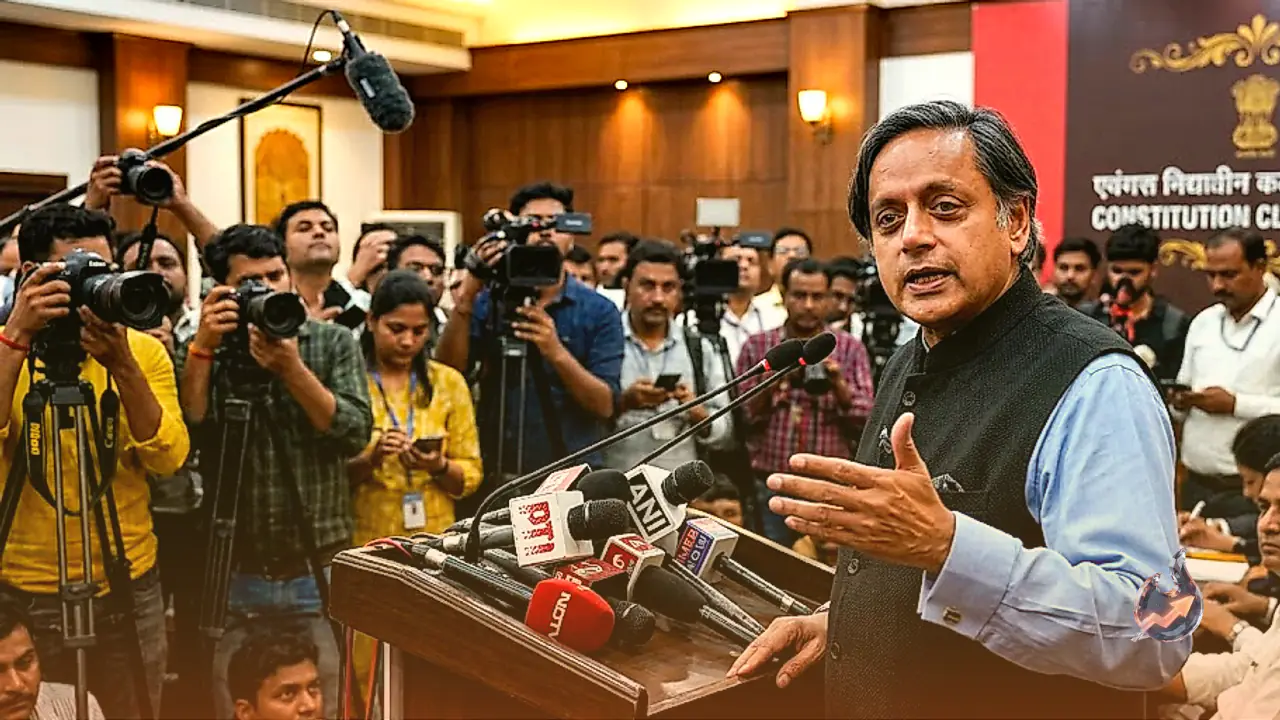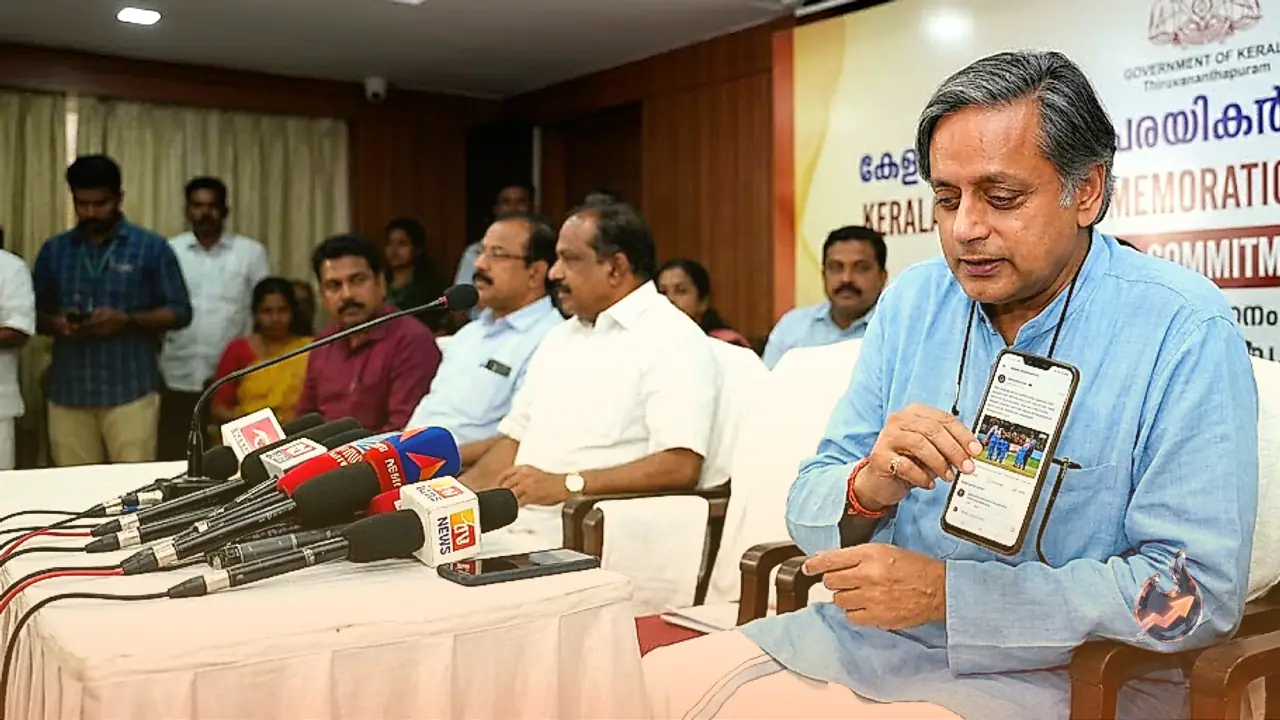




















Member of Parliament Shashi Tharoor has shared a sharp public commentary on social platform X, combining poetic introspection with a notable judicial remark to question the contemporary political landscape. His post contrasts poetic metaphors about power with strict judicial observations regarding institutional procedures.
Poetic Reflection on Vigilance and Political Maneuvers
In the opening lines of his post, Shashi Tharoor highlighted a short poem addressing public apathy and hidden power dynamics. The verse suggests that shutting one's eyes only deepens the darkness, emphasizing that staying vigilant is the only true way to maintain a watch over governance. It further questions the nature of modern political chess, asking who the real player is and who has been reduced to a mere pawn.
Highlighting Chief Justice Surya Kant's Statement
Directly following the verses, Shashi Tharoor quoted Chief Justice Surya Kant, who firmly stated, “Modified Form 6 has not been approved by us. Let us be very clear.” By appending an open-ended rhetorical prompt right beneath this explicit statement, Tharoor underscored the divide between proposed regulatory modifications and judicial approval, sparking public debate over electoral administrative protocols.
About Gaya
Located in the state of Bihar, Gaya is a historically prominent urban center and the state's second-largest city, serving as an important district headquarters where Magahi is widely spoken. Bordered by the Phalgu River to the east, the city is geographically framed on three sides by rocky hills known as Ramshila, Pretshila, and Brahmayoni. Mentioned in ancient epics like the Ramayana and Mahabharata, Gaya holds immense cultural and spiritual value across Hinduism, Buddhism, and Jainism, regularly attracting large numbers of domestic and international travelers.
Public Reaction
The post triggered active discussion among citizens online, reflecting diverse viewpoints. Many participants expressed serious concerns regarding duplicate voter entries and roll accuracy, while others questioned the exact jurisdictional oversight between the judiciary and the election administration.