





















A notable structural transformation has emerged within the armed separatist movement in Balochistan, where female insurgents are transitioning into formal, independent combat divisions. The Balochistan Liberation Front (BLF) has formally announced the creation of its first dedicated women-only armed fighting wing, titled the Karima Armed Assault Division (KAAD). Alongside the organizational rollout, the outfit declared that the newly established division has executed its maiden tactical operation against state security forces in the province.
First Combat Operation Claimed in Jusak Near Turbat
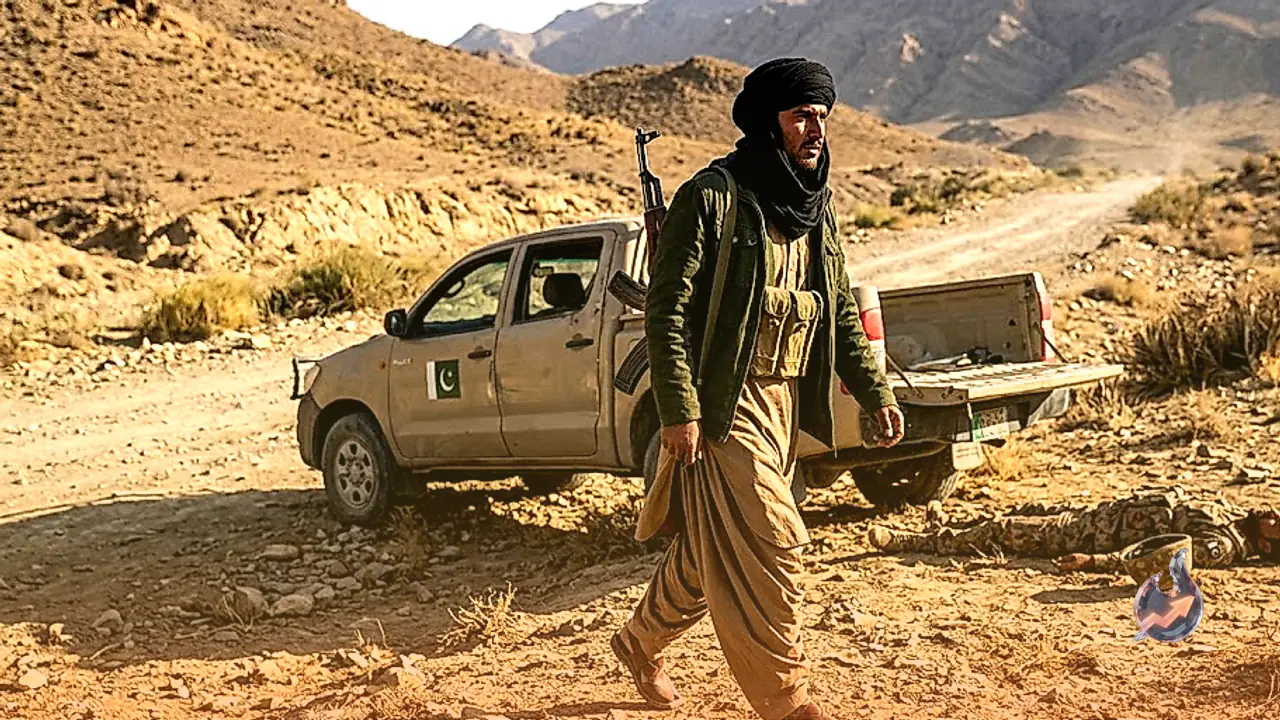
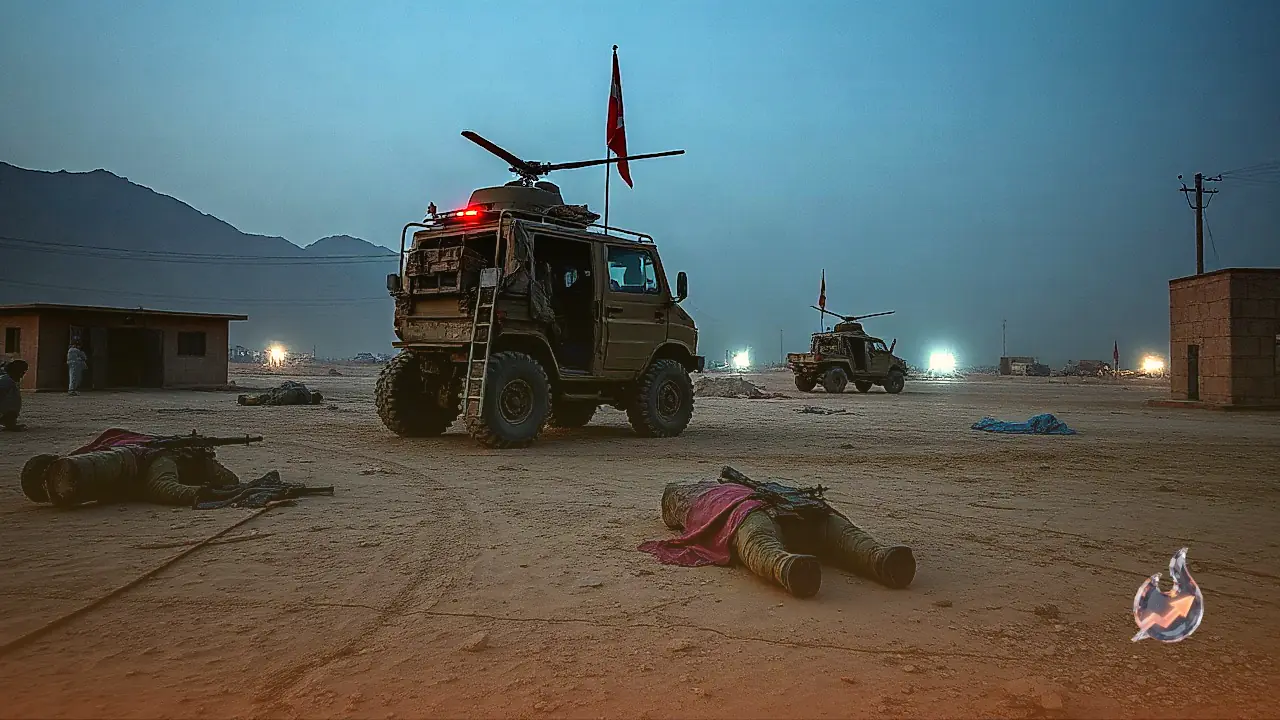
According to BLF spokesperson Major Gwahram Baloch, KAAD carried out its introductory military strike on September 22, 2026, in the Jusak (Jowsk) area of Turbat, situated in southern Balochistan. The planned offensive targeted a convoy belonging to the Pakistani military's Action Task Force as it traveled along the strategic highway linked to the China-Pakistan Economic Corridor (CPEC). The group characterized the engagement as a coordinated, pre-planned multi-tiered ambush rather than a spontaneous clash.
The separatist outfit claimed that the ambush resulted in multiple casualties and injuries among the Pakistani soldiers inside the convoy, along with substantial damage to several military transport vehicles. Major Gwahram Baloch indicated that this engagement marks only the opening phase of KAAD's tactical operations. The spokesperson stated that a comprehensive report detailing the estimated casualties, seized or destroyed military assets, and the strategic operational charter of KAAD would be made public shortly.
Unit Dedicated to the Memory of Karima Baloch
Named the Karima Armed Assault Division, the new wing has been structured to integrate women directly into active battlefield combat, moving beyond conventional roles. The division derives its title from Karima Baloch, who served as one of the most prominent female leaders and public faces of the Baloch nationalist and political campaign prior to her death.
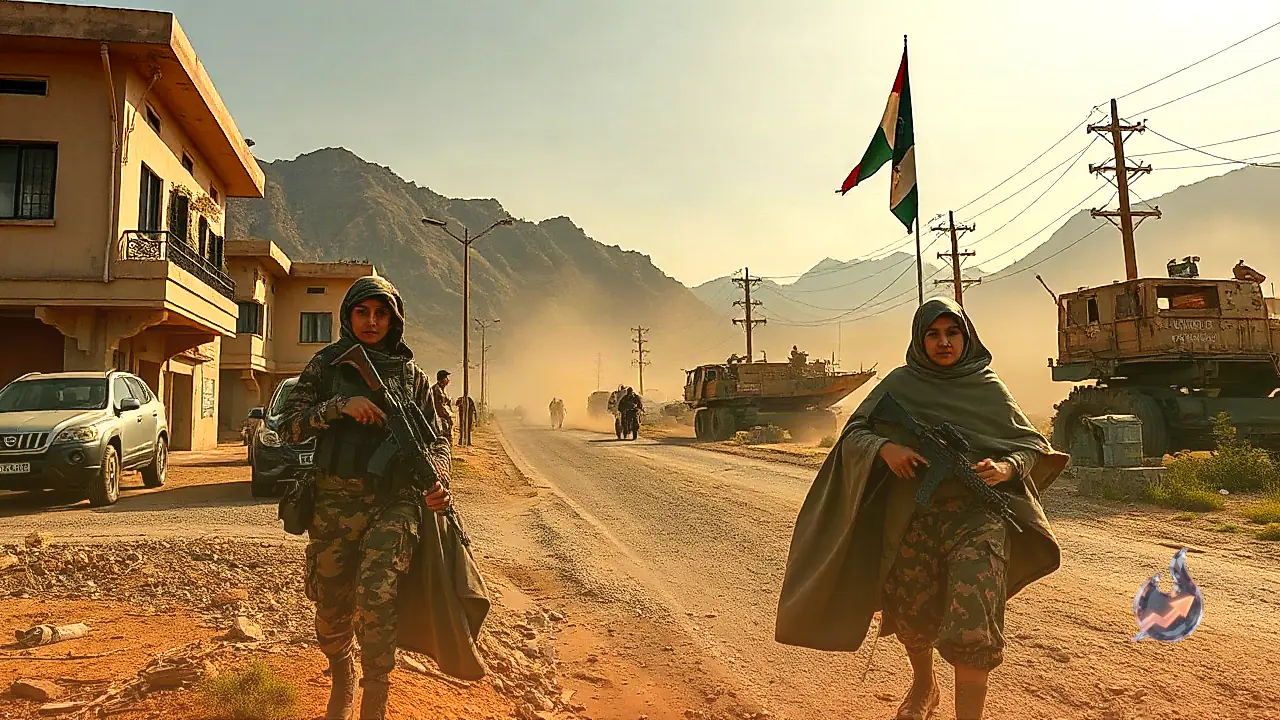
To accompany the announcement, the BLF released official imagery showcasing female members of the newly formed division dressed in military uniforms and equipped with combat gear. The visual release was paired with explicit messages signaling an aggressive tactical approach toward future confrontations. The formation comes at a juncture when the militarization of women within Baloch insurgent groups is gaining unprecedented operational prominence.
From Political Activism to Direct Armed Action
The involvement of women in Baloch nationalist groups is not a novel development, but the trajectory of their participation has experienced a dramatic shift over recent years. Previously focused largely on political mobilization, human rights campaigns, logistics, and organizational messaging, female cadres are now increasingly positioned at the forefront of kinetic and suicide strikes across the region.
This shift received global scrutiny in April 2022, when Shari Baloch carried out a suicide bombing outside the Confucius Institute at the University of Karachi. That attack claimed the lives of three Chinese instructors and their local Pakistani driver, with responsibility claimed by the Majeed Brigade of the Baloch Liberation Army (BLA). The Karachi blast served as an operational precedent, followed by a sequence of high-profile operations involving women across Balochistan.
Timeline of Prior Infiltrations and Tactical Strikes
Subsequent to the Karachi incident, an array of attacks carried out by separatist groups featured female operatives in decisive combat roles. In June 2023, an attack on a military convoy in Turbat was carried out with the direct participation of a female suicide operative. In August 2024, an assault on a Frontier Corps compound in Bela involved an explosive-laden vehicle driven into the target perimeter.
The momentum continued into subsequent years. In March 2025, a paramilitary convoy was struck in the Kalat district during a suicide mission that involved a female operative. Later that year, in November 2025, an operation connected to the BLF saw Zarina Rafiq target a Frontier Corps installation in Nokkundi using a vehicle-borne improvised explosive device. Furthermore, during January and February 2026, the BLA publicly revealed that female operatives were engaged in large-scale coordinated maneuvers under its major offensive dubbed Operation Herof 2.0.
Institutionalizing Combat Roles Across Separatist Networks
The regular deployment of female fighters has prompted insurgent factions to codify these roles into dedicated wings. In May 2026, the BLA established its own distinct women's wing, placing commander Shahnaz Baloch at the helm of the outfit. The creation of KAAD by the BLF represents a parallel institutional step, reflecting a broader pattern among separatist groups to formalize women's participation into structured military commands.
The geographic selection for KAAD's opening strike carries distinct strategic weight. The Jusak sector of Turbat lies immediately adjacent to the CPEC transit route. Balochistan constitutes the geographic core of Beijing's multi-billion-dollar economic corridor, housing the deep-sea Gwadar Port and associated transit infrastructure. Both the BLF and the BLA have systematically designated state security personnel and Chinese investments, engineering staff, and installations as primary operational targets. The introduction of permanent female assault units signals an expanding operational capacity across this contested transit corridor.