






















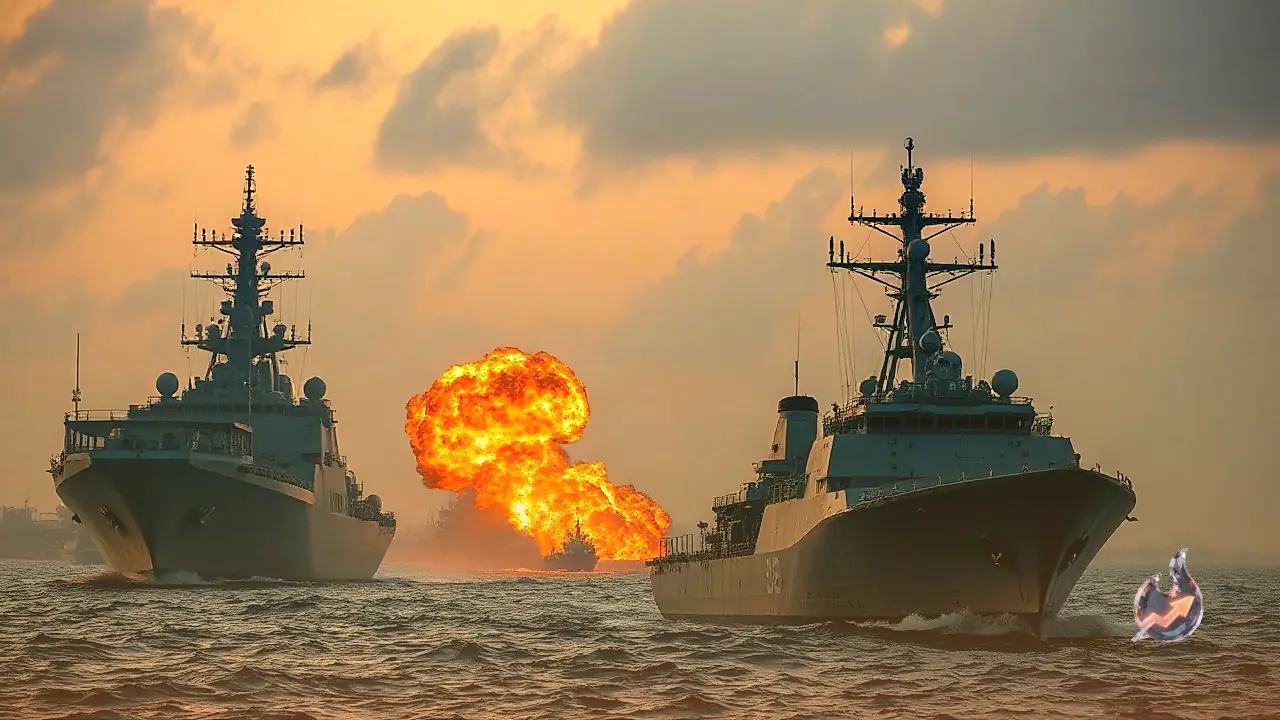

Diplomatic friction between New Delhi and Islamabad escalated further as Pakistani naval forces initiated extensive live weapon trials across the northern Arabian Sea. The ten-day exercise involves firing surface and sub-surface munitions across an expanse stretching 420 kilometres. The military drill, scheduled from September 18 to September 28, is unfolding in the exact maritime corridor where frontline warships of the two nations collided just days earlier.
Extensive Maritime Zones Cordoned Off for Live Trials
Official navigational warnings issued on September 18 by the National Hydrographic Office delineated three dedicated maritime sectors in the northern Arabian Sea. Commercial shipping and civilian vessels have been cautioned to avoid these coordinates while warships conduct high-intensity live-firing manoeuvres. The timing of the exercise is notable because both capitals remain locked in intense diplomatic arguments regarding naval conduct in international waters. Open-source maritime analyst Damien Symon highlighted details of the firing notifications publicly through social media posts.
The September 15 Collision and Diplomatic Protests
The current confrontation stems from an incident on September 15 involving Indian guided-missile destroyer INS Kolkata and Pakistani vessel PNS Hunain. The Ministry of External Affairs in New Delhi stated that INS Kolkata was carrying out a routine surveillance deployment when PNS Hunain approached at high speed, attempting a hazardous overtaking manoeuvre that led directly to a physical scraping between the hulls. Indian authorities formally denounced the manoeuvre as reckless and unprofessional, lodging a stern protest after summoning a Pakistani diplomat.
New Delhi emphasized that the Pakistani vessel breached Article 10 of the 1991 bilateral agreement between the two neighbours. This clause mandates that warships from both sides maintain a minimum separation of 3 nautical miles, equivalent to roughly 5.6 kilometres, when operating in international waters. Indian officials confirmed that INS Kolkata suffered no significant damage and continued its assigned operational mission, whereas PNS Hunain sustained structural impact that forced it to abandon the waters and head back to port.
Islamabad Accusations and the SEASPARK-26 Context
In contrast, Pakistani authorities rejected New Delhi's account, claiming instead that the Indian destroyer engaged in provocative steering maneuvers. Islamabad asserted that the encounter took place within its Exclusive Economic Zone during its scheduled SEASPARK-26 naval exercise. Initiating fresh live-fire artillery and torpedo drills over an identical maritime zone between September 18 and September 28 underscores persistent posturing in the contested northern reaches of the Arabian Sea.