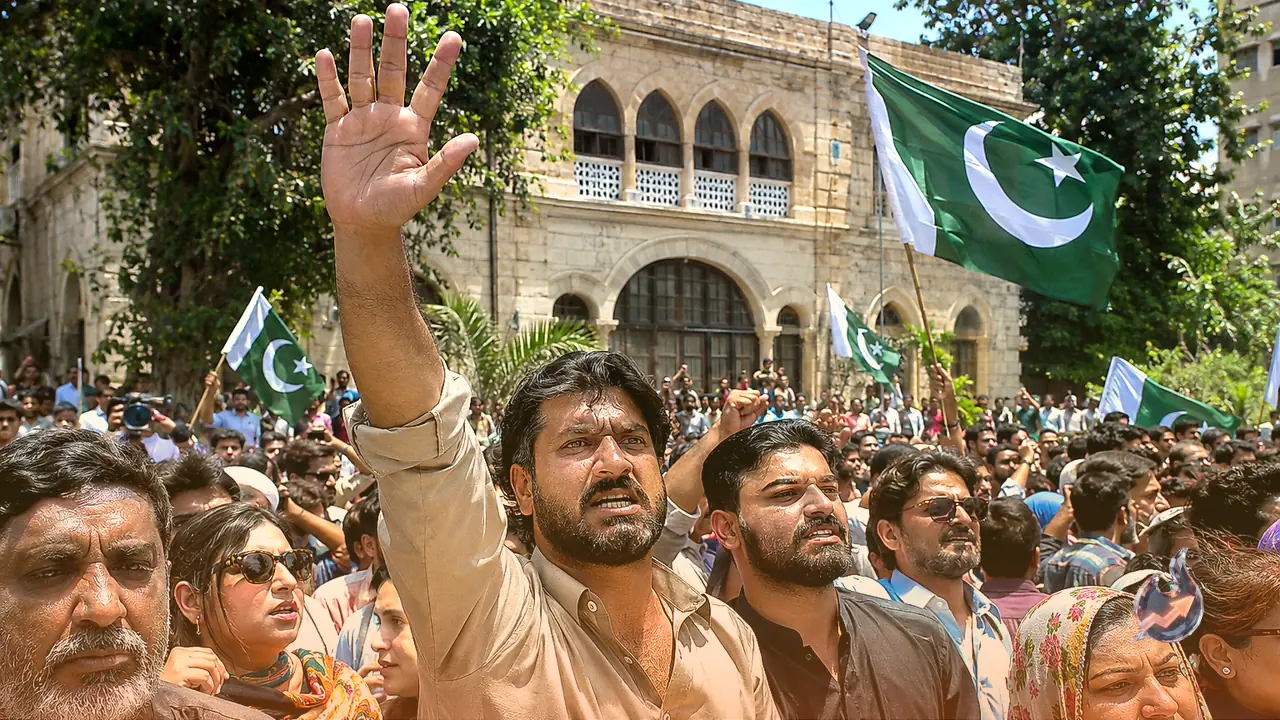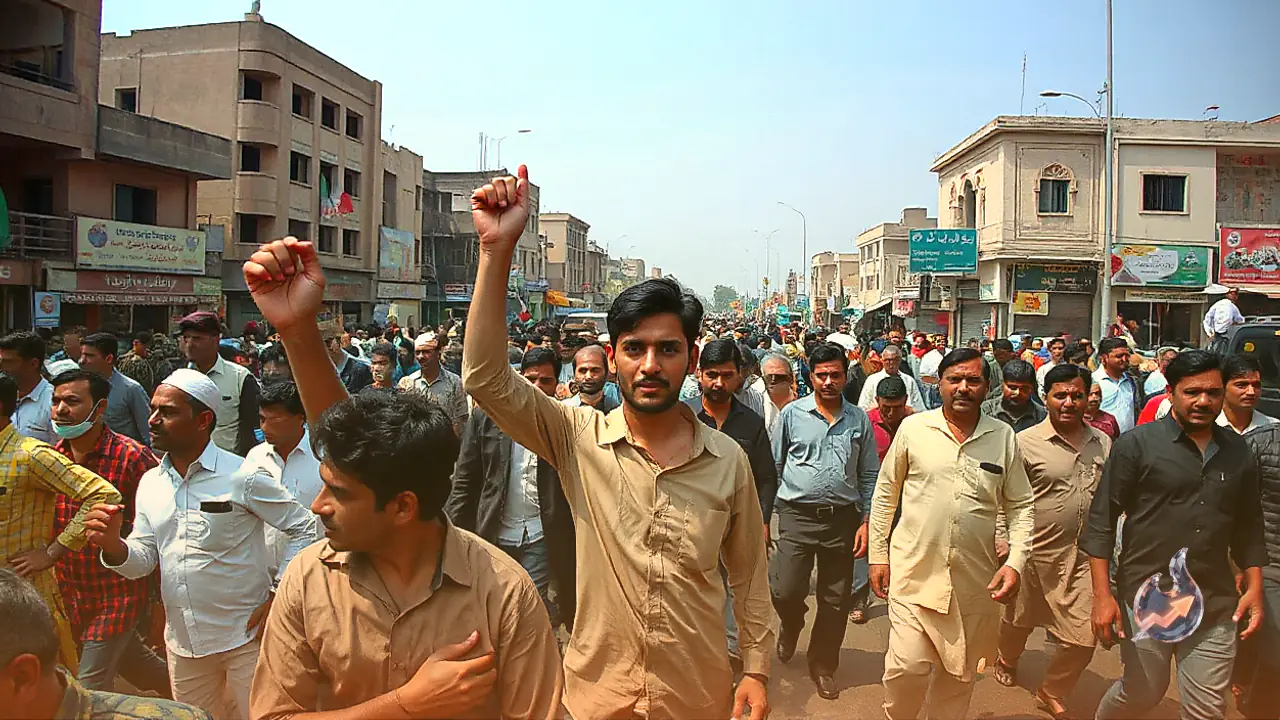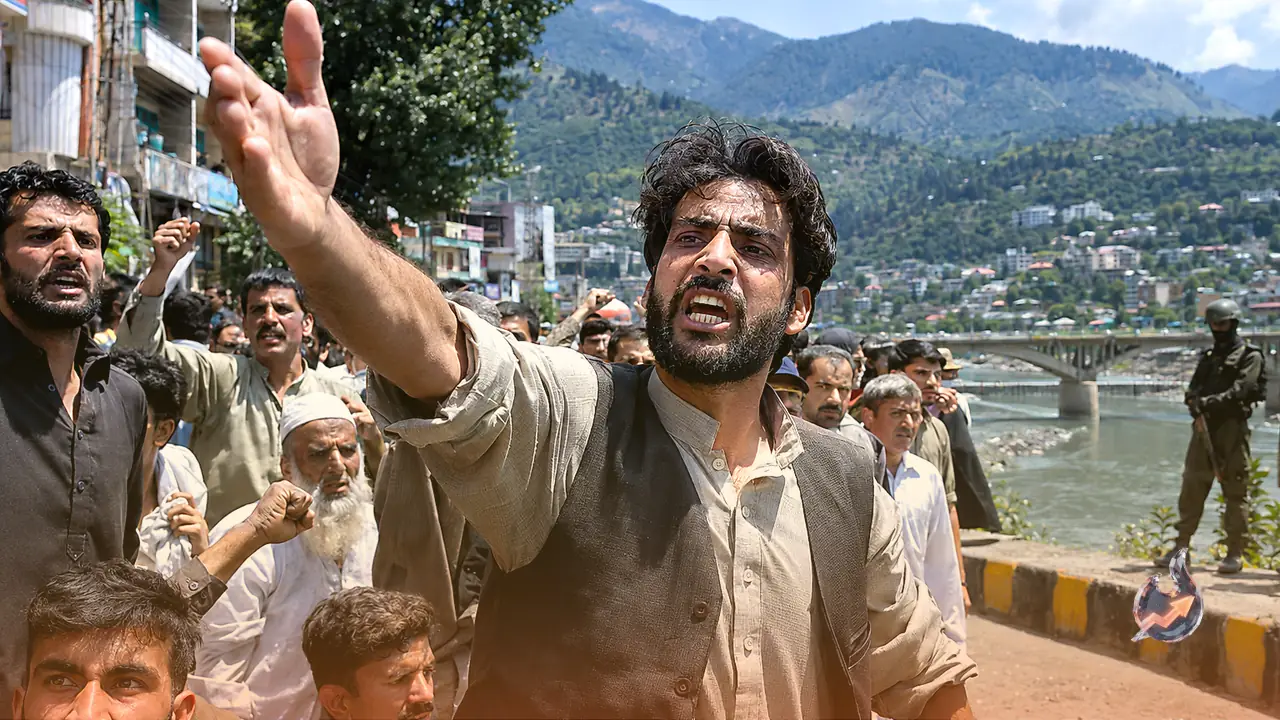

Protests and severe civil unrest have gripped Pakistan-occupied Kashmir, turning the region into a boiling cauldron of public anger against Islamabad's heavy-handed administration. Ordinary citizens are facing bullets simply for demanding basic necessities, while the ruling establishment continues to label local residents as terrorists. Pakistan, which has long treated the territory as its personal colony, is now reaping the bitter harvest of its own oppressive policies. The heavy deployment of the Rawalpindi military and Islamabad's suppression tactics have shattered the patience of the local population, pushing the region to a dangerous precipice.
Amid this worsening crisis, a prominent figure has emerged to challenge the Pakistani state openly, unnerving even the country's top military commander Asim Munir. Identified as Ghazi Shahzad, this individual has released a stern video message declaring an open conflict against the state, boldly proclaiming that guns will be met with guns. His fiery statements have added fuel to an already volatile situation, signaling a shift from peaceful demonstrations to armed confrontation in the disputed territory.
The Direct Warning From Ghazi Shahzad
In a forty-five-second video clip that has surfaced from the region, Ghazi Shahzad issues a direct and aggressive challenge to the Pakistani leadership and the local puppet assembly. Shahzad states clearly that he wants to deliver a precise and powerful message to the authorities. He warns that if the military establishment or the members sitting in the assembly, who were installed by external forces rather than the public, continue to open fire on unarmed civilians, organizations like Tehreek Tahfuz-e-Riyasat Jammu and Kashmir and Janbaz Force will retaliate in kind.
The video further emphasizes that under no circumstances will the local population tolerate any fresh military operations in the region. Ghazi Shahzad explicitly rejects the very notion of a military operation, declaring that Pakistan has no right to launch such campaigns in their homeland. This unequivocal threat demonstrates that the ongoing agitation in PoK has moved far beyond slogans and sit-in protests, transforming into a hardened armed challenge against the government.
Background of Ghazi Shahzad and His Rise to Prominence
The name Ghazi Shahzad has once again captured widespread attention amidst the unfolding turmoil in PoK, particularly due to his association with militant factions like the Janbaz Force and his aggressive rhetoric against Islamabad. According to available reports, Shahzad's name has previously surfaced in connection with high-security incidents in the region, including prison breaks. His involvement in inmate escapes from the Rawalpindi or Rawalakot jails cemented his reputation within radical and extremist circles.
Now, with tensions escalating between local activist groups, action committees, and emerging armed factions, Shahzad's hardline stance has heightened security concerns for the administration. While thousands of citizens take to the streets demanding their fundamental rights, food, electricity, and self-determination, the overt presence of armed groups has pushed the ground reality into an explosive phase.
Oppression and Brutality Faced by the People of PoK
The deep-seated rage of the PoK populace is rooted in decades of systematic neglect and exploitation. For generations, the Pakistani military and civilian governments have treated the region as a resource colony and a testing ground. Local resources have been plundered while residents were systematically denied basic human rights. Whenever the local population attempted to raise their voice for justice, they were met with brutal state repression.
Reports indicate that the administration's actions mirror those of ruthless oppressors. Over the past several months, the region has allegedly been subjected to strict food blockades, making survival nearly impossible for ordinary families and children. The military forces under Asim Munir have frequently resorted to firing on peaceful demonstrators. Additional actions such as drone surveillance, indiscriminate shooting, internet shutdowns, and the arbitrary detention of young people have further alienated the local population.
Months of Unrest and the Emergence of Armed Factions
The current outburst of anger is the culmination of months of sustained agitations led by the Jammu and Kashmir Joint Awami Action Committee and various local residents. What began as localized protests against exorbitant electricity bills, slashed wheat subsidies, and basic governance issues has gradually snowballed into a massive anti-establishment movement. The population has grown thoroughly exhausted by continuous external interference and is demanding complete autonomy over local affairs.
As these demonstrations continue, the rising prominence of armed groups has added a dangerous dimension to the crisis. While the PoK legislative assembly talks of dialogue, the authorities simultaneously label ordinary protesters as criminals and terrorists. In the midst of this chaotic environment, statements from figures like Ghazi Shahzad and groups like the Janbaz Force indicate that certain factions are preparing for a protracted and violent struggle against the security forces.
The Consequences of Fostering Instability
Pakistan, long accused of promoting cross-border infiltration and unrest in neighboring regions, now faces an active internal rebellion within the territory under its own control. The situation has deteriorated to the point where political maneuvering and peace talks involve figures tied to controversial and radical networks. This unfolding reality underscores the failure of the Pakistani establishment to establish any genuine moral authority or lasting trust among the residents of PoK.