





















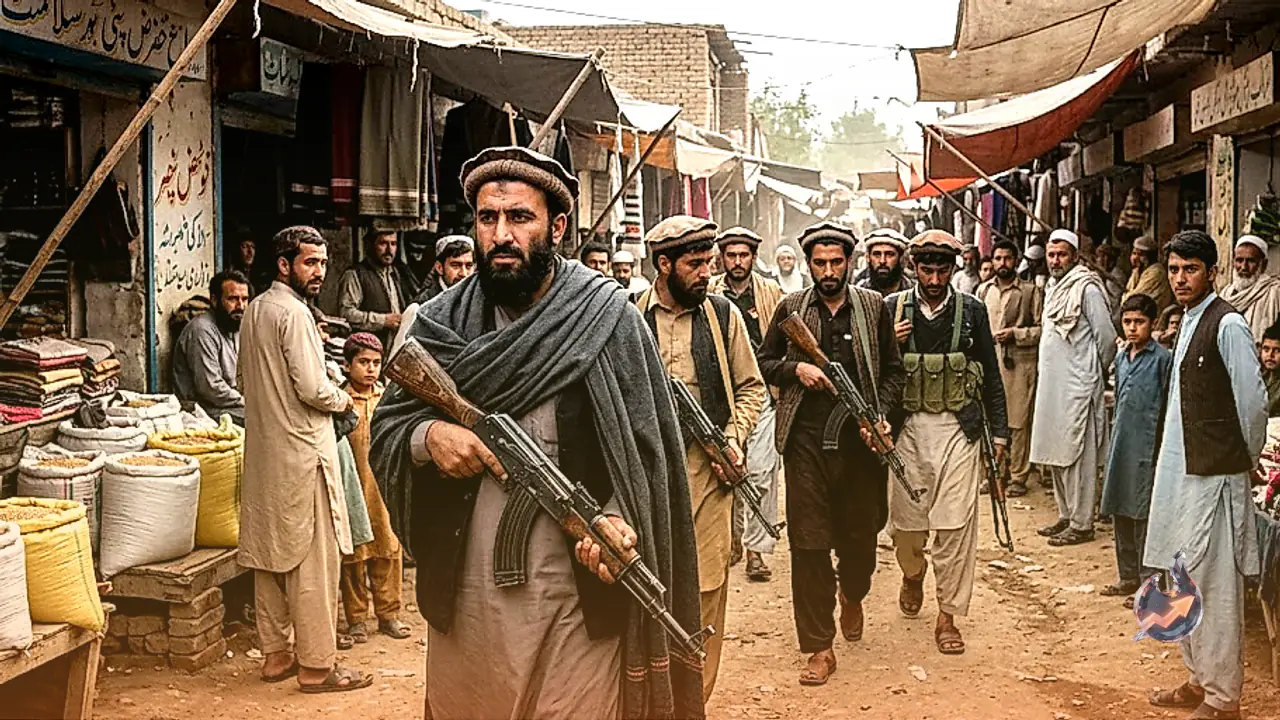

A visual clip emerging from the Makin area of South Waziristan has triggered renewed scrutiny over the security apparatus in Pakistan's tribal belt. The footage captures a group of heavily armed individuals marching openly through the main market of the town. These armed men are claimed to be affiliated with Tehrik-i-Taliban Pakistan (TTP). In the circulating material, the individuals assert their firm ground presence in the locality, openly boasting that no authority can prevent them from entering or operating in the area.
Militant Statements and Ground Claims in Makin
In statements accompanying the footage, the suspected TTP cadres maintain that the militant group retains a persistent operational footprint across Makin. They openly declare their intention to continue conducting armed campaigns in the sector. One individual characterizes their confrontation with the Pakistani military as 'jihad' while accusing state security personnel of spreading terrorism under the pretext of maintaining peace. Furthermore, the alleged fighters claim that ongoing volatility and security operations have forcibly displaced tribal residents from various parts of the territory.
Questions Over Verification and Authenticity
Significant questions surround the credibility and timeline of the visual material. Preliminary assessments indicate that the exact date of recording, the precise location, and the authenticity of the clip have not been independently confirmed. Consequently, the individual identities of the armed men visible in the footage and the legitimacy of their ground claims remain unverified by independent observers. Nevertheless, the open display of heavily armed groups within an established commercial hub like Makin signals potential deterioration in the wider stability of South Waziristan.
Re-emergence Fears in Khyber Pakhtunkhwa
South Waziristan, situated within Khyber Pakhtunkhwa province, has historically witnessed sustained armed clashes between TTP militants and Pakistani defense forces. An uptick in insurgent activities carries implications that extend far beyond military outposts and border posts. Whenever civilian policing and state administration recede in remote districts, ordinary residents bear the direct brunt. Such administrative vacuums inevitably disrupt routine movement, imperil local trade and commerce, and amplify day-to-day security hazards for the resident population.
Threats to CPEC Projects and Cross-Fringe Coordination
The potential resurgence of TTP elements also poses a severe security hazard to major infrastructure investments across the country. The physical safety of foreign personnel working on projects connected to the China-Pakistan Economic Corridor (CPEC) stands out as a critical operational concern. Simultaneously, security institutions face heightened apprehension over prospective tactical coordination between TTP and Baloch separatist groups, a convergence that could multiply strategic defense complications across multiple volatile fronts.