




















Following the construction of the world's highest railway arch bridge over the Chenab River, situated 359 metres above the riverbed, major engineering initiatives focusing on river basin management and water utilization are gaining momentum across northern India. While the 1,315-metre-long steel bridge stands as the critical engineering pillar of the Udhampur-Srinagar-Baramulla Rail Link project to provide all-weather rail connectivity to the Kashmir Valley, upstream and downstream river projects are charting a major shift in Himalayan hydrology. At the forefront of these developments are the proposed Chenab-Beas Link Tunnel project in Himachal Pradesh's Lahaul Valley and a new sediment diversion system at Salal Dam in Jammu and Kashmir.
Chenab Rail Bridge Viewing Deck and Engineering Museum
Constructed to integrate the Kashmir Valley seamlessly with the broader national rail network, the Udhampur-Srinagar-Baramulla Rail Link project features the massive Chenab Rail Bridge as its central marvel. Towering 359 metres above the riverbed, the 1,315-metre-long structure surpasses the height of the Eiffel Tower in Paris and has garnered widespread attention for its complex structural design.
According to senior railway officials, specialized tourist infrastructure including a viewing deck and an advanced engineering museum is being developed directly adjacent to the bridge, with plans to open the facilities to the public shortly. The museum will utilize detailed photographic archives, digital presentations, and precision scale models to showcase how Indian engineers erected the 467-metre central steel arch amid extreme wind velocities and treacherous Himalayan rock formations.
The transformation of the bridge precinct into an active tourism hub is slated to provide substantial economic benefits to local stakeholders in Jammu and Kashmir. Regional taxi operators, small retail vendors, certified tour guides, and local hospitality establishments are projected to see a tangible rise in commercial activity and household earnings as visitor footfall rises.
Technical Architecture of the Chenab-Beas Link Tunnel
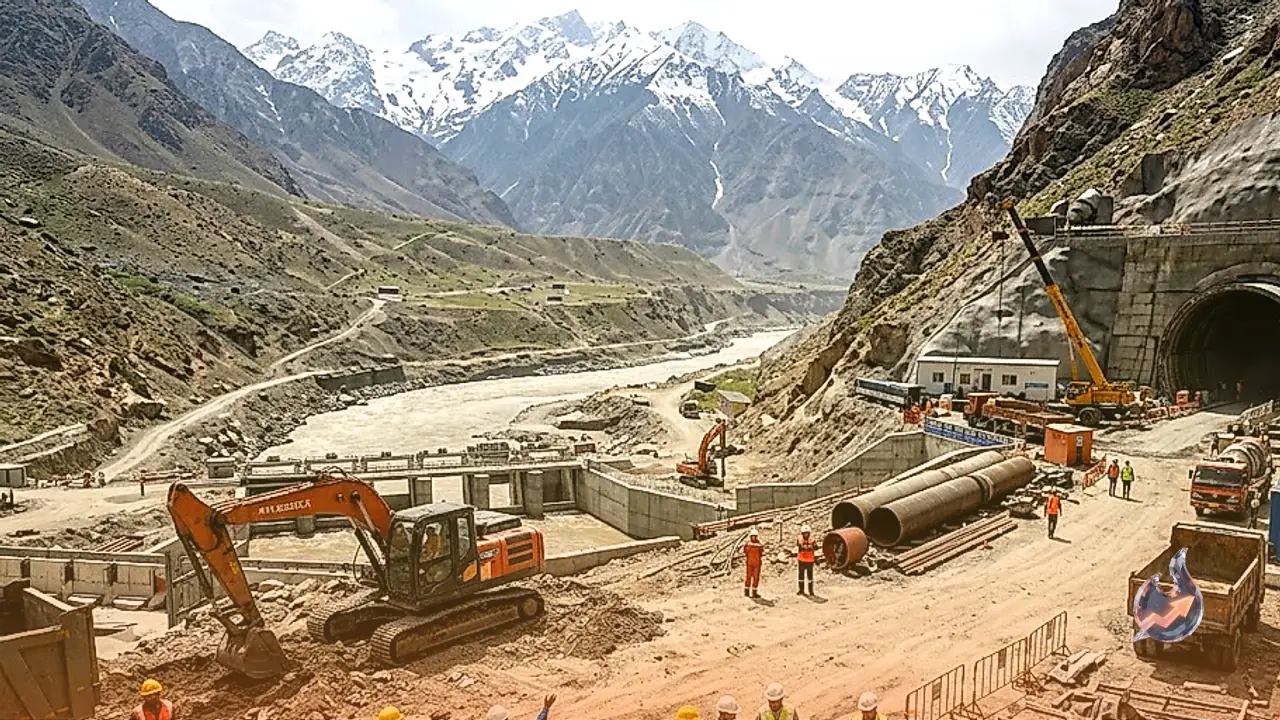
Beyond surface transport infrastructure, detailed blueprints have advanced for water management in Himachal Pradesh. The Link-3 Project, formally designated as the Chenab-Beas Link Tunnel Project, has been planned in the Lahaul Valley with an estimated capital outlay of Rs 2,532 crore. Under this proposal, a 19-metre-high barrage will be built across the Chandra River near Koksar village. Hydrologically, the Chandra River serves as the primary headstream that converges to form the Chenab River.
From the Koksar barrage, an 8.7-kilometre-long subterranean tunnel will be excavated to divert surplus discharge from the Chenab basin directly into the Beas River system. This tunnel alignment will pass deep beneath the Pir Panjal mountain range, situated in the vicinity of the Atal Tunnel.
Executing the venture is the National Hydroelectric Power Corporation (NHPC). Upon completion, the diverted water will augment downstream power generation, yielding an additional 4,000 megawatts of hydroelectric power for Himachal Pradesh. The central government has set a definitive execution timeline: construction is scheduled to commence on 1 August 2026, targeting full completion by 31 July 2029.
Sediment Management Tunnel Cleared for Salal Dam
In a parallel development in Jammu and Kashmir, the central government has accorded approval for a crucial structural addition to the Salal Dam. A new sediment management tunnel will be constructed at the dam site at an estimated cost of Rs 268 crore.
The primary function of this dedicated tunnel is the systematic flushing of accumulated silt and riverbed sediment that has settled within the Salal Dam reservoir over decades of operation. In addition to desiltation, the hydraulic structure will possess the technical capability to divert river flows when necessary, preserving active reservoir capacity and enhancing operational flexibility.
The Indus Waters Treaty Framework and Strategic Shifts
The river systems of the region have long been governed by the Indus Waters Treaty signed in 1960. Under the treaty architecture, the six major rivers of the Indus basin were split into two operational groups. India received unrestricted use of the eastern rivers comprising the Ravi, Beas, and Sutlej. Conversely, roughly 80 percent of the water from the western rivers comprising the Indus, Jhelum, and Chenab was allocated to Pakistan, while India retained rights to 20 percent of the water alongside non-consumptive entitlements for run-of-the-river hydroelectric generation and specified agricultural irrigation.
In the wake of persistent security challenges and following the terror attack in Pahalgam, the Indian government adopted a stringent policy posture, maintaining that blood and water cannot flow together, and subsequently moved to keep the Indus Waters Treaty in abeyance. Consequently, Indian agencies have intensified efforts to optimize water utilization within national territory.
Pakistani Objections and Economic Implications
The infrastructure plans have triggered significant concern across the border. Pakistani authorities contend that India's Chenab-Beas Link Tunnel project seeks to divert an estimated 1.9 million acre-feet of water from the Chenab River basin.
In an official statement, Pakistan's Ministry of Foreign Affairs stated that India had not shared official information regarding these projects. The ministry further asserted that water is being weaponized, which would devastate Pakistan's economy, terming the move a direct and serious violation of the 1960 Indus Waters Treaty.
Pakistan's economy remains heavily agrarian, with more than 80 percent of its agricultural cultivation dependent on irrigation fed by the Indus, Jhelum, and Chenab rivers. Water managers in Islamabad anticipate that routing surplus Chenab discharge into the Beas river will reduce inflows reaching Pakistan's Punjab province, threatening canal irrigation networks and downstream hydropower output. Apprehensions have also been raised regarding the operational implications of the Rs 268 crore sediment bypass tunnel at Salal Dam. Despite these diplomatic objections, India remains focused on executing domestic infrastructure to secure regional energy and water needs.