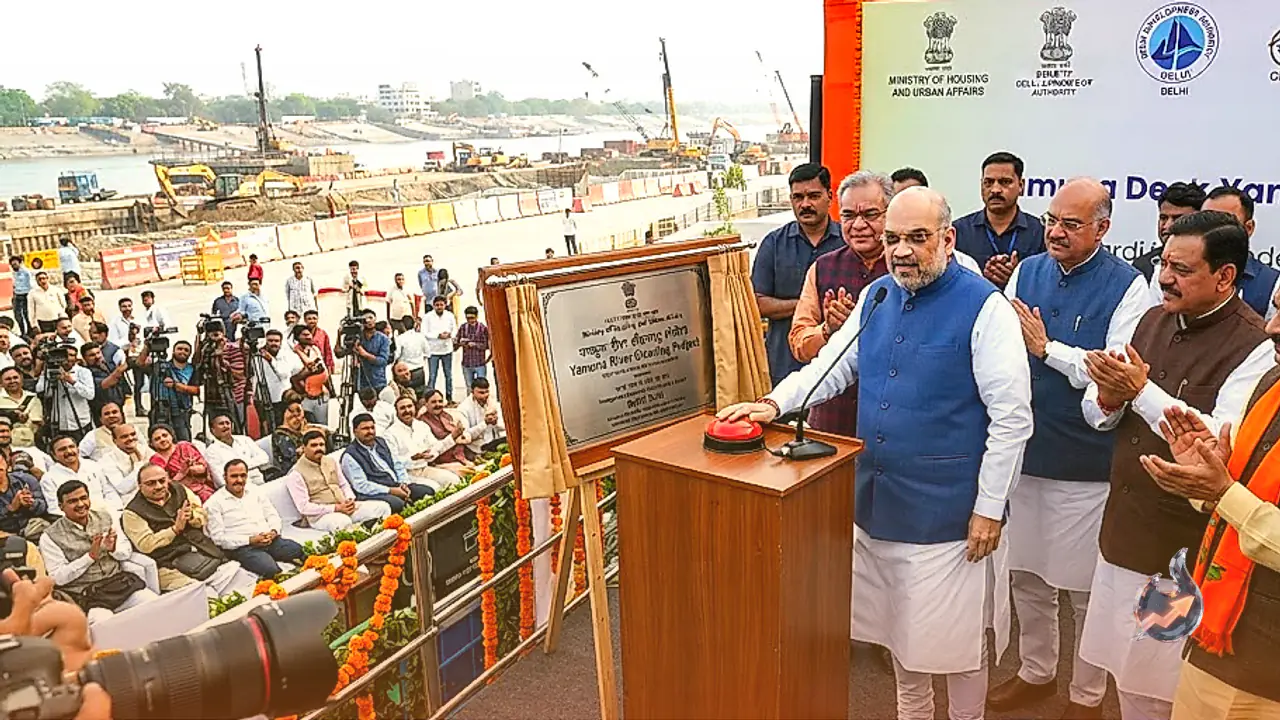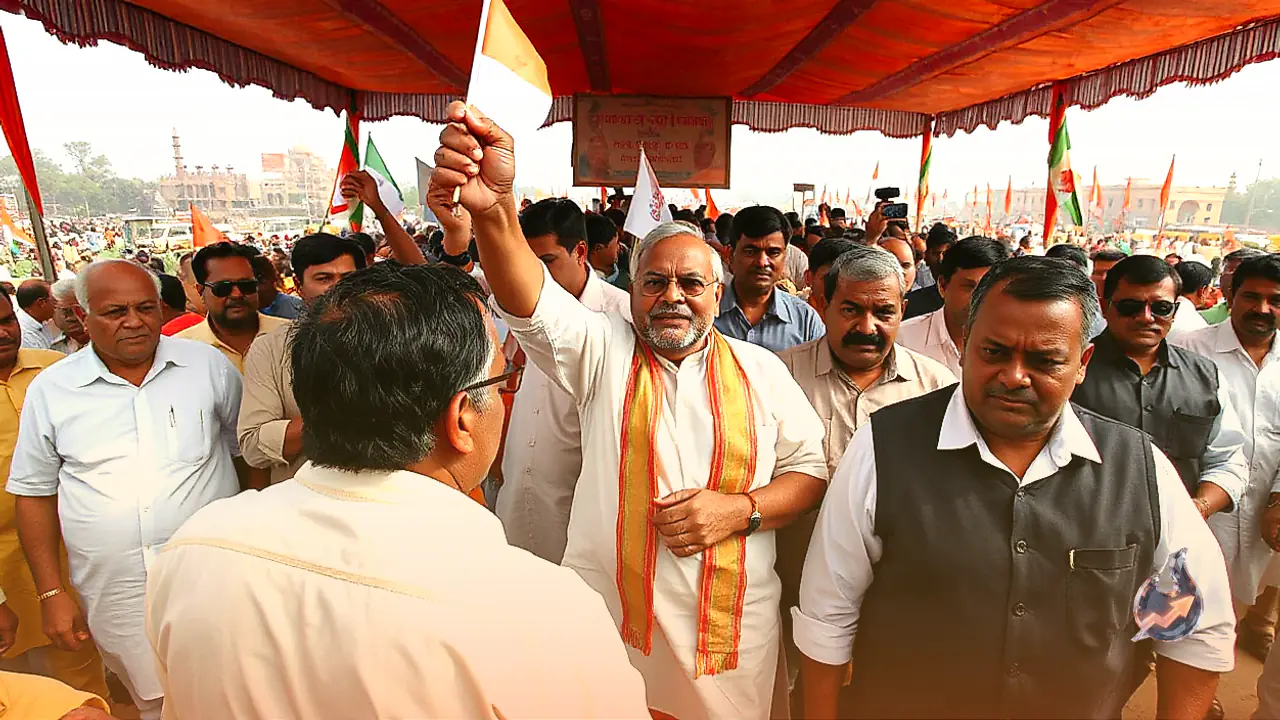





















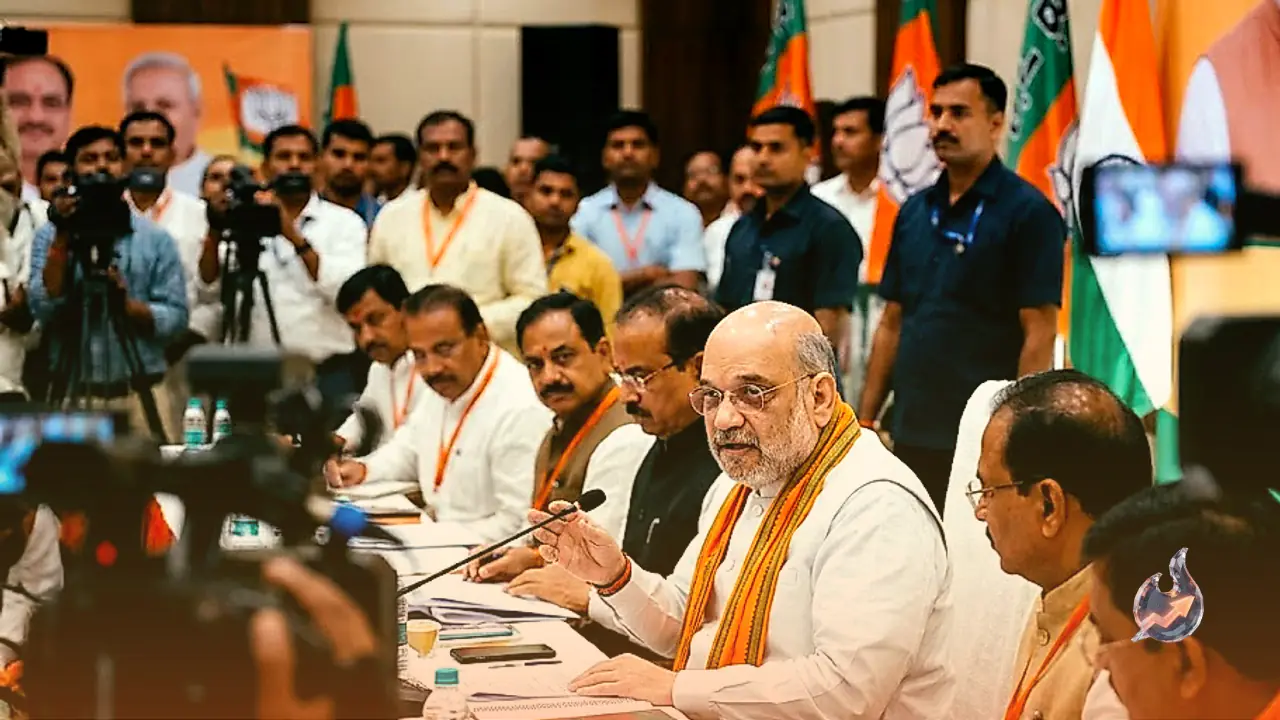

In Indian politics, some faces merely build a temporary identity, while others are known for decisions that fundamentally alter the course of governance. One such prominent name is Union Home Minister Amit Shah. From the intricate details of party organization to election strategies, from making monumental decisions in Parliament to safeguarding the internal security of the nation, the political journey of Amit Shah has witnessed numerous historic milestones.
Early Political Journey and RSS Roots
Whether facing insurmountable challenges, taking courageous decisions, or drafting complex political strategies, his style remains distinct. A sharp intellect, unwavering determination, and the image of an action man define the nation's Home Minister. His electoral management is unparalleled, and his speed of execution is remarkable. The story of Amit Shah begins with his early association with the Rashtriya Swayamsevak Sangh. His active involvement in the Akhil Bharatiya Vidyarthi Parishad honed his leadership skills, eventually reaching its pinnacle within the organizational framework of the Bharatiya Janata Party.
From Uttar Pradesh to the Center of National Politics
When the BJP secured a historic victory in the 2014 Lok Sabha elections, Amit Shah's role in formulating party strategy and organizational expansion in Uttar Pradesh drew special attention. Subsequently, his tenure as the national president of the party and his relentless efforts to expand the BJP across various states further cemented his political standing. In 2019, Amit Shah assumed office as the Union Home Minister of the country. The same year, he entered Parliament after winning the Lok Sabha election from Gandhinagar. This journey from an ordinary organizer to the center stage of national politics stands as one of his greatest political achievements. However, his identity is not confined to electoral strategy alone; upon taking charge as Home Minister, he spearheaded decisions that sparked long-standing debates regarding national politics, security, and law and order.
Major Political and Legislative Milestones
Several key years and milestones define the trajectory of Amit Shah's political career
- 1980s: His formative political journey began here, marked by associations with the RSS and ABVP, followed by active participation in the BJP organization.
- 2014: He assumed office as the national president of the BJP, taking charge of crucial organizational and electoral management at the national level.
- 2019: He took oath as the Union Home Minister, shouldering the responsibility of national security and vital legislative decisions.
- 2021: He took charge of the newly created Ministry of Cooperation, establishing a separate central ministry specifically for the cooperative sector.
Article 370 and the Citizenship Amendment Act
Any discussion on Amit Shah's tenure as Home Minister remains incomplete without mentioning Article 370. On August 5, 2019, Amit Shah made a monumental announcement in Parliament. The process to revoke the special constitutional status granted to Jammu and Kashmir under Article 370 was set in motion, alongside the reorganization of the state. This decision became one of the most decisive and debated chapters in modern Indian politics. Following this, the Citizenship Amendment Act, or CAA, was successfully passed through Parliament.
The government maintained that this legislation offered a clear pathway to Indian citizenship for non-Muslim refugees belonging to specified communities who arrived from Pakistan, Bangladesh, and Afghanistan prior to December 31, 2014, and fulfilled the prescribed criteria.
Transforming the Criminal Justice System
This was followed by a transformative era in the nation's criminal justice framework. Three new criminal laws, namely the Bharatiya Nyaya Sanhita, the Bharatiya Nagarik Suraksha Sanhita, and the Bharatiya Sakshya Adhiniyam, came into effect on July 1, 2024. The government framed these changes as a monumental step away from colonial-era criminal jurisprudence towards modernizing the legal and judicial process.
Key Decisions During Amit Shah's Tenure
His tenure has been marked by foundational decisions that have reshaped the nation's legal and security landscape
- Article 370 (2019): Re-engineering the special constitutional status of Jammu and Kashmir and executing state reorganization.
- CAA (2019): Establishing provisions for granting citizenship to eligible individuals from designated communities in neighboring countries.
- Three New Criminal Laws (2024): Replacing legacy frameworks with an entirely updated system of criminal jurisprudence.
Parliamentary Strategy and National Security Stance
A defining hallmark of Amit Shah's working style has been his ability to elevate an issue to a top political priority, forge a seamless parliamentary path for it, and then present the government's stance firmly before the country. This politics of decisive action cements his reputation as a resolute leader in the eyes of his supporters. For him, Parliament is not merely a platform for debate, but a mechanism to translate political resolve into binding law. His speeches repeatedly emphasize themes of national security, constitutional reforms, the promotion of Hindi, the elimination ofism, and the political vision of a developed India. Speaking on Article 370 in August 2019, he framed the government's move as the fulfillment of a long-standing political commitment. His message on national security has remained consistently uncompromising, advocating strict action against terrorism and zero tolerance for threats to the nation.
The Reasoning Behind the Title Chanakya
In Indian political discourse, the epithet Chanakya is frequently attached to Amit Shah. What lies behind this comparison? His political methodology is characterized by a firm grip on party organization, a sharp grasp of electoral arithmetic, an emphasis on a grassroots network of workers, and a persistent drive to execute objectives down to the lowest administrative tier. His tenure as BJP national president proved vital for the party's widespread expansion and high-stakes electoral campaigns. Following the 2014 Lok Sabha triumph in Uttar Pradesh, his electoral strategies became a subject of national study. A crucial aspect of his working style is his constant endeavor to channel major political objectives right down to the individual polling booth level. By analyzing regional specifics, social equations, areas of organizational weakness, and regions requiring heightened worker mobilization, his meticulous approach to electoral management sets him apart.