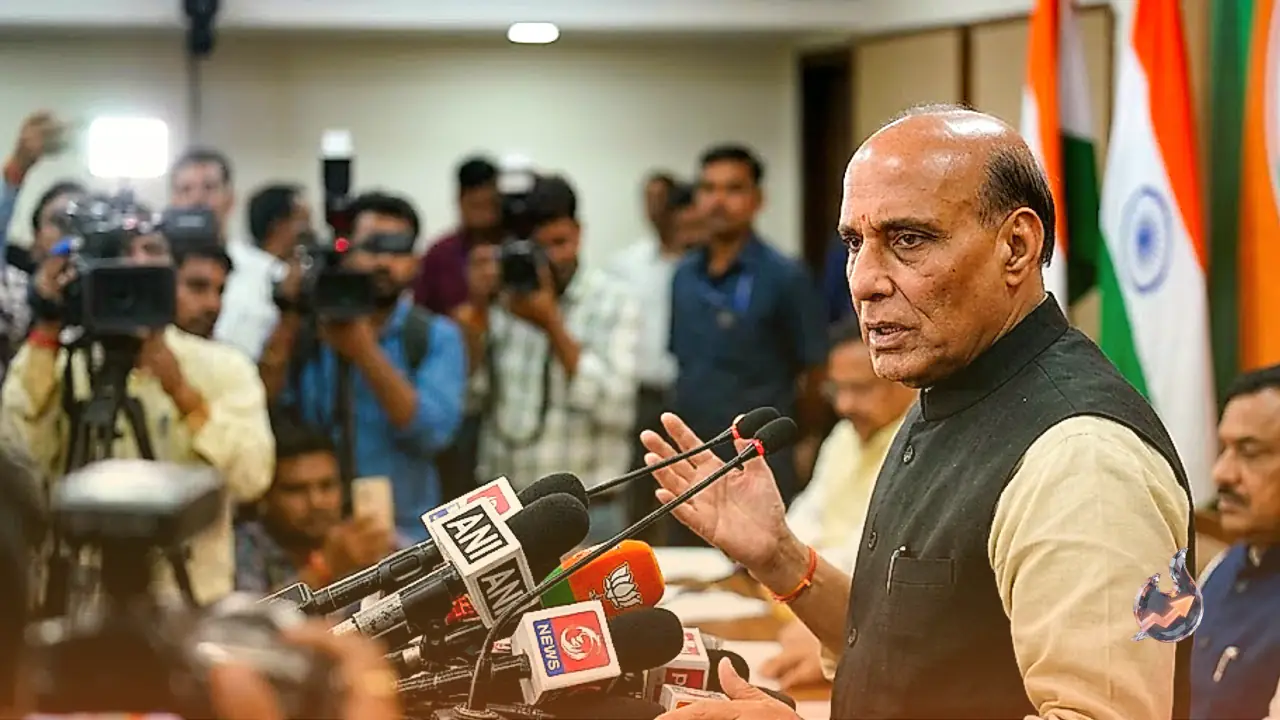















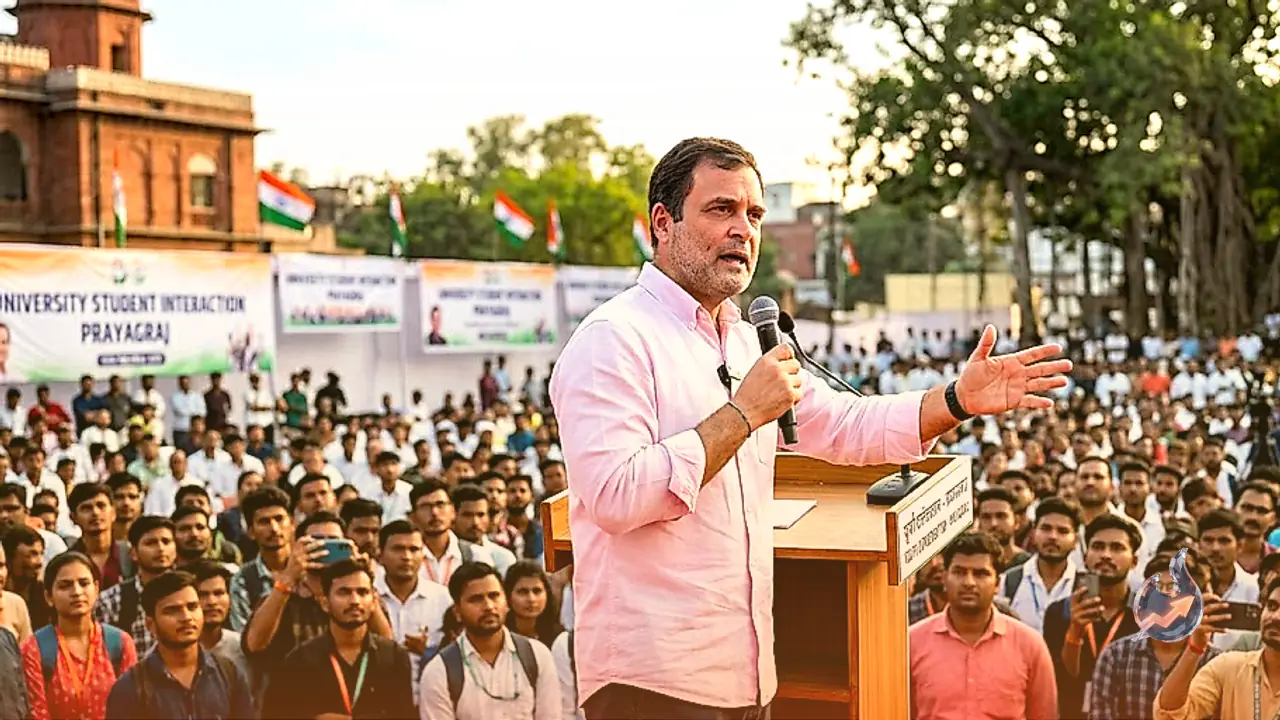

When Rahul Gandhi addressed a gathering of students in Prayagraj, his critique of the central government focused on pressing issues like the NEET paper leaks and widespread youth unemployment. However, alongside his sharp political commentary, his choice of clothing became a major talking point across social media platforms. Dressed in a vibrant pink shirt instead of his usual casual attire, the Congress leader caught the attention of political observers and commentators who view the outfit as more than just a passing fashion trend. Across modern political history, sartorial shifts have frequently been utilized as deliberate visual tools to project political messaging, build distinct public identities, and establish rapport with target demographics.
A Shift from Traditional Attire to Strategic Wardrobe Choices
In Indian politics, public figures have traditionally favored the classic white kurta-pyjama as a sign of simplicity and national tradition. Breaking away from this standard attire, Rahul Gandhi has gradually developed a wardrobe that favors western casuals like T-shirts and denim. This transformation reflects a wider strategy to craft a distinct visual persona. Historical precedents in Indian politics demonstrate that clothing choice often carries deep symbolic meaning. Bahujan Samaj Party leader Mayawati, for instance, carefully curated a distinct political identity by wearing light pink and cream suit ensembles paired with diamond earrings. Her wardrobe choice was not merely personal style, but a calculated political symbol aimed at confronting traditional social hierarchies and establishing a powerful identity against the Manuvadi framework. Rahul Gandhi appears to be following a similar trajectory by using color and style to shape his political image.
The Three Colors of Rahul Gandhi's Public Campaigns
Over recent political campaigns, Rahul Gandhi's wardrobe choices have aligned with specific themes and outreach efforts. During the extensive nationwide Bharat Jodo Yatra, he consistently wore a simple white T-shirt. The outfit was intended to represent transparency, truth, and accessibility, helping him connect directly with ordinary citizens and young voters on the ground. The simple white T-shirt marked a clear departure from standard political wear, signaling an approachable leader eager to listen to public concerns. While the visual shift did not instantly translate into massive electoral gains, it formed a foundational component of an ongoing effort to rebrand his public image.
The E20 Fuel Debate and Social Media Trolling
Following the white T-shirt phase, Rahul Gandhi adopted a dark blue T-shirt during a campaign highlighting concerns over ethanol-blended petrol. While targeting the government over E20 fuel policies, he claimed that higher ethanol blends could cause mechanical damage to vehicle engines. The dark blue color was chosen to convey authority, seriousness, and technical focus during a confrontational debate. However, this strategy met with challenges on digital platforms. Political critics and online users scrutinized his statements and fact-checked the claims, pointing out that the specific vehicle model used during the demonstration was already certified as compatible with E20 fuel. Consequently, the blue attire phase triggered significant social media trolling and debates over policy accuracy.
Pink as a Global Symbol of Resistance and Dissent
Rahul Gandhi's decision to wear a pink shirt during his Prayagraj student interaction carries distinct historical and global connotations. Unlike neutral tones, the color pink has repeatedly served as a visual symbol of protest, youth energy, and social dissent in contemporary movements. In 2009, India witnessed the 'Pink Chaddi' campaign, where activists mailed pink underwear to members of the Sri Ram Sena after the group targeted women in a Mangaluru pub. Internationally, during the 2017 demonstrations against Donald Trump in the United States, thousands of women wore hand-knitted pink cat-eared hats, known as 'Pussyhats', turning the color into a worldwide emblem of political resistance. By wearing pink while discussing education policy failures, NEET paper leaks, and employment shortages, Rahul Gandhi visually aligned himself with student protesters challenging established systems.
Visual Political Messaging: Narendra Modi's Blue Attire Contrast
The strategic use of color in political communication is well established across the political spectrum. Prime Minister Narendra Modi has long utilized sartorial elements to reinforce political narratives during key public appearances. Following the 2024 Lok Sabha elections, in which the Bharatiya Janata Party secured a third term in power but missed an outright single-party majority, Prime Minister Modi was seen wearing blue attire during high-profile events. Observers noted that the choice of blue was intended to project composure, political authority, and continuity during a shift in parliamentary dynamics. Both leaders recognize that visual cues often communicate intent faster than public speeches.
Social Media Resonance and Public Reaction
The appearance in Prayagraj quickly sparked widespread commentary online. Congress leader Sadaf Jafar shared a post on X on August 9, 2026, outlining the evolution of Rahul Gandhi's wardrobe from the white T-shirt representing truth to the blue symbolizing social justice, and finally the pink shirt embodying youth aspirations. She stated that the leader is dismantling traditional political norms to build a closer connection with Gen Z and millennial voters across India. Online discussions under trends like #ChhatronKiGoonj highlighted how the choice of dress resonated among young audiences, turning a simple wardrobe selection into a broader debate on youth outreach and political communication.