






















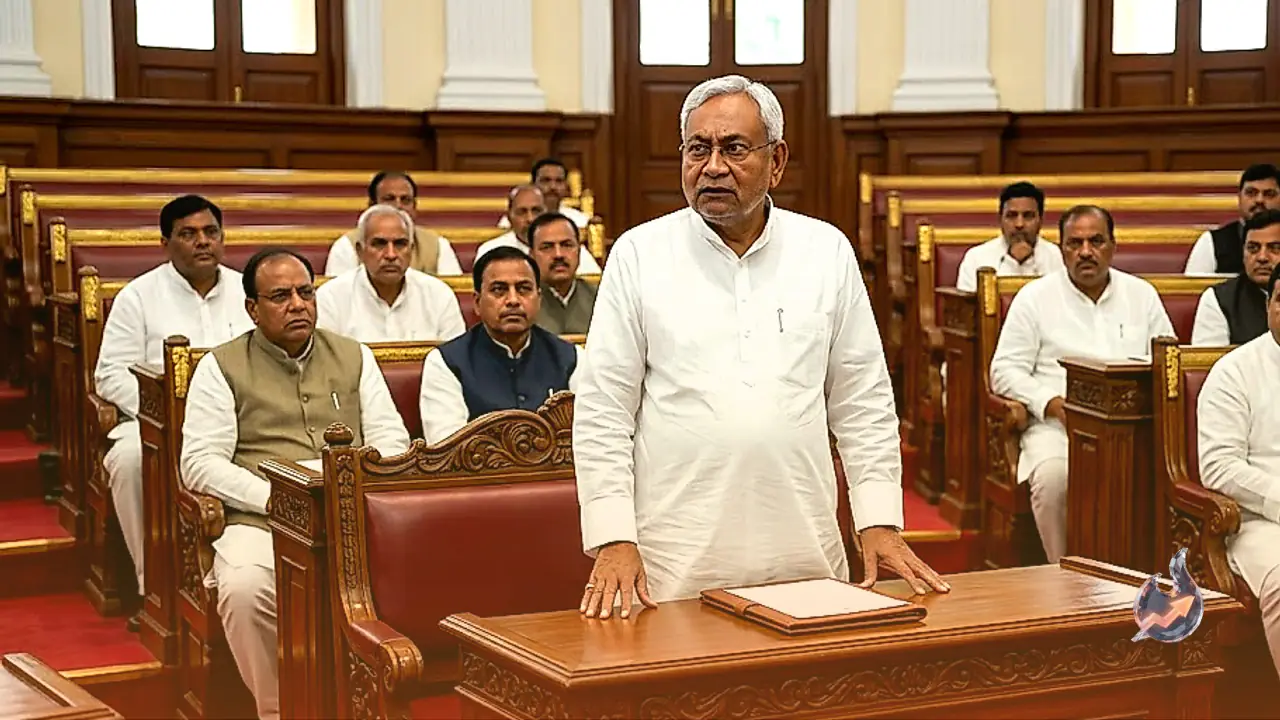

The ongoing monsoon session of the Bihar legislature is bracing for a highly volatile fourth day, with the opposition armed and ready to corner the state government over the nationwide NEET paper leak controversy and the recent police lathicharge on protesting students in Patna. Having finalized their floor strategy, opposition leaders are expected to relentlessly demand answers and accountability from the ruling benches, setting the stage for significant uproar inside the house.
Despite the anticipated political storm, the day’s legislative agenda is packed with crucial administrative and financial business. The proceedings will kick off with the designated Question Hour, which is specifically allocated for lawmakers to seek answers regarding the Education and Cooperative departments. Following this, the focus will shift to the state's finances in the afternoon half of the session.
Financial Focus and Supplementary Budget
In a major financial move, the Finance Minister is scheduled to table the Second Supplementary Expenditure Statement for the financial year 2026-27. To ensure these additional public expenditures receive the necessary legal and constitutional sanction, the government will simultaneously introduce the ‘Bihar Appropriation (No. 3) Bill, 2026’.
Sweeping Legislative Approvals on Day Three
The tense atmosphere expected today follows an incredibly productive Wednesday, which marked the third day of the monsoon session. The house successfully passed a total of thirteen significant legislative bills. Among the most notable was the Bihar Private University (Amendment) Bill 2026, aimed at transforming the state's higher education landscape.
Speaking on the university amendment, Chief Minister Samrat Choudhary emphasized that the initiative will provide a new direction for the youth by curbing the massive educational migration to other states. He highlighted staggering statistics to make his point, noting that thirty thousand students from Bihar are currently enrolled at Amity University, while another eleven thousand are studying at Lovely Professional University. Acknowledging the severe financial strain this places on parents whose children are forced to study outside, he affirmed that the government is actively working to reverse this long standing trend.
Cracking Down on Cyber Abuse and Paper Leaks
Another major legislative milestone was the passage of the Bihar Crime Control (Amendment) Bill 2026. Deputy Chief Minister Vijay Kumar Chaudhary justified the new measures by pointing out the rapidly changing nature of criminal activities in the modern world. The new law introduces strict penal actions for those using abusive language or making derogatory comments on social media platforms, carrying a mandated punishment ranging from six months to one year in prison. In a direct response to recent academic scandals, the legislation also officially classifies exam paper leaks as a form of organized crime.
Urban Revamp and Business Reforms
On the infrastructure front, the assembly cleared the Bihar Urban Development Bill 2026, paving the way for the creation of the ‘Bihar Urban Development Authority’. Urban Development Minister Nitish Mishra stated that this newly formed institution will be exclusively dedicated to driving city development and upgrading essential urban infrastructure.
Simultaneously, the industrial sector received a boost with the Bihar Ease of Doing Business Bill 2026. Industries Minister Shreyashi सिंह explained that the bill introduces a comprehensive single window clearance system for prospective investors. Under this streamlined process, the ‘Invest Bihar’ secretariat is now mandated to clear all business applications within a strict thirty day timeframe.
Empowering Rural Local Bodies
Finally, the legislative blitz included the Bihar Panchayati Raj (Amendment) Bill 2026, which significantly decentralizes financial power. Panchayati Raj Minister Deepak Prakash detailed the new provisions, revealing that village panchayats will now have the legal authority to collect fees on hoardings, banners, and commercial advertisements. Furthermore, it is now mandatory to get building maps officially approved before constructing multi story buildings in rural areas. By granting panchayats the right to levy holding taxes and user charges, the state aims to transform these local bodies into self reliant institutions capable of funding their own development projects.